"249 grams and blocked: DJI releases cheapest LiDAR drone — and immediately loses largest market"
DJI Lito 1 and Lito X1 — the company's most affordable drones with obstacle avoidance and 4K HDR — emerged just as the FCC blocked the new DJI models from entering the US market.

By Tetiana Suchkova-Ladik
April 24, 2026 · 2 min read
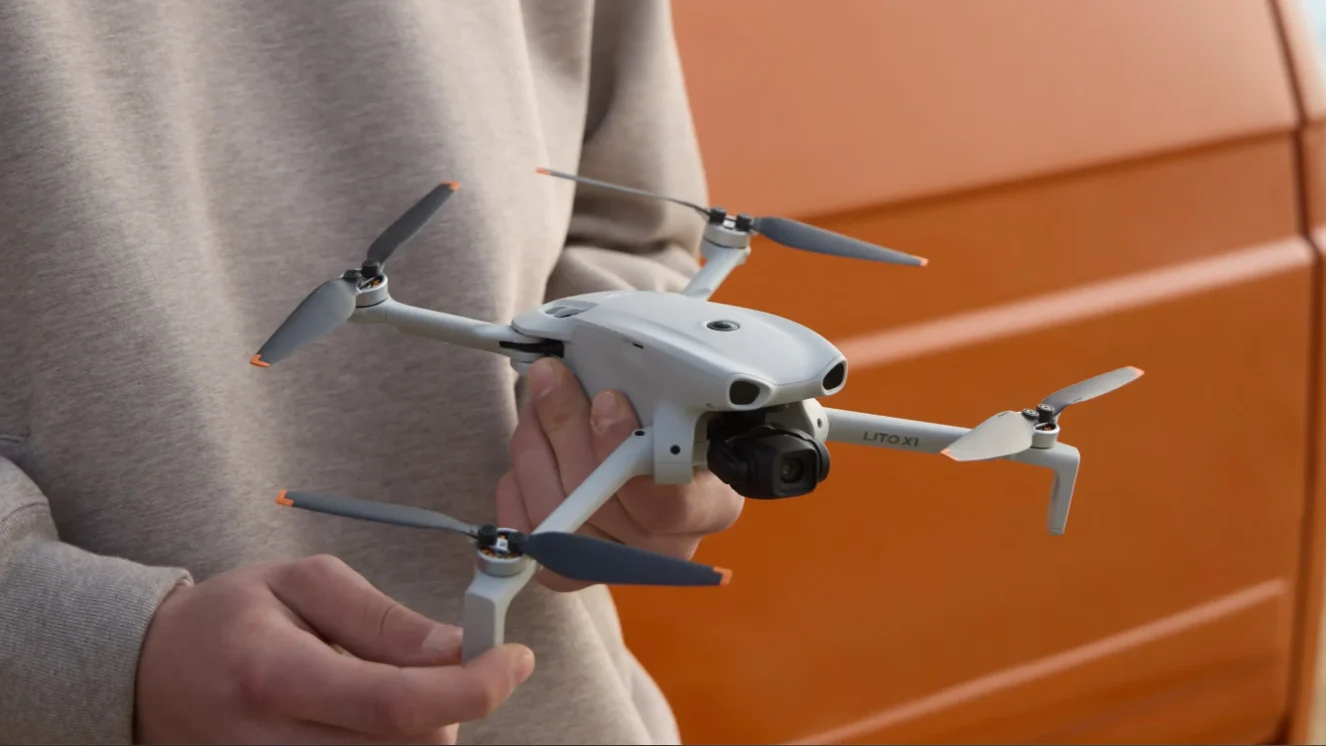
DJI has launched a new Lito line — two foldable drones weighing up to 249 grams, aimed at beginners. But the intrigue here goes beyond the specs: both models received FCC authorization before it came into effect — and effectively became some of the last new DJI products that could theoretically reach American stores.
Two drones — same weight, different physics
The Lito 1 and Lito X1 weigh the same — less than 249 grams. This is no coincidence: this threshold in most countries means class C0/UK0, meaning you can fly almost anywhere, including over people, without additional permits. Weight is a legal strategy disguised as an engineering solution.
Both cameras are 48 MP, but the sensors differ. The Lito 1 received a 1/2-inch sensor, while the Lito X1 has a 1/1.3-inch sensor, supporting 4K/60fps HDR, 4K/100fps slow-motion, and 10-bit D-Log M. As TechRadar notes, the Lito X1 is "an appetizing compromise between the cheap Mini 4K and the expensive Mini 5 Pro."
LiDAR in a drone for €419 — a first
The Lito X1 received a front-facing LiDAR sensor in addition to an omnidirectional obstacle detection system that works at lighting levels of 5 lux. Previously, LiDAR appeared only in professional or significantly more expensive models. Here — in a starter drone for €419 (≈$490).
The Lito 1 costs €339 (≈$396) and lacks LiDAR, but retains omnidirectional sensors and the same flight time — up to 36 minutes with a standard battery and up to 52 minutes with an extended one. Both models support Wi-Fi 6 for fast file transfers; the Lito X1 additionally has 42 GB of internal storage.
Authorization exists — the market does not
On December 23, 2025, the FCC added DJI to the "Covered List" — a list of companies whose equipment cannot receive new American authorizations. New DJI drones can no longer be legally imported and sold in the US. The Lito 1 and Lito X1 managed to obtain FCC authorization before the deadline — but, as CNN reports, the FCC's decision was based on a White House interagency body's conclusion about risks of "persistent surveillance and data theft," rather than on the public audit that the industry expected.
"We are ready to cooperate, be open and transparent, provide all necessary information for a full inspection"
Adam Welsh, head of DJI global policy, in a letter to American officials
The inspection never happened. Instead — automatic addition to the list under NDAA 2025 conditions.
What this means for buyers
- Europe, Asia, Ukraine — drones are available at standard prices, no regulatory restrictions.
- USA — existing Lito inventory can be sold, no new shipments will arrive.
- Weight under 249 g — in most jurisdictions allows flying over people without special permission, making Lito especially attractive for content creators.
- LiDAR in Lito X1 — reduces crash risk for beginners, but increases cost relative to Lito 1 by only €80.
If DJI does not pass an American security audit or find a partner for local manufacturing by the next FCC review — Lito, the company's most accessible LiDAR-equipped line, will remain a product that officially does not exist in the world's largest drone market.



