$27 per shot vs $50,000 "shaheed": why Sweden bet on a cannon rather than a missile
Sweden and Denmark are allocating €226 million to supply Ukraine with Tridon Mk2 systems — 40mm automatic cannons that shoot down drones at the cost of ammunition rather than missiles. This is not merely a new weapon, but a bet on a different logic for air defense.

By Tetiana Suchkova-Ladik
April 6, 2026 · 3 min read
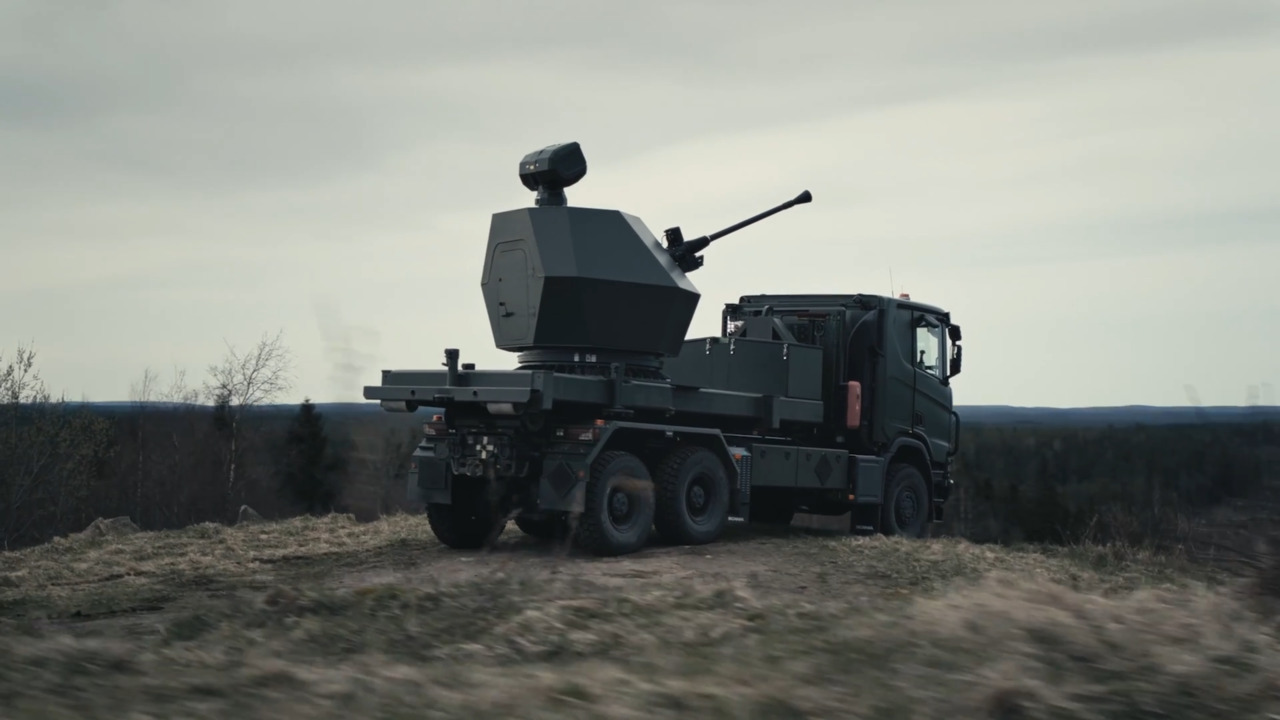
When Sweden announced the allocation of over €182 million for the purchase of Tridon Mk2 systems for Ukraine — as part of a broader €1.2 billion package — the key to this decision turned out not to be the amount, but the philosophy. Instead of expensive missiles — cheap programmed ammunition. One shot costs about $27. A "Shahed" costs between $20,000 to $50,000.
What is Tridon Mk2 and why it appeared now
Tridon Mk2 is a mobile medium-range air defense system from BAE Systems and Saab, first presented in 2024. At its core is the 40mm Bofors 40 Mk4 gun, which fires at a rate of up to 300 rounds per minute and engages targets at ranges up to 12 km. The system operates around the clock, in any weather, and can reduce its firing rate to 200 rounds per minute to conserve ammunition.
The key ammunition is the 3P round (Prefragmented, Programmable, Proximity-fuzed): a programmable tungsten fragmentation charge that detonates at the required distance from the target. This very design allows for shooting down small drones, which missiles of the "Patriot" class are not physically designed to intercept effectively.
The systems for Ukraine are equipped with the Saab Giraffe 1X radar, which significantly improves target detection and tracking. The package also includes spare parts and a significant supply of ammunition.
Denmark joined — and this is important
The procurement is being carried out by the Swedish agency FMV simultaneously on behalf of two countries: Sweden allocates over €182 million, Denmark — about €44 million. Together — €226 million, which allows for the equipment of an entire air defense battalion. As reported by Militarnyi, the first systems are expected to arrive in Ukraine within several months after the official order — the systems are already in production.
"Tridon Mk2 is the only economically justified way for NATO to counter drones at scale"
The Forensic Archive, analysis of the cost/effectiveness ratio of air defense systems
Interception economics: why this is truly a different logic
The problem with modern air defense is not only technical, but also arithmetic. A Patriot PAC-3 missile costs about $4 million. With it, you can shoot down a "Shahed" for $50,000 — and this is an economic disaster for the defending side. Tridon Mk2 flips the equation: even if 5–30 rounds at $27 are spent on one drone, the total interception cost remains dozens of times lower than the cost of the target.
- Cost of one 3P round: ~$27
- Firing rate: up to 300 rounds/min
- Effective range: up to 12 km
- Additionally: the system can engage ground targets with direct fire
This is exactly why Sweden is ordering Tridon Mk2 simultaneously for its own needs — not just for Ukraine. This is a signal: the system is considered suitable for real combat conditions, not just for export.
What this means for Ukraine
Ukraine has already faced the problem of "missile ammunition depletion": each wave of "Shaheds" forces the expenditure of expensive interceptors, which are critically lacking. Tridon Mk2 does not replace Patriot or NASAMS — it closes a different niche: mass attacks of cheap drones, where missile air defense is excessive and irrational.
If the battalion-level set truly arrives within several months, Ukraine will receive a tool that allows for withstanding drone waves without critically draining rocket reserves — and this, rather than technical characteristics, is the main strategic consequence of the deal.
The question is different: will there be enough ammunition for the battalion under the conditions of attacks that Russia conducts every night — and does the package provide for long-term contracts for the supply of 3P rounds, without which the system becomes an expensive platform without bullets?