56-Year Record Held. Artemis II Broke It in 6 Days of Flight
# Artemis II Crew Surpasses Apollo 13 Distance Record on April 6, 2026 The Artemis II mission crew on April 6, 2026, surpassed the 248,655-mile mark from Earth — breaking the Apollo 13 record that had stood since 1970. However, the record distance is merely one dimension of a mission that tests equipment rather than plants flags.

By Tetiana Suchkova-Ladik
April 7, 2026 · 2 min read
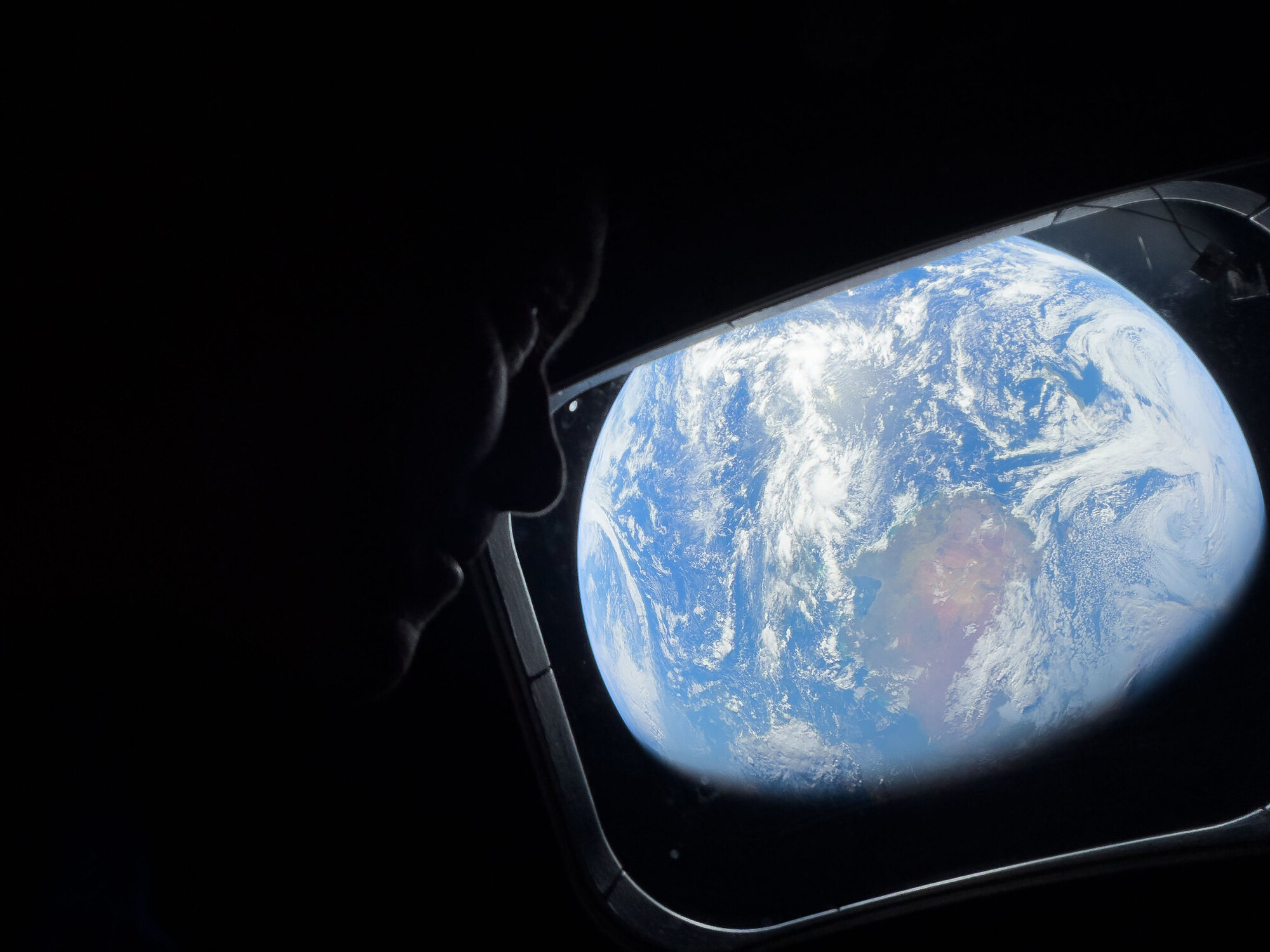
On April 6, 2026, on the sixth day of flight, at 12:56 Central American time, the spacecraft Orion with four astronauts on board crossed the 248,655-mile mark from Earth. This is the exact distance that the damaged Apollo 13 reached in April 1970 — and for 56 years no one had come close.
What was accomplished — and what was not
The maximum distance of Artemis II was 252,760 miles (406,800 km) — 4,105 miles farther than the previous record. However, the mission does not include a landing: Orion passed approximately 4,067 miles from the Moon's surface on a free-return trajectory — the same scheme that once saved Apollo 13, but now applied intentionally to test the spacecraft's systems in deep space conditions.
The crew — NASA astronauts Reid Wiseman, Victor Glover, Christina Koch, and Canadian Space Agency astronaut Jeremy Hansen — became the first people to venture so far from Earth since the Apollo 17 mission in 1972.
"From aboard Integrity — as we exceed the farthest distance humans have ever traveled from planet Earth, we do this honoring the efforts of our predecessors. But most importantly — we use this moment to challenge the current and next generation: make sure this record doesn't stand for long."
— Reid Wiseman, commander of Artemis II
A parallel story: craters and loss
During the flight, the crew proposed names for two lunar craters. The first — in honor of the spacecraft, Integrity. The second — in honor of Carol, Wiseman's late wife. After the mission's completion, the proposals will be formally submitted to the International Astronomical Union, which regulates the naming of objects in the Solar System.
The scientific portion of the mission is also substantial: during the Moon's orbit, the crew observed the craters Orientale and Hertzsprung — multi-aged ring basins. Comparing their topography should help understand how lunar structures degrade from subsequent impacts.
Why the Apollo 13 record stood for so long
The paradox is that Apollo 13 set the record unintentionally — the crew orbited the Moon on an emergency trajectory after an oxygen tank explosion. Artemis II repeated a similar orbit as a standard test scenario. According to NASA, the main goal of the mission is to test how Orion's systems perform in real deep space conditions before the next mission, Artemis III, attempts to land on the Moon's surface.
NASA broadcast the Moon orbit across eight platforms simultaneously — from NASA+ to Netflix and HBO Max. This is the first time the agency has livestreamed a space mission through streaming services on this scale.
If Artemis III actually executes the landing — the distance record will remain with Artemis II. The question is whether NASA will delay the next mission the same way it delayed this one: Artemis II was supposed to fly in 2024.



