Airbnb launches global 'Book Now — Pay Later': what it means for travelers and Ukrainian hosts
Airbnb has expanded its "Book Now — Pay Later" option worldwide. This is not just a convenience — it is changing traveler behavior and the short-term rental market. We examine how the new model works, who it benefits, and what legal risks accompany it.

By Tetiana Suchkova-Ladik
February 17, 2026 · 2 min read
What it is about
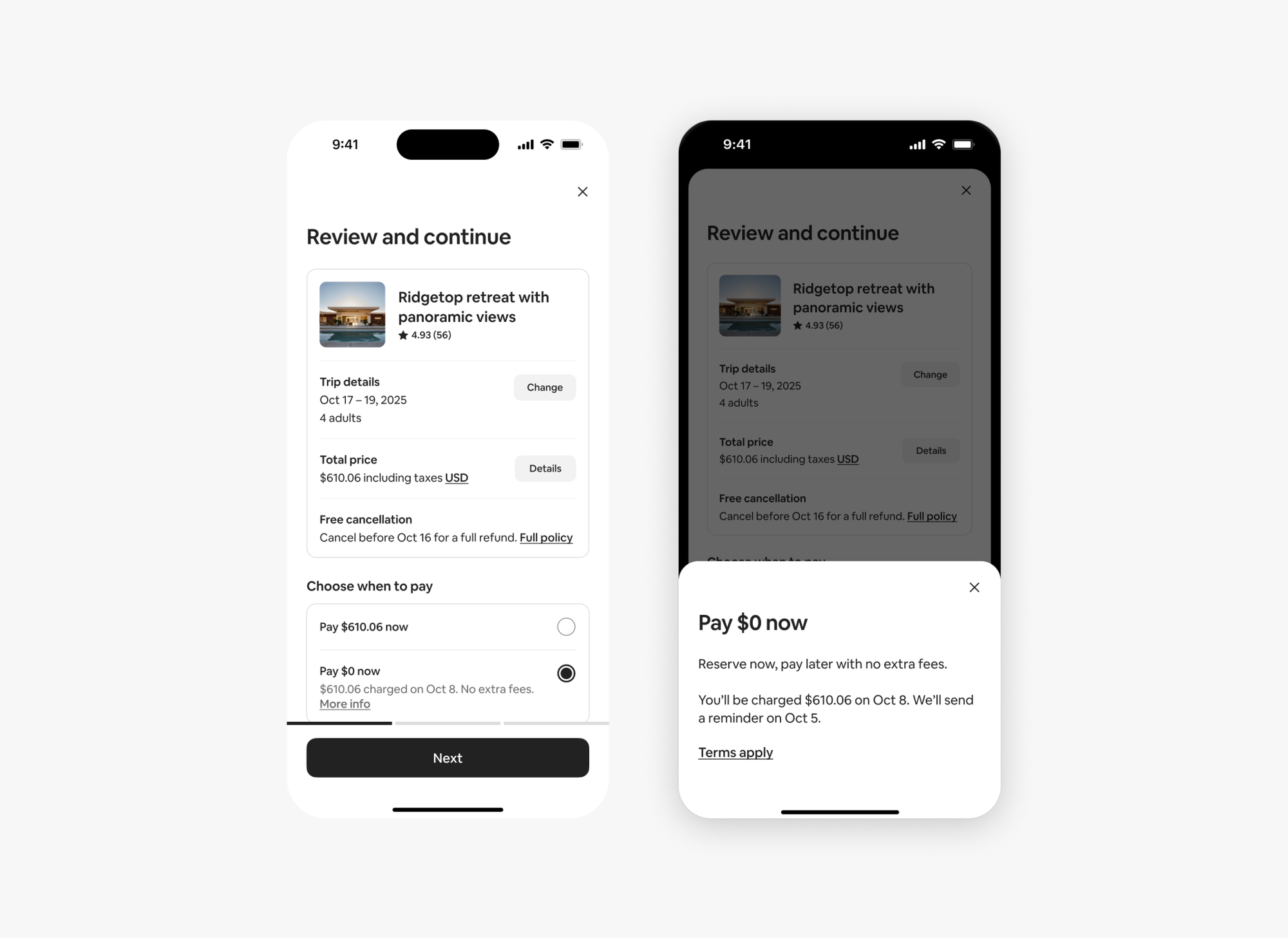
Airbnb has rolled out globally the "Book now — pay later" feature. Users can confirm a booking without an immediate charge: payment is taken closer to the check‑in date. For guests this means greater flexibility in planning; for hosts — potential increased demand.
What the company says and the numbers that matter
According to Airbnb’s Q4 2025 report, the new payment format changed booking patterns: the number of booked nights increased, people began planning trips earlier, and they more often chose larger homes (four or more bedrooms). As a result, the average nightly rate also rose. Previously the option was available only in the U.S.; there, the company says, about 70% of users with access chose this method.
"The new payment format affected booking patterns: people are booking more nights and planning trips earlier"
— Airbnb, Q4 2025 report
Why it matters for Ukrainians
For Ukrainian travelers and the diaspora the option means simpler finances: when planning a trip home or a business trip, you can confirm accommodation now and pay closer to arrival, which reduces today's financial burden. For Ukrainian hosts — it’s a chance to raise occupancy and the average nightly rate, because guests are more likely to choose larger, more comfortable properties when planning family trips or longer stays.
Regulatory pushback and the hotel market
New platform benefits are meeting resistance: the Turkish Tourism Association announced its intention to seek a ban on Airbnb and Expedia in the country. In addition, in August 2025 more than 10,000 European hotels joined a class action lawsuit against Booking.com, seeking compensation for losses. This serves as a reminder that digital platforms are changing market dynamics — consumers and some hosts win, but questions about regulation and competition arise.
"The local hotel industry is seeing a drain of customers to platforms and is demanding market protection"
— Turkish Tourism Association
Risks and opportunities for Ukraine
Opportunities: increased travel demand, higher host revenues, more convenient financial terms for the diaspora and domestic travel. Risks: intensified competition with the hotel sector, which could prompt calls for stricter regulation; and the need to protect consumer rights and maintain housing safety standards.
Conclusion
The expansion of the "Book now — pay later" option is an example of how a product innovation changes behavior and the market. For Ukrainians it’s an opportunity to use more flexible trip‑planning conditions and to boost hosts' incomes. At the same time, tension is growing between platforms and the traditional hospitality industry — now it is up to regulators and businesses to decide: transform the rules of the game or try to stop them.