Airbus and Chinese humanoids: what the UBTech contract means for aircraft production
Airbus begins using Chinese humanoid robots Walker S2 — this is not just shop-floor automation, but a sign of change for global supply chains and a signal to Ukraine about the need to invest in robotics and industrial process safety.

By Tetiana Suchkova-Ladik
January 19, 2026 · 2 min read
What happened
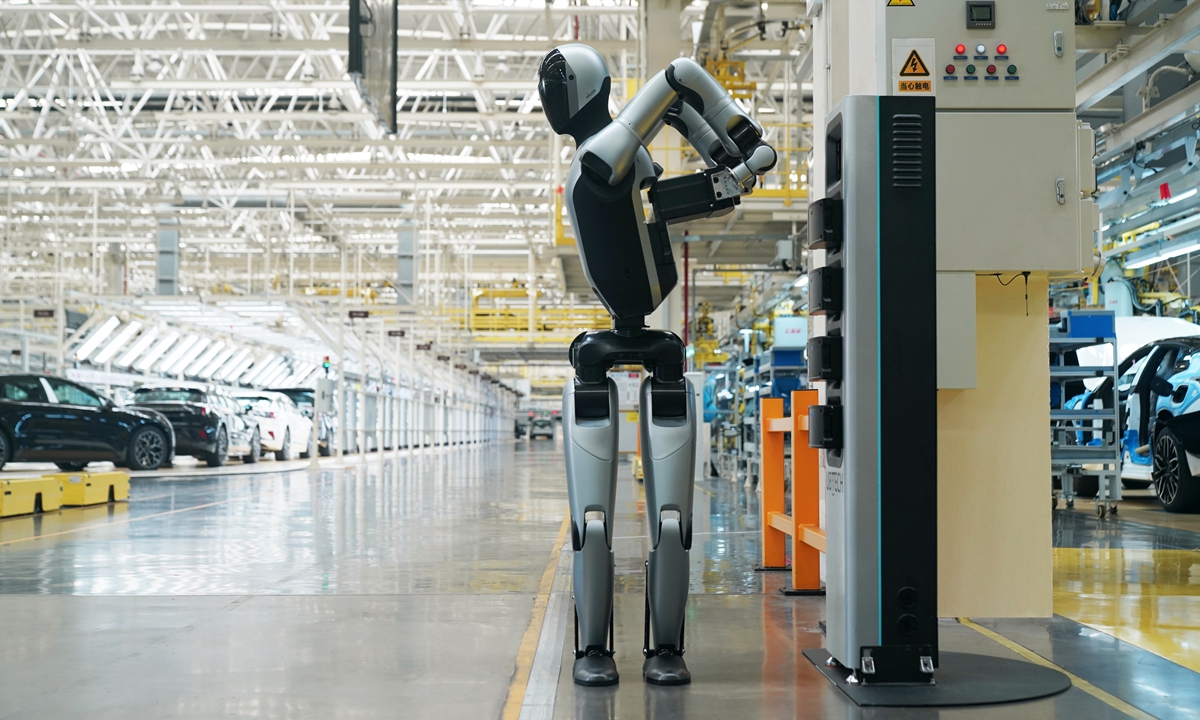
According to the South China Morning Post, Chinese company UBTech will supply humanoid robots Walker S2 for Airbus production lines. The same robots previously underwent testing at Texas Instruments facilities in the U.S., and are already being used at BYD and Foxconn.
"Chinese UBTech will supply humanoid robots Walker S2 for Airbus production."
— South China Morning Post (SCMP)
What sets the Walker S2 apart
Walker S2 is a humanoid robot with hands, a camera and artificial intelligence. Its key characteristics: a payload of up to 15 kg, object recognition, and an automatic battery-swapping system that allows it to operate without long downtimes. These capabilities make it suitable for tasks that require the flexibility of a human hand and extended robotic operation in manufacturing and warehousing.
Scale and market
As of the end of 2025 UBTech had produced about 1,000 such robots. The company plans to bring tens of thousands of units to market in 2026; last year it received orders worth roughly 1.4 billion yuan (more than $200 million). UBTech was founded in 2012 in Shenzhen and in 2023 became the first Chinese robotics startup to list on the Hong Kong stock exchange — after the news of the Airbus contract its shares rose by almost 7%.
Why this matters
First, it confirms a trend: aerospace and high-precision manufacturing are increasingly integrating humanoid automation, which can perform tasks where traditional stationary robotic arms are less effective.
Second, the introduction of such solutions into the supply chains of large Western companies raises questions of certification, cybersecurity and component control — especially in industries with heightened reliability and safety requirements, such as aircraft manufacturing.
What this means for Ukraine
This deal is not just business news. For Ukraine it is a signal on several levels: competition for industrial contracts and work flows will increase, so investments in robotics, safety standards and workforce qualifications are needed. It is also important to monitor how components and software are integrated into these solutions to minimize the risks of dependence on a single supplier in critical sectors.
Brief summary
By bringing in the Walker S2, Airbus is testing a production model in which humanoid robots complement human labor where flexibility and continuity are required. This is both an economic opportunity and a technological challenge — for European factories, for markets, and for Ukraine, which must choose between importing turnkey solutions and developing its own technologies and standards.
Source: South China Morning Post; testing data — reports of use in production at Texas Instruments, BYD and Foxconn, as well as UBTech press releases.