Amazfit Active 3 Premium in Europe: up to 13 days of battery life and advanced running analytics
Amazfit is launching the Active 3 Premium in the European market — a watch for regular runners with long battery life, enhanced navigation and running analytics. Priced at €170, it signals that competition in the fitness‑gadget segment is shifting toward a blend of practicality and affordability.

By Tetiana Suchkova-Ladik
February 26, 2026 · 2 min read
What’s important
Amazfit has officially introduced the new smartwatch Active 3 Premium in Europe. It continues the line aimed at people who train regularly and need reliable analytics and navigation during long runs or off‑trail workouts.
Technical highlights
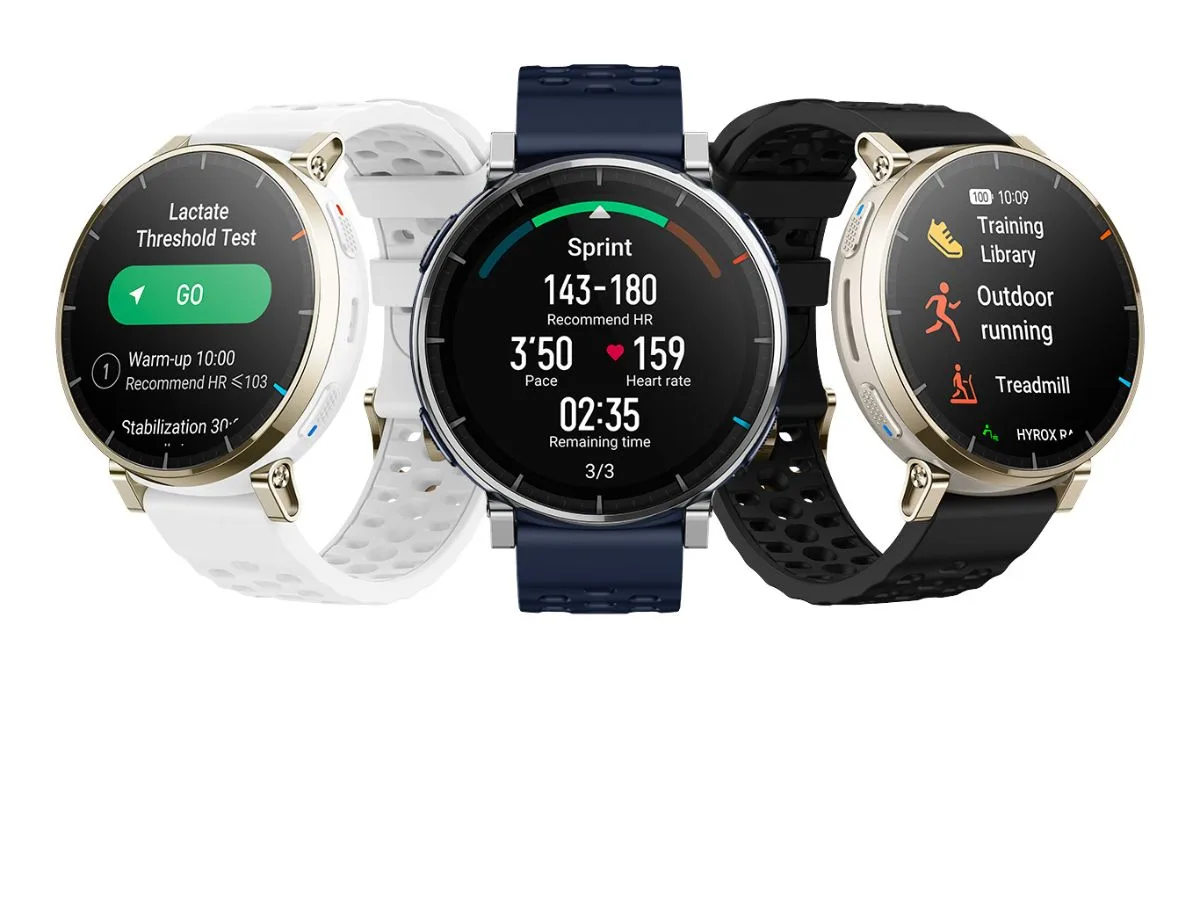
The watch features a 1.32‑inch AMOLED display with a resolution of 466 × 466 pixels and a peak brightness of up to 3000 nits. The screen is protected by sapphire glass; the case is made of steel, and there are four physical buttons for quick access to functions. The 658 mAh battery is rated by the manufacturer for up to 13 days of battery life in standard usage — a figure that makes the watch practical for long trips and multi‑day training sessions.
Analytics and navigation
Active 3 Premium collects advanced biometric data: running power analysis, ground contact time, lactate threshold estimation based on collected metrics, as well as HRV and VO2 Max. There is sleep monitoring and an energy‑resource assessment system called BioCharge. For navigation it supports six satellite systems and has built‑in GPS plus 4 GB of map storage, which is useful on routes without smartphone access. Training modes include, among others, Aerobic Endurance Foundation and Fartlek, suitable for various training plans.
“Active 3 Premium is designed for people who train every day and need reliable analytics without unnecessary settings”
— Amazfit representative, press release
Price, availability and market
The gadget is already on sale in Europe at a price of €170. Available colors: Dark Blue, Black, Gold and White. In the context of Amazfit’s product strategy, this is a notable offering in the lower‑mid price segment; at the same time the brand continues to position itself in premium niches (for example, the T‑Rex Ultra 2 with a titanium case and up to 30 days of battery life).
What this means for the user
The combination of long battery life, offline maps and advanced biometrics makes the Active 3 Premium an attractive option for runners who value independence and accurate analytics without being tied to a smartphone during workouts. At €170 it can also be an affordable alternative to more expensive solutions for those assembling gear for regular training.
Conclusion
The arrival of another balanced model on the European market means competition in the fitness‑watch segment continues to raise the bar for practicality at a moderate price. The next step for users and reviewers will be field testing: whether the watch can withstand real‑world loads and conditions — and how well the analytics hold up in field use.