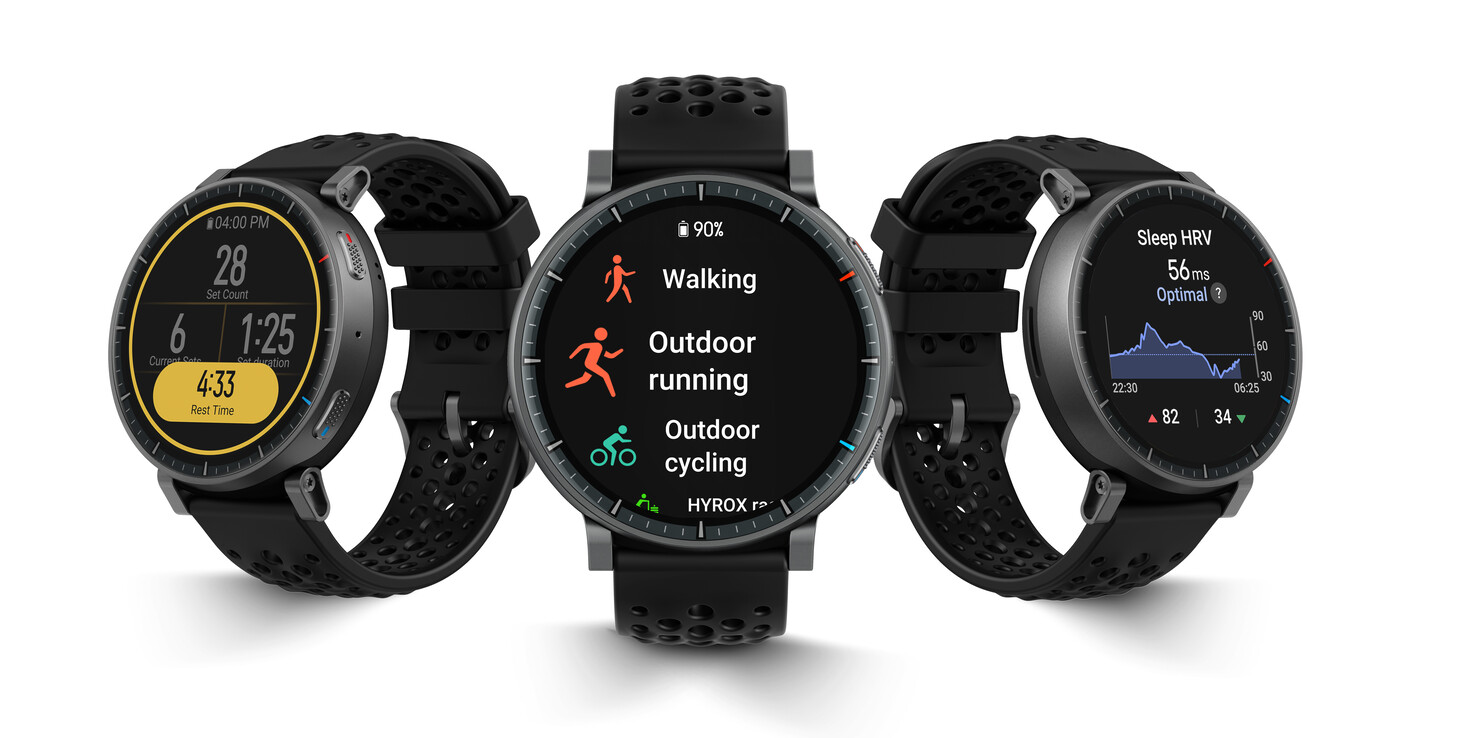
Amazfit Active Max for €169: 25-day battery life, bright display and enhanced sports features
The new Amazfit smartwatch combines long battery life, a very bright AMOLED display and navigation with offline maps — an attractive proposition for active users and those who value the balance between price and features.

By Tetiana Suchkova-Ladik
December 30, 2025 · 2 min read
Why this matters
Amazfit Active Max appeared on the European market on December 30 for €169. It's not just another fitness tracker: a 1.5-inch AMOLED display with peak brightness up to 3000 nits, long battery life and support for offline maps make the gadget a notable offer in the "price–capability" segment.
What's inside and how it works
The watch weighs 39.5 g without the strap, supports more than 160 sports modes, and features automatic workout detection and route building for running and walking. The device continuously monitors heart rate, defines heart rate zones and sends alerts when preset limits are exceeded. After workouts, the user receives detailed reports on load, recovery, sleep quality, heart rate variability and the BioCharge energy index.
Battery life and multimedia
Amazfit claims up to 25 days of operation in regular mode, up to two weeks under heavy use and up to 64 hours with GPS enabled. The device has 4 GB of storage for music and podcasts, supports Bluetooth headsets and offline playback via the Zepp app.
Navigation and ecosystem
Active Max supports GPS and working with offline maps — topographic, ski and contour maps — and allows synchronization with popular services: Strava, adidas Running, Google Fit, Komoot and Relive. In Europe, the Zepp Pay contactless payment feature is available.
"We target users who want a reliable, durable and affordable tool for an active lifestyle,"
— an Amazfit representative
The market and what it means for users
Against pricier models — for example, the T‑Rex 3 Pro in Europe at around €400 or premium solutions with satellite connectivity — Active Max positions itself as a practical choice for those who prioritize battery life and navigation without a high price tag. For the Ukrainian consumer, this means access to a functional gadget that performs well on long outdoor trips and during intensive training.
Conclusion
For €169, Amazfit offers a set of features usually expected from more expensive devices: a bright display, long battery life, offline maps and integration with popular sports services. The question is whether the model will withstand market competition in the long term — but already it looks like a smart investment for those who value practicality over brand prestige.