Amazfit T‑Rex Ultra 2: titanium elements and up to 30 days' battery life — what it means for travelers and rescuers
Amazfit has unveiled the rugged flagship T‑Rex Ultra 2 with titanium elements, a 10 ATM rating and a battery life of up to 30 days. We break down why these features matter specifically for people who work or travel outdoors, and what a starting price of $550 actually means.

By Tetiana Suchkova-Ladik
February 20, 2026 · 2 min read
What was announced
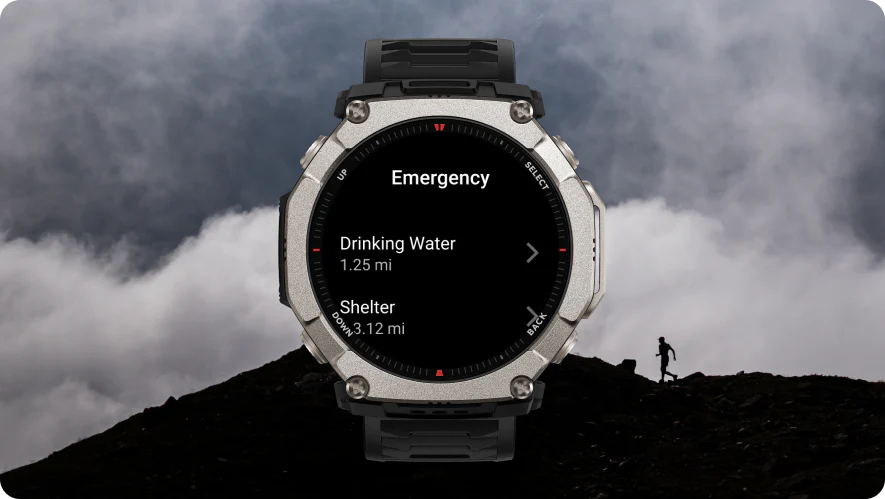
Amazfit has introduced the new T‑Rex Ultra 2 — a rugged smartwatch aimed at travelers and athletes. The device features titanium elements in the case, a reinforced construction, 10 ATM dive certification and weighs about 89 g. The watch is already on sale, with a starting price of $550.
"aimed at travelers and athletes"
— Amazfit, press release
Display and battery life: what the numbers mean
The T‑Rex Ultra 2 has a 1.5‑inch AMOLED with sapphire glass and a peak brightness of up to 3000 nits — meaning it is readable in bright sunlight and during snowy expeditions. Battery life is provided by an 870 mAh cell; the manufacturer promises up to 30 days in standard mode or up to 50 hours with active GPS. For field operations, such autonomy reduces logistical burden: fewer portable chargers and less frequent recharging.
Navigation and safety
The watch works with six satellite systems and supports full offline navigation. Users can download full‑color maps, plan routes up to 100 km, view elevation profiles and receive automatic route recalculation. There is a built‑in microphone and speaker for Bluetooth calls, as well as a two‑mode LED flashlight with an SOS function, adding practicality in extreme conditions.
Storage, connectivity and temperature range
The device has 64 GB of internal storage for maps, music and training data, supports NFC payments and is rated to operate reliably at temperatures down to -30 °C. For users in cold climates and at altitude, these are important assurances of reliable operation.
Who it’s for
The device is focused on people who spend a lot of time outdoors: travelers, trail athletes, rescuers and volunteers working in harsh weather. The combination of protection, autonomy and offline navigation makes the watch a tool that reduces dependence on a smartphone in the field.
Price and context
A starting price of $550 positions the T‑Rex Ultra 2 in the premium rugged watch segment. For the Ukrainian market, service and local update support are also important: the manufacturer has already announced new apps for the Amazfit lineup, and some models will receive updates in 2026.
Conclusion
The T‑Rex Ultra 2 is not about glossy image, but about functionality: titanium elements, a very bright display, long battery life and offline navigation. For those who value reliability in the field, it is a significant alternative on the market. The deciding questions are how willing Ukrainian users are to pay for reliability and whether local service and updates will be available.