AMD Unveils Ryzen AI 400: Copilot+ on PCs — What It Means for Security and Innovation
At MWC 2026, AMD announced the Ryzen AI 400 series with native support for Microsoft Copilot+. These aren’t just new chips — they could mark a step toward more autonomous, faster, and more secure AI processing on devices. We break down why this matters now and which risks should be taken into account.

By Tetiana Suchkova-Ladik
March 2, 2026 · 2 min read
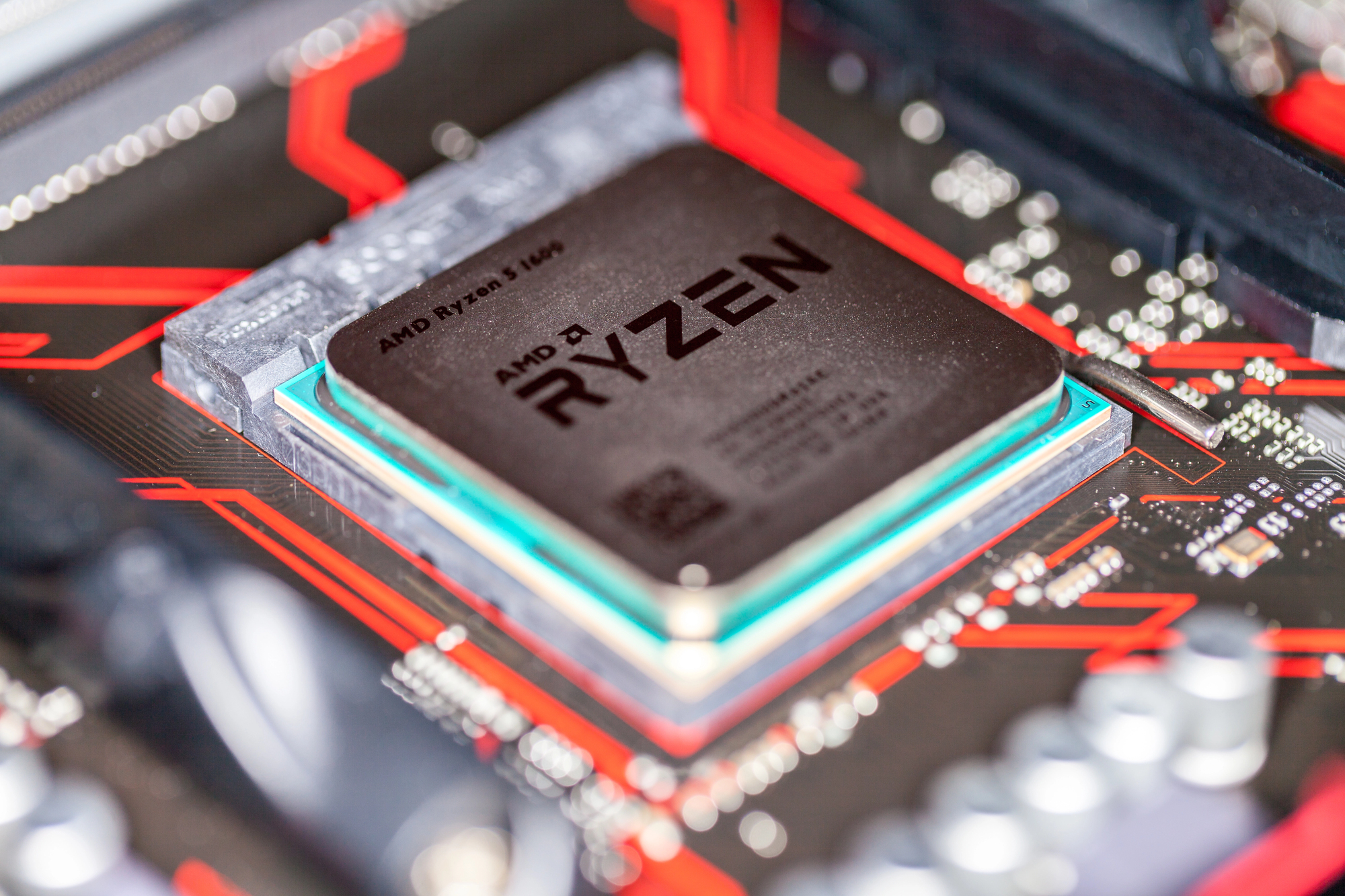
What was announced at MWC 2026
At MWC 2026 AMD unveiled the desktop Ryzen AI 400 lineup and the mobile Ryzen AI PRO 400 series. The main news — these solutions are the first for PCs with native support for Microsoft Copilot+, which previously was available mainly on devices with Snapdragon processors.
Technically, the new products feature the XDNA 2 neural processor with performance up to 50 TOPS, Zen 5 cores and integrated RDNA 3.5 graphics. The series includes G models for standard PCs and energy‑efficient GE variants with a 35 W TDP for compact systems. Flagships are the Ryzen AI 7 450G and PRO 450G (8 cores / 16 threads, up to 5.1 GHz, Radeon 860M graphics); midrange models are the Ryzen AI 5 440G and 435G (6 cores, Radeon 840M).
The mobile lineup includes processors for business laptops and mobile workstations; the top model, the Ryzen AI 9 HX PRO 470, also claims up to 50 TOPS for AI tasks. AMD states a possible multithreaded performance increase of up to 30% compared to comparable competitor chips. The first laptops with these processors from HP, Lenovo and Dell are expected in the second quarter of 2026.
"These platforms are built to move some AI processing from the cloud to the device and provide native integration with Copilot+."
— AMD, press release (MWC 2026)
Why it matters
Copilot+ natively on PCs means reduced dependence on cloud services in a number of scenarios: faster response times, lower latency, reduced budgetary costs for data transfer and better preservation of privacy. For businesses and government bodies this is not only a convenience but a matter of data and control.
The presence of a powerful neural processor on the endpoint device opens possibilities to run large language models and analytics tools directly "at the edge" — important for scenarios where Internet connectivity is unstable or sensitive (public infrastructure, critical logistics, military applications).
Who this concerns in Ukraine
For Ukraine this could become a tool to increase digital resilience: local processing of AI tasks reduces the risk of data leaks and enables faster deployment of analytics for defense, logistics, healthcare and government services. It is also an opportunity for the IT ecosystem and OEM partners to roll out localized solutions on powerful PCs and laptops.
Clarifications and risks
It is worth remembering that performance claims are the manufacturer's data. Independent benchmarks and real‑world workload tests will appear later. In addition, the article also mentions legal challenges: a lawsuit was filed in the U.S. against Intel and AMD over suspicions that chips were supplied that could have been used in weapons and drones of certain countries — a reminder that supply chains and regulatory oversight remain critically important.
Conclusion
Ryzen AI 400 is a step toward more autonomous and faster PCs with on‑device AI capabilities. For Ukraine it is important not only to procure the hardware but also to develop an implementation policy: security standards, local services and testing under real workloads. Whether the declarations by AMD and Microsoft will turn into accessible tools for Ukrainian enterprises and state bodies is a question for the coming quarters.



