Apple designs smart glasses without display — and bets on material, not technology
Four frame shapes, acetate instead of plastic, proprietary design without fashion industry partners — Apple enters the market where Meta has already sold 7 million pairs.

By Tetiana Suchkova-Ladik
April 14, 2026 · 2 min read
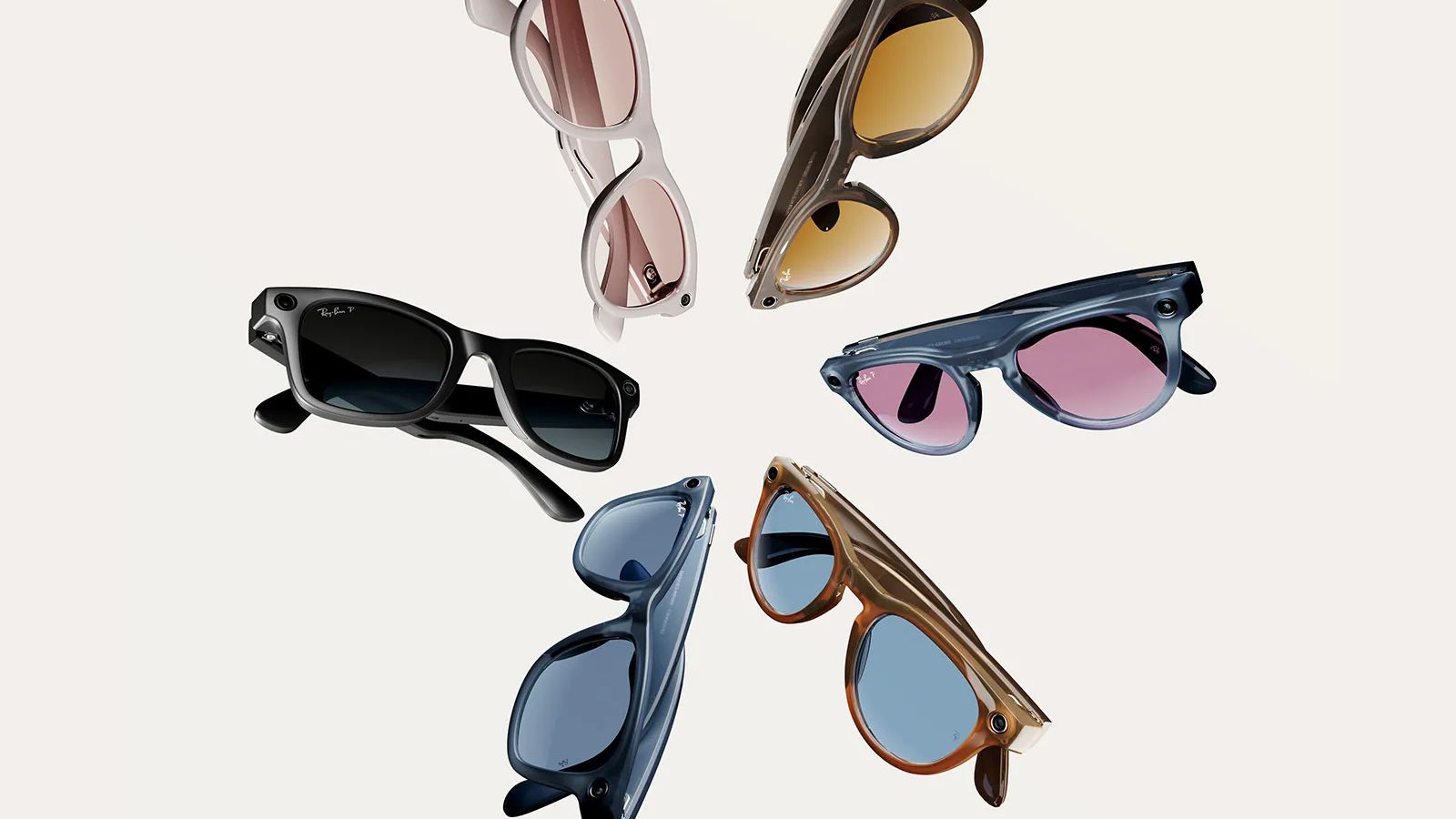
When Apple presented Vision Pro, the bet was on complete immersion. Now the company is testing the opposite: glasses without a display, without an AR layer, without projection — only cameras, microphones, speakers, and an updated Siri. Conceptually, this is almost the same as Ray-Ban Meta. But Apple is making a fundamentally different choice in one place: the material.
Four frames, one material
According to Bloomberg reviewer Mark Gurman, Apple is testing at least four frame designs. A large rectangle in the style of Ray-Ban Wayfarer, a thinner rectangle — similar to CEO Tim Cook's glasses, a larger oval and a smaller oval. All are made of acetate, not the common plastic used by most competitors. Acetate is a material traditionally associated with premium frames: heavier, denser, with a natural shine. Among the colors being tested are black, ocean blue, and light brown.
The cameras are arranged in an oval pattern and vertically oriented — which visually distinguishes the device among competitors with horizontal lenses.
"Design is what Apple is counting on to win the competition"
Bloomberg, Power On newsletter, April 2026
The market already exists — and it's large
Apple is entering a market that is far from empty. According to The Next Web citing Gurman, Meta sold over 7 million pairs of Ray-Ban and Oakley smart glasses in 2025 — three times more than combined for 2023–2024. According to Counterpoint Research, Meta's share of the global smart glasses market in the first half of 2025 exceeded 73%. Google is also entering this space with Gemini glasses in partnership with Warby Parker, as is Samsung.
A fundamental difference in strategy: Meta builds glasses in partnership with EssilorLuxottica, a giant in the optical industry. Apple, according to PhoneArena, designs frames on its own, without fashion partners. This is a risk — and simultaneously a way to maintain control over aesthetics and supply chain.
Functionality: not Vision Pro, but more than AirPods
- Photos and video through cameras
- Calls and music through built-in speakers
- Notifications from iPhone
- Hands-free interaction through Siri with iOS 27
According to AppleInsider, smart glasses are only part of Apple's three-element strategy in the AI-wearables space. Along with them, new AirPods with infrared cameras and an AI pendant with microphones and front-facing cameras are being developed. The idea is for each device to "see" the surrounding world and transmit that picture to Apple Intelligence.
The project's internal name is N401 (previously N50). According to Technobezz, an announcement is expected at the end of 2026, with sales in 2027.
The question is not whether people will buy Apple glasses. The question is whether premium acetate and proprietary design can justify the price if functionally the device lags behind Meta Ray-Ban, which already has two years of accelerated development and 73% of the market: if Apple enters the market with a price above $400 without exclusive AI features, the first version may repeat the fate of the first Apple Watch — a loud launch and a rethink after the first generation.