Apple Watched Foldable Phones for Five Years — And Finally Made a "Passport"
iPhone Ultra Mockup Confirms Unusual Apple Choice: Horizontal Layout Instead of Vertical Arrangement, Wider Than Any Competing Flagship. This Is Either a Reimagining of the Category or a Risky Bet Against a Market That Samsung and Google Have Already Perfected Over Years.

By Oleg Bazylewicz
May 6, 2026 · 2 min read
While Samsung is releasing the seventh Galaxy Z Fold and Google is already on its third Pixel Fold, Apple is only now showing the first prototypes of its foldable iPhone. And the main intrigue lies not in the fact of the delay itself — but in which format the company has chosen.
A "Passport" Instead of a Book
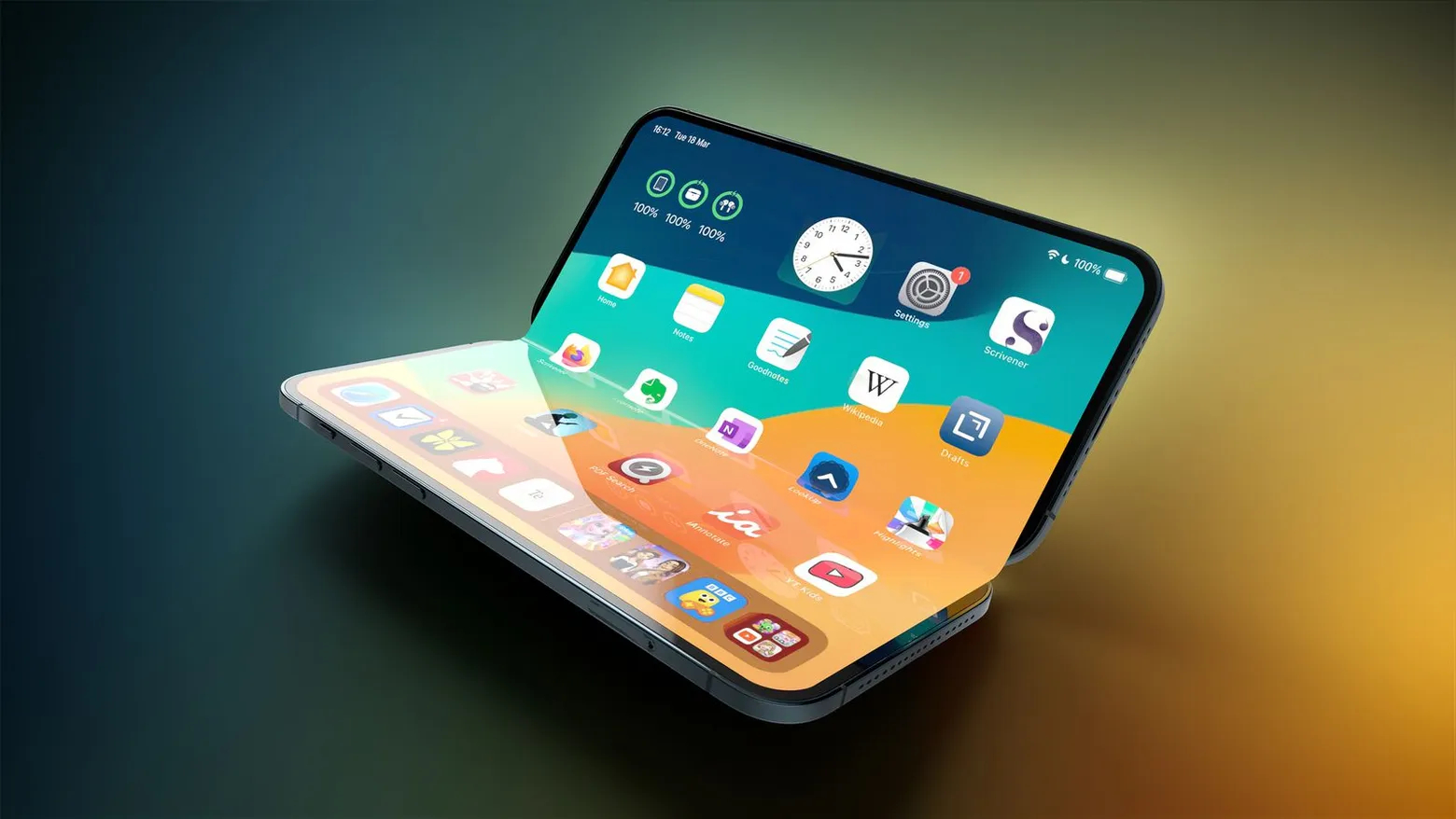
The popular YouTube channel Unbox Therapy published a 10-minute video featuring a prototype of the iPhone Ultra — and the author described his first impression of the device concisely: "it looks like an iPad nano". The device indeed resembles a passport when folded: it is significantly wider and "stockier" than a conventional smartphone. When unfolded, an internal display of approximately 7.7–7.8 inches opens up in a 4:3 aspect ratio — a format more associated with an iPad mini than with a phone.
This is a fundamentally different approach compared to competitors. Samsung and Google chose a vertical "book" format — the phone folds lengthwise. Apple, judging by the prototypes, is betting on horizontal, where the priority is the unfolded state as the primary mode of operation.
The large camera module protrudes so much that the device wobbles when placed on a table in its folded state.
Macworld on the Unbox Therapy prototype demonstration
What Insiders Know — and Where the Gaps Remain
According to Macworld, the iPhone Ultra is expected in September 2026 alongside the iPhone 18 Pro and Pro Max. The name is not yet final: both "iPhone Ultra" and "iPhone Fold" are in circulation. As for the price, according to analysts' forecasts, the base configuration will cost around $2,000 — exactly as much as Samsung charges for the Galaxy Z Fold 7 in the US.
The hinge construction in the prototype is not final, and this is a critical detail. As noted by 91mobiles, the durability of the hinge and the visibility of the crease have been the main challenges for Samsung and Google over several generations. Apple is entering a segment where competitors have already spent years solving these problems.
At the same time, there is one potential advantage: according to Tech Advisor, the display for the iPhone Ultra will be manufactured by Samsung Display — the same company that demonstrated a panel without a visible crease at CES 2026. If Apple obtains this technology, it could avoid one of the biggest compromises of the first generation.
Why Delays Are Not Always a Loss
- Apple Watch arrived years after the first smartwatches and captured the market.
- AirPods were not the first TWS earbuds — but they set the standard.
- HomePod came late and never became a leader — this is a counterexample worth remembering.
Delays provide time to learn from others' mistakes. But it also means that the audience will compare the iPhone Ultra not to the original Galaxy Fold from 2019, but to the polished seventh generation.
If Samsung Display truly supplies Apple with a creaseless panel — the first generation of iPhone Ultra could prove to be technically more mature than any other "first" Apple device in a new category. But if the hinge fails or the $2,000 price turns out to be a ceiling for the average buyer — a five-year delay will not justify any marketing presentation.