Apple scales back Vision Pro: what it means for innovation and for Ukrainian developers
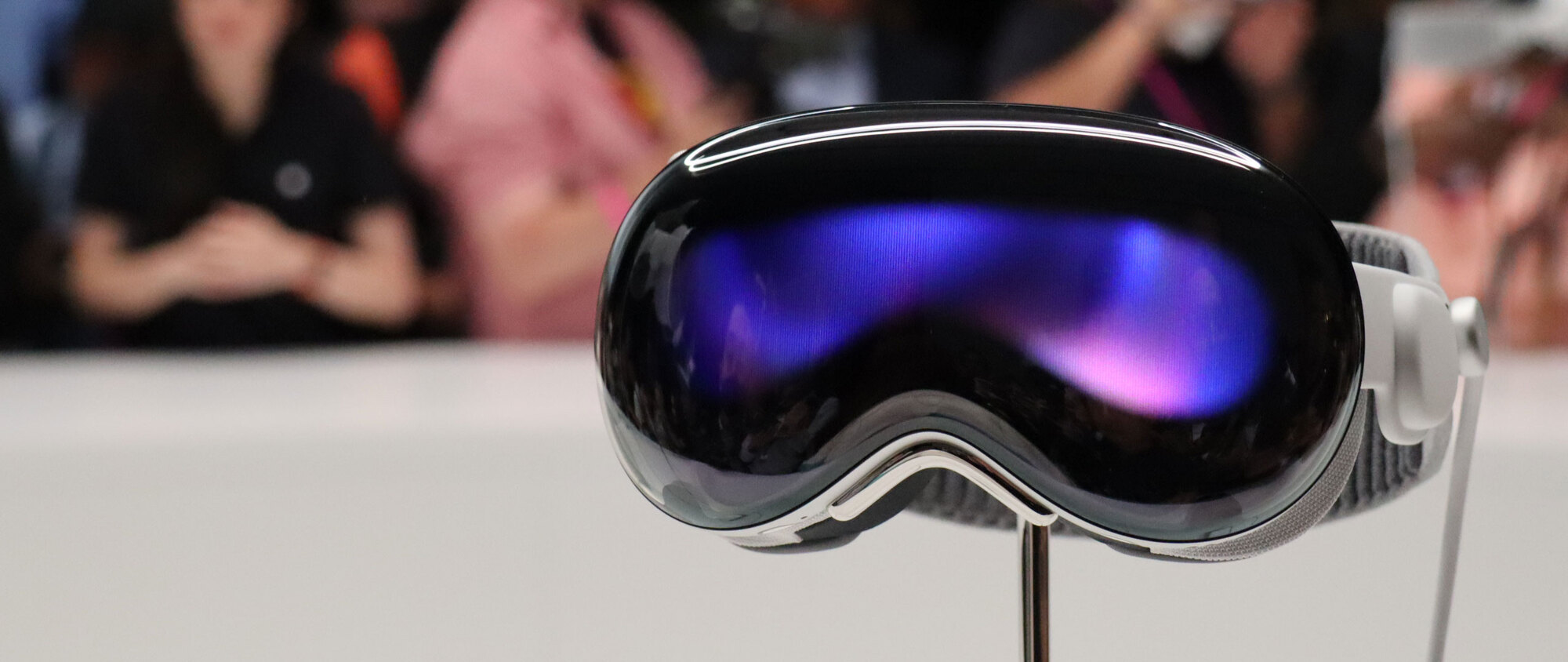
Apple plans to cut production and marketing of the Vision Pro amid sluggish sales. We examine why this matters for the market and investors, and how a shift in priorities across the global tech ecosystem could become an opportunity for the Ukrainian IT sector.

By Tetiana Suchkova-Ladik
January 2, 2026 · 2 min read
Brief and important
Apple is reportedly cutting production of its mixed‑reality headset Vision Pro and has almost halted marketing support — The Guardian reports, citing analysts' reports.
“Apple has been forced to cut production of the Vision Pro mixed‑reality headset, as well as its marketing spend on the device, due to weak sales.”
— The Guardian
What the data show
According to information cited by the Financial Times based on Sensor Tower data, Apple reduced marketing spend on the Vision Pro by more than 95% in 2025. Apple does not publish official sales figures, but IDC estimates roughly 45,000 units were sold in the final quarter of 2025 — far fewer than expected for a mass‑market product.
“Apple reduced marketing spending on the headset by more than 95% in 2025.”
— Financial Times (Sensor Tower data)
IDC also reports that Chinese contract manufacturer Luxshare stopped producing the headset in early 2025, and Apple did not expand direct sales beyond 13 countries, limiting the device's availability.
Why this happened
Key factors are the high price (starting at $3,499), weight and comfort during prolonged use, and a limited number of native apps that justify the investment. The AR/VR market remains niche: users and developers are waiting either for a large price drop or for a few “killer” apps that change use scenarios.
Implications for the industry and for Ukraine
This is not just the failure of a single model — it is a signal to investors and developers: major players are regrouping and refocusing on offerings that deliver quicker commercial returns, notably AI‑enabled solutions. For the Ukrainian IT market this has two sides:
- Risk: reduced interest from global investors in expensive hardware experiments could shrink the number of AR/VR projects financed by international partners.
- Opportunity: the shift toward AI and software services opens demand for software teams, system integration and datasets — areas where Ukrainian companies have traditionally been strong.
What’s next
Apple is expected to possibly introduce a cheaper Vision Pro model in 2026 and to more actively integrate AI features into its devices. If these steps occur, they could revive interest in the platform, but in a different form — with less emphasis on expensive hardware and more on an ecosystem of services and apps.
For Ukraine this is a chance to rethink priorities: invest in software products, content‑generation tools and AI solutions that can be scaled and exported quickly.
Conclusion
The Vision Pro situation is not just a story about one device. It marks a shift in the strategies of tech giants: hardware experiments are costly, the market is waiting for practical use cases, and investments flow toward areas with faster visible commercial results. For the Ukrainian IT community this is a signal to adapt offerings to demand for software and AI, rather than betting solely on niche hardware solutions.
Sources: The Guardian, Financial Times (Sensor Tower data), IDC.