Apple Fixes Liquid Glass — But the Real Reason Isn't About Aesthetics
macOS 27 fixes interface that Apple itself broke a year ago. Complaints about transparency lead to preparations for touchscreen MacBooks and transition to Apple Silicon only.

By Tetiana Suchkova-Ladik
May 11, 2026 · 3 min read
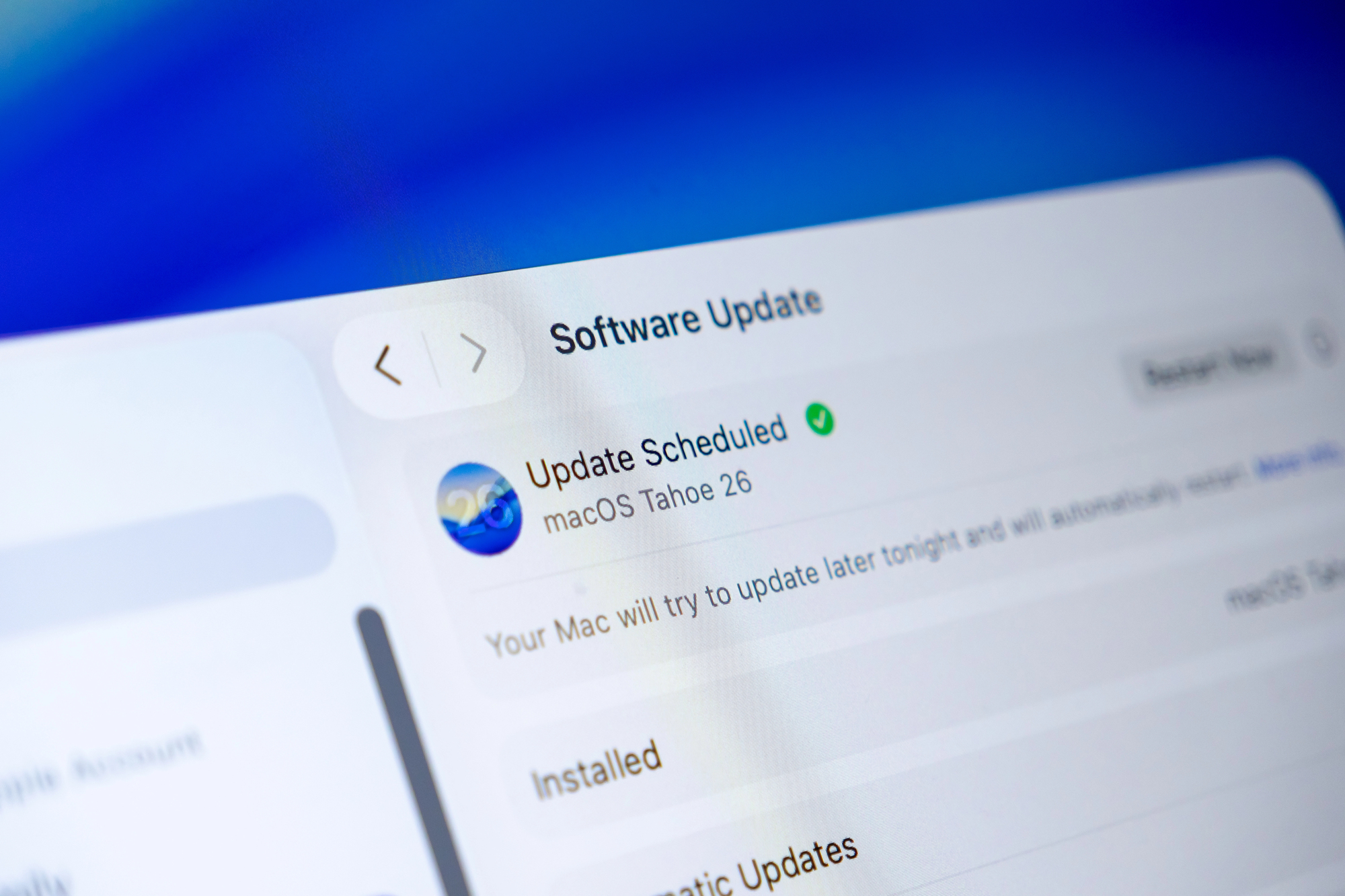
When a company spends years building a reputation for flawless design, and then is forced to publicly fix its own interface a year after release — that's no longer an "iteration." That's an admission of a mistake. This is exactly what's happening with Liquid Glass in macOS 27.
What specifically is broken and what's being patched
According to Mark Gurman from Bloomberg, Apple internally describes the changes as "a light redesign" — fixing shadows, transparency, and contrast of elements that proved problematic for readability in macOS Tahoe. The criticism came not just from ordinary users: designers and developers complained about accessibility issues — the interface is difficult to perceive in bright conditions or for people with vision impairments.
As MacRumors reports, there's also a technical reason why Liquid Glass looks worse than intended: most Macs still use LCD displays, which don't reproduce glass and transparency effects as effectively as OLED screens. In other words, Apple developed an interface for hardware it hasn't sold yet.
Safari and AI: convenience or illusion of control
In parallel, a new Safari feature is being tested — automatic tab grouping using AI. The system will independently sort open tabs into categories without user intervention. The feature is based on existing Tab Groups, but delegates organization to Apple Intelligence.
"I don't want AI rearranging my tabs"
— typical reaction in MacRumors threads after the feature announcement
This is a fundamental contradiction in Apple's approach: the company positions automation as convenience, but part of its audience perceives it as a loss of control over their own workspace. The feature will also be available in iOS 27 and iPadOS 27.
Snow Leopard 2026 — and the end of Intel
Alongside the design, macOS 27 will have a "Snow Leopard" focus: according to MacRumors, Apple is concentrating on stability, performance, and bug fixes — without major architectural innovations. The analogy with Mac OS X Snow Leopard from 2009 is apt here: after the ambitious Leopard, the company took a year to "clean the pipes."
But there's a significant difference from 2009: macOS 27 will be the first version that no longer supports Intel Macs. After Apple announced that macOS Tahoe was the last for Intel, the next release will work exclusively on Apple Silicon (M1 and newer). For corporate clients where video production teams still use Intel applications without ARM equivalents — this is not an abstract warning, but a real deadline.
The real context: preparing for touchscreen Mac
The least discussed in the leaks — the most important. As Gurman reports, Apple is simultaneously testing in macOS 27 interface optimizations for touchscreen displays — in connection with an expected MacBook Pro or MacBook Ultra with a touchscreen, planned for early 2027. These changes will likely be hidden in public beta versions and appear only with the new hardware.
Then the Liquid Glass fix takes on a different meaning: Apple isn't just responding to complaints — it's adapting the interface for OLED screens and touch input that don't yet exist for sale. The current "patches" are platform preparation, not an admission of defeat.
If a MacBook with a touchscreen launches by March 2027 and gets an OLED panel, it will become clear whether Liquid Glass was a premature decision for future hardware — or just a rushed redesign that needed to be salvaged retroactively.



