Bullet — Ukrainian interceptor reaching 450 km/h: the modular drone changing the rules of air defense
At Enforce Tac 2026, Degree-Trans unveiled Bullet — a fast, modular tactical drone integrated with Archon Defense. It is a technical and political signal to partners and the frontline: interception and strikes in a single platform.

By Tetiana Suchkova-Ladik
March 6, 2026 · 2 min read
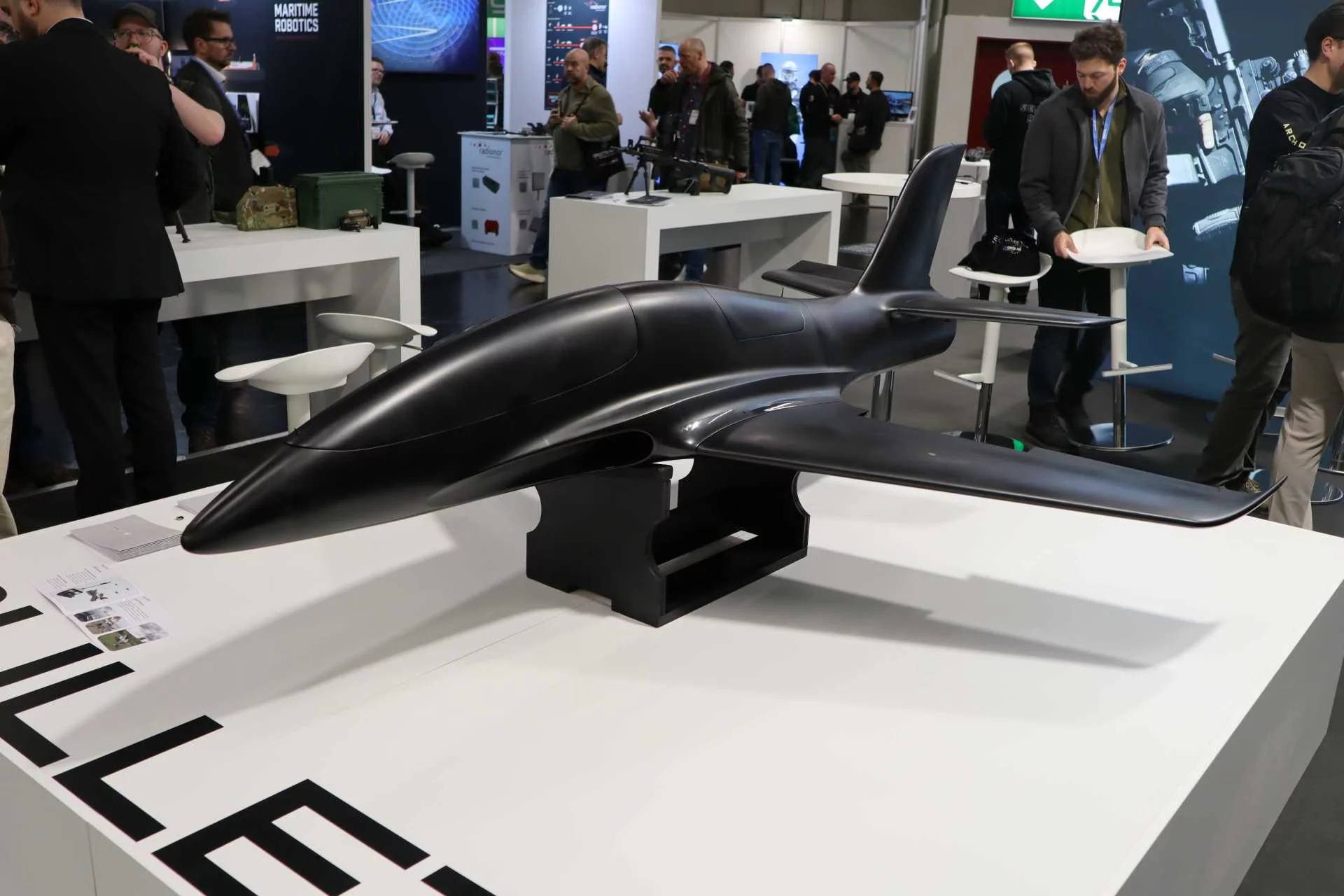
What was shown at Enforce Tac 2026
At the Enforce Tac 2026 exhibition in Germany the Ukrainian company Degree-Trans LLC, together with the Turkish Archon Defense, presented the tactical drone Bullet. According to Army Recognition, Archon demonstrated its own payload systems integrated into the platform.
Platform capabilities
Bullet is positioned as a universal interceptor and strike drone: designed to intercept reconnaissance UAVs and loitering munitions, conduct reconnaissance, and engage ground targets — radar stations, air‑defense systems, rocket launchers, transport, and fuel‑infrastructure facilities. Key technical parameters: maximum up to 450 km/h, operational range up to 200 km, payload up to 9 kg, ceiling up to 5500 m. The platform architecture is modular, allowing rapid reconfiguration of equipment for specific missions.
"Bullet was created for interception and strike missions in complex combat conditions, combining a modular architecture with experience from real use in Ukraine."
— Army Recognition
Why this matters for Ukraine and partners
First, speed and modularity make it possible to respond to new threats — especially loitering munitions and fast reconnaissance systems. Second, in October 2025 AIRO Group Holdings and Degree-Trans signed a letter of intent on joint production of such interceptors in the US and Ukraine for deliveries to NATO, partners, and the Defense Forces of Ukraine. This is no longer just a technical demonstration, but an element of geoeconomic communication and a marker of trust.
Industry context
Compared with other Ukrainian developments — for example the interceptor Sokyra (up to 240 km/h) — Bullet offers higher speed and greater operational depth. At the same time, the number of successful startups on the market is growing: the example of Magura Uforce, which received a valuation of more than $1 billion, demonstrates an expanding ecosystem and increasing investment attractiveness.
Implications and forecast
The technology itself is an important step, but the next stages should be certification, scaling up production, and signing contracts. If these links come together, Bullet could become an effective tool for adaptive air defense and another export product of the Ukrainian defense industry. Now the ball is in the partners' court: declarations must turn into signed contracts and real production.