Casio G‑Shock Fine Metallic with red display launches in the EU — prices, features and why it matters
After debuting in Japan, Casio is rolling out its Fine Metallic line to European markets. We look at what these models are, how much they will cost, and why they’ll attract attention beyond collectors.

By Tetiana Suchkova-Ladik
February 17, 2026 · 2 min read
What happened
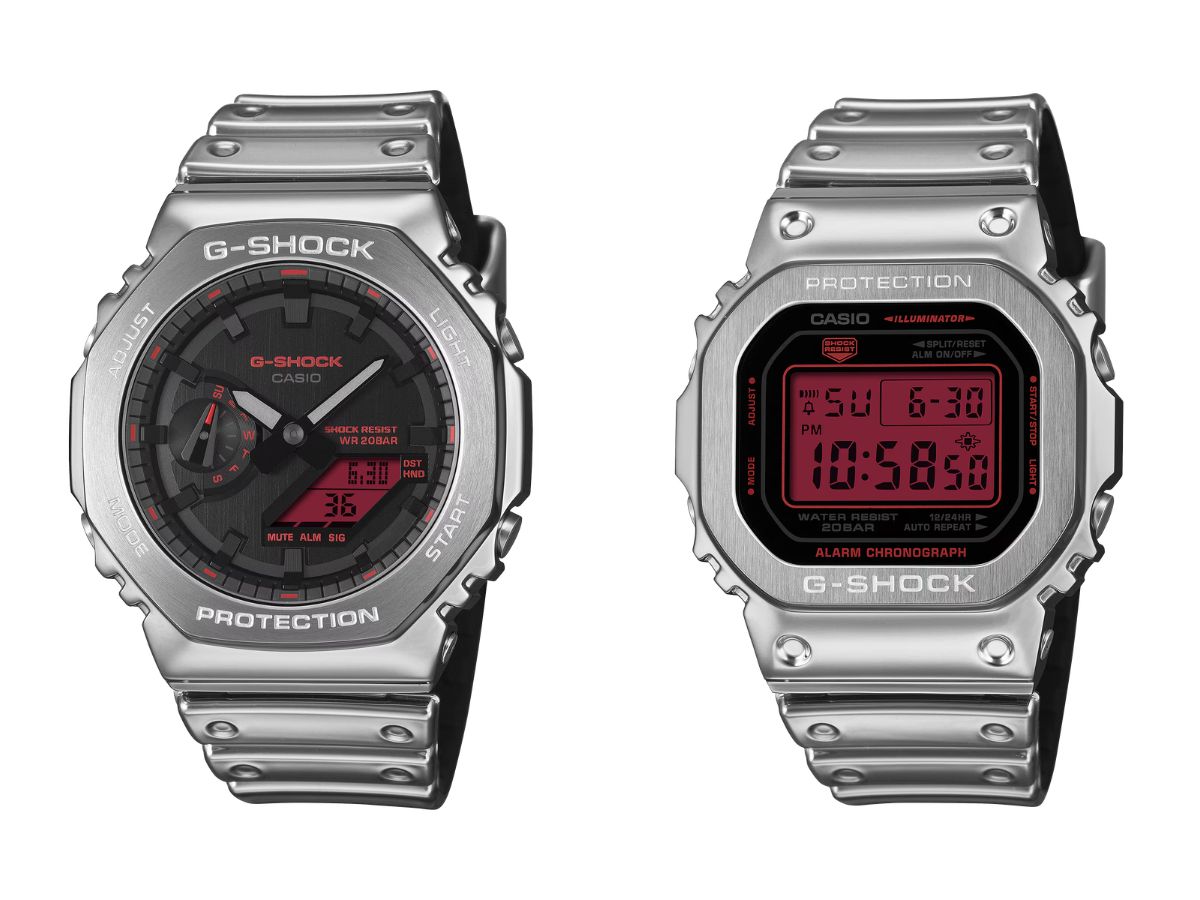
Casio has planned a launch in Europe of a new G‑Shock Fine Metallic line featuring striking red displays. After the launch in Japan in early February 2026, the corresponding product pages have already appeared on the brand’s official sites in several EU countries marked "coming soon".
"The watches have already appeared on the brand's official websites in several EU countries marked 'coming soon'."
— Casio, product page
Models and prices
In the European Union official prices are listed for two key versions: the hybrid GM-2100YRA-8A at €269, and the digital GM-5600YRA-8 at €249. Both feature steel bezels and contrasting red displays — the visual focal point of the new series.
Technical specifications
GM-2100YRA-8A has an octagonal metal bezel, a textured black dial and a digital window with a red background; functions include world time, a stopwatch and water resistance up to 200 meters. GM-5600YRA-8 is styled similarly: steel bezel, polymer case and strap, a timer, alarm, stopwatch and the same 200‑meter water resistance.
Why it matters
Expansion into EU markets is not just a showcase of the new design. First, it’s about availability: official sales mean warranty coverage, after‑sales service and official regional support. Second, the pricing positions the line as premium yet practical — an attractive option for those who want a rugged watch with a bold design.
This is also important for Ukrainian buyers: appearance on European platforms increases the likelihood of supplies to local retailers and faster delivery for the diaspora and the domestic market.
Context and confirmation
The product pages allow registration to receive a notification when sales start — a standard practice that indicates preparation for an official release. Last year’s Casio experiments (for example, the AE‑1700H with a fishing function or the recreation of the model from the film "Back to the Future") show that the brand mixes niche ideas with mass releases — and it often works: such models attract attention from collectors and everyday users alike.
When to expect it and what to do
No exact start date for sales in EU countries has been announced yet. If you plan to buy, sign up for notifications on the official product page or follow updates from local retailers. For those who need a reliable everyday gadget in tough conditions, G‑Shock traditionally remains one of the smartest choices.
Quick summary
Casio is introducing a noticeable, technically prepared G‑Shock Fine Metallic line with a red display to the European market. This is more than a stylish release — it’s a step toward better availability and service for European and Ukrainian consumers. Now it depends on the sales start date: the official pages are ready, the ball is in the retailers’ court.



