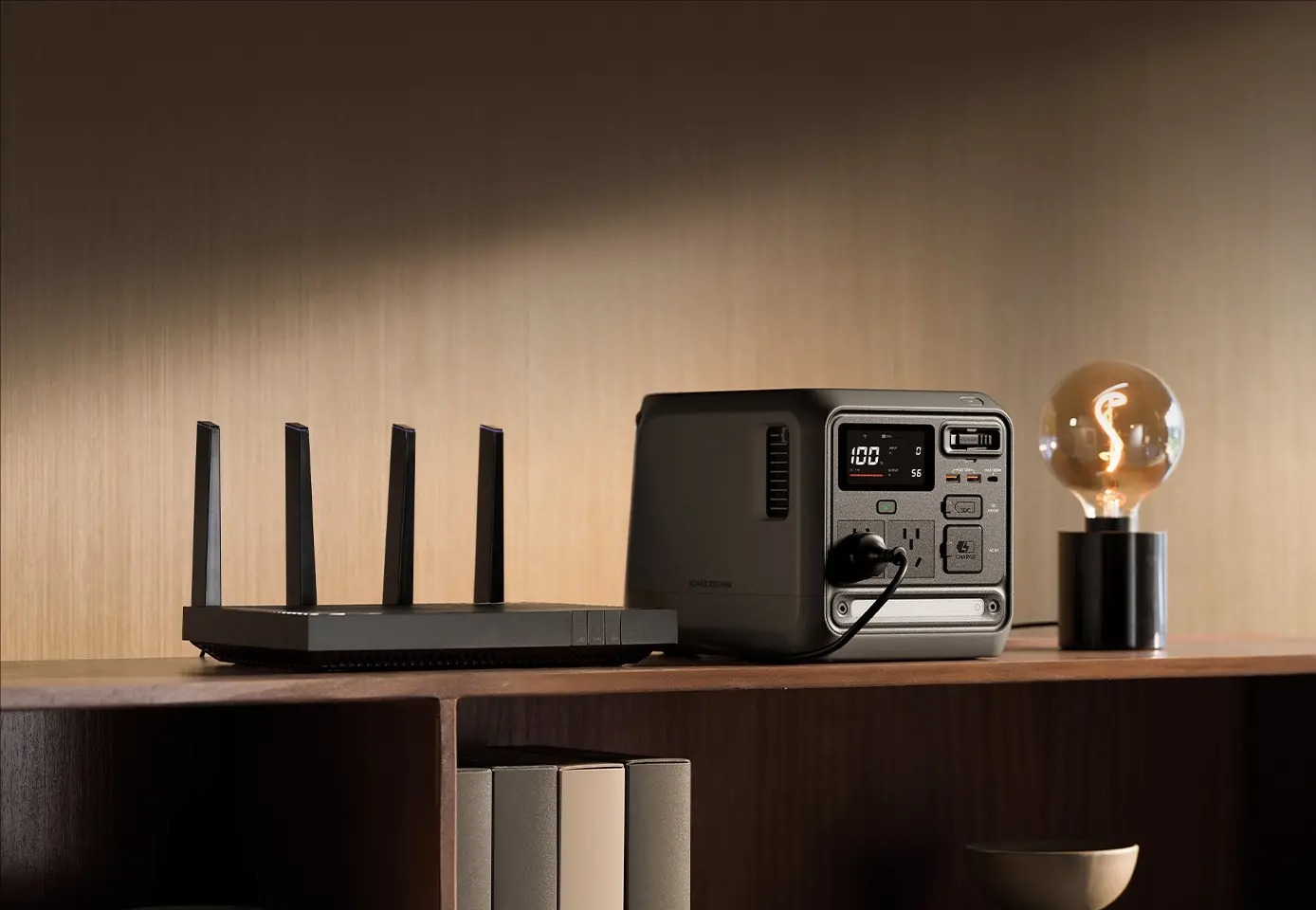
DJI Power 1000 Mini — compact power station for home and outdoor use: 1000 W for $359
DJI unveiled in China a downsized version of the Power 1000 V2 focused on mobility and fast recharging — the device could serve as a useful backup during power outages and for field operations; a global release is expected later.

By Tetiana Suchkova-Ladik
January 22, 2026 · 2 min read
Why this matters
At a time when backup power is a matter of safety for many Ukrainian households and volunteer initiatives, compact and fast‑charging power stations are becoming not just a gadget but a practical tool. DJI has brought the Power 1000 Mini to market as a lighter and faster alternative to the Power 1000 V2 — and these technical solutions are important not only for travelers but also for those preparing for unexpected outages.
Briefly from DJI's press release
The Power 1000 Mini debuted in China; a global launch is expected later. The battery, of type LiFePO₄, is rated for 4,000 cycles of charging while retaining 80% capacity. Maximum output — 1000 W, continuous load — 800 W. In China the recommended price is 2499 yuan (≈ $359).
Technical details that matter in practice
Interfaces: a built‑in retractable USB‑C cable supporting 100 W bidirectional power, another 100 W USB‑C port, two USB‑A ports at 12 W each, two AC outlets and an SDC port. The manufacturer notes that the number of AC sockets has been reduced compared to the previous model.
Charging speed is one of the key advantages: a full charge takes 75 minutes, up to 80% — in less than an hour. Power sources: mains, USB‑C or solar panels. The chassis includes an LED light with an SOS mode.
Dimensions of the Power 1000 Mini — 314 × 212 × 216 mm, weight — 11.5 kg. For comparison, the Power 1000 V2 is 448 × 225 × 230 mm, weight — 14.2 kg.
"The Power 1000 Mini was created with mobility and fast recharging in mind — it is a solution for people who need reliable backup in a compact format."
— DJI, press release
Comparison and competition
The market is seeing a simultaneous increase in compact power units: for example, Xiaomi introduced a universal charging station at 140 W with eight ports for $42. But comparisons should be made along two axes: capacity/cycle count and practicality in real‑world scenarios. Here the Power 1000 Mini appears primarily as a solution for those who need a balance between large capacity and portability.
What this means for Ukraine
For Ukrainian household consumers, volunteer centers and mobile teams, it's not only the wattage that matters but charging time, weight and portability. The Power 1000 Mini offers a combination of fast charging, relatively low weight and battery longevity, making it attractive as a backup source for communications equipment, laptop charging and low‑power medical devices.
Summary
DJI has bet on mobility and rapid energy recovery: 1000 W maximum, 4,000 cycles for the battery and fast charging — these are arguments in favor of the Mini as a tactical and household backup. But a key question is when and at what price the device will become available on global markets, including in Ukraine. Whether local markets and suppliers can turn DJI's announcement into a real tool for improving energy resilience — time will tell.