Droid NW 40: Ukrainian robot with a 40mm grenade launcher in Brussels — what this means for the frontline
DevDroid showcased the ground robotic system Droid NW 40 at BEDEX. This is not just an engineering demonstration — such systems reduce the risk to soldiers and could change approaches to reconnaissance and fire support.

By Tetiana Suchkova-Ladik
March 17, 2026 · 2 min read
In Brussels they showed a platform that pulls people out of the most dangerous zone
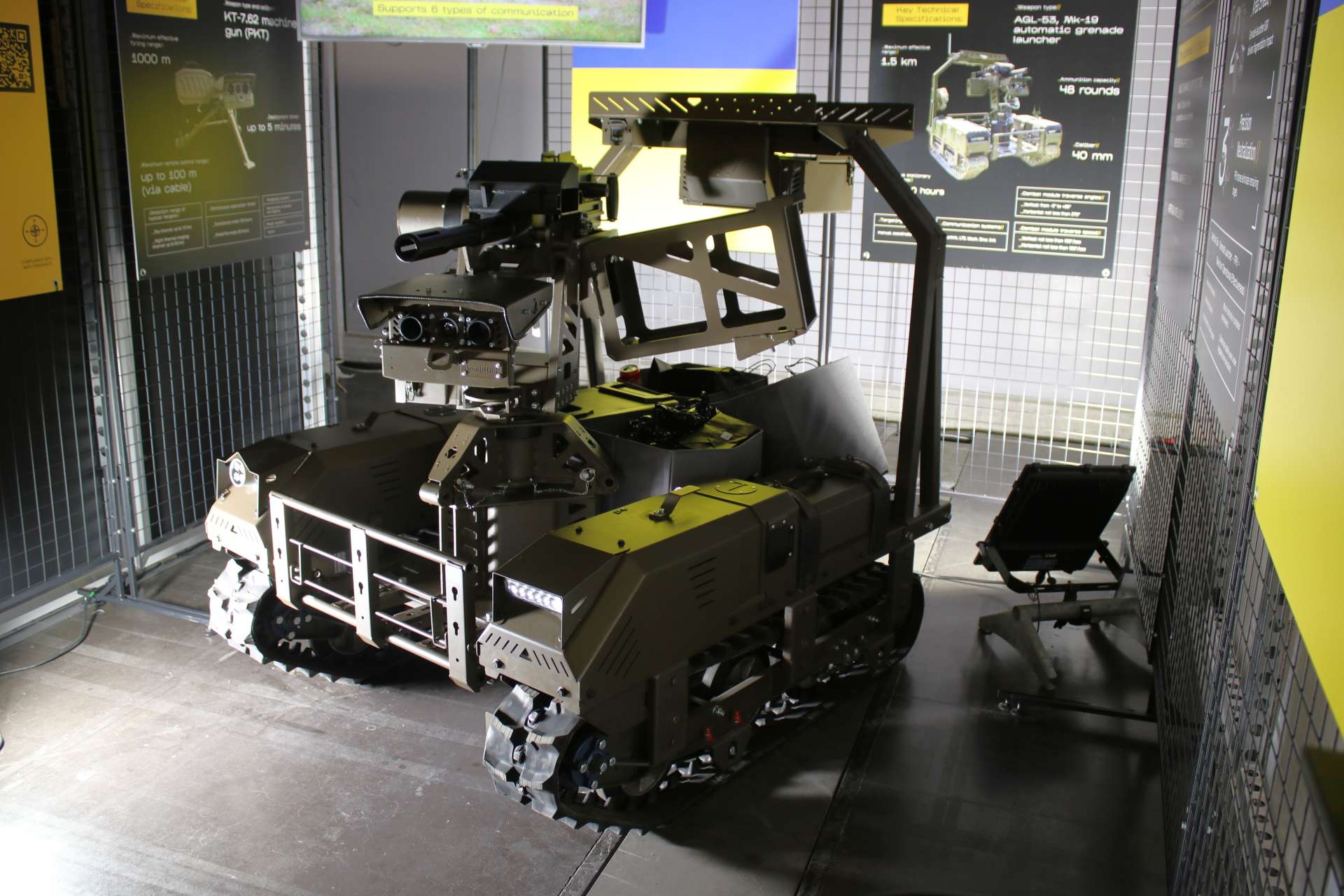
According to LIGA.net, Ukrainian company DevDroid presented the ground robotic complex Droid NW 40 with an automatic grenade launcher at the international BEDEX exhibition. The demonstration is important not only as a technical triumph — it offers a practical response to a key frontline problem: how to reduce risks to personnel while maintaining fire effectiveness.
Technical characteristics worth remembering
Armament: automatic grenade launcher of 40 mm caliber — Mk‑19 or the Ukrainian AGL‑53; ammunition load of 48 grenades, fire in single shots or bursts. Range: maximum up to 2 km, effective around 1.5 km. The aiming system can operate manually or by preset coordinates.
Mobility and endurance: range up to 50 km on roads and up to 40 km off‑road; up to 12 hours on the move or up to 120 hours stationary. Communications: supports Starlink, LTE, Mesh and Sine.link; operator interface and integration with the wheeled chassis have been updated.
"The platform is designed for reconnaissance and fire support without involving personnel in the zone of direct contact."
— DevDroid, press service (reported by LIGA.net)
Demonstration in action and combat examples
The DevDroid stand was visited by Belgian Minister of Defence Theo Francken, who personally tested the system. During the demonstration control was carried out remotely: the operator was in Belgium, the complex itself in Ukraine; the link was via encrypted internet channels. This underscores the practical suitability of the system under remote control conditions.
According to the company, the DevDroid robot was recently used effectively in combat: one robotic ground complex (RGC) destroyed two Russian servicemen from a distance of 300 meters, and another model (Droid TW‑7.62) took three opponents prisoner. Such precedents add trust to the platforms and demonstrate operational readiness, not just exhibition specs.
Why this matters for Ukraine and its partners
A few points that provide context:
• Personnel safety: remote RGCs reduce the need to send people into open areas for reconnaissance and suppression of firing points. This is a pragmatic step toward lowering casualties.
• Tactical flexibility: the combination of reconnaissance and a fire module allows rapid response to detected threats without additional unit deployment.
• Communication resilience: support for Starlink along with other channels reduces vulnerability of command chains, but at the same time raises questions about cybersecurity and link robustness during shelling or jamming.
• A signal to partners: DevDroid's successes show that the Ukrainian defense industry can quickly turn field experience into relatively affordable products. For allies this is a marker for potential investment, cooperation on serial production and integration into the AFU's tactics.
Conclusion — what’s next
Technically, the Droid NW 40 is ready to meet concrete reconnaissance and fire‑support tasks. But from demonstration to mass deployment there are still several steps: certification, unit training, protection of control channels and maintenance logistics. The question is not only about the availability of the technology, but how quickly partners and Ukrainian command can scale its use to benefit defense capability.
Now the move is to practical solutions: project support, serial deliveries and training will determine whether these demonstrations turn into a systemic advantage on the front.