Droid TW‑7.62 by DevDroid repelled an assault — what this means for the security of our units
One ground robot changed the outcome of a battle: how the Droid TW‑7.62 reduces risks for soldiers and is changing tactics on the frontline. We break it down with facts and expert commentary.

By Tetiana Suchkova-Ladik
March 10, 2026 · 2 min read
Briefly — why it’s worth paying attention
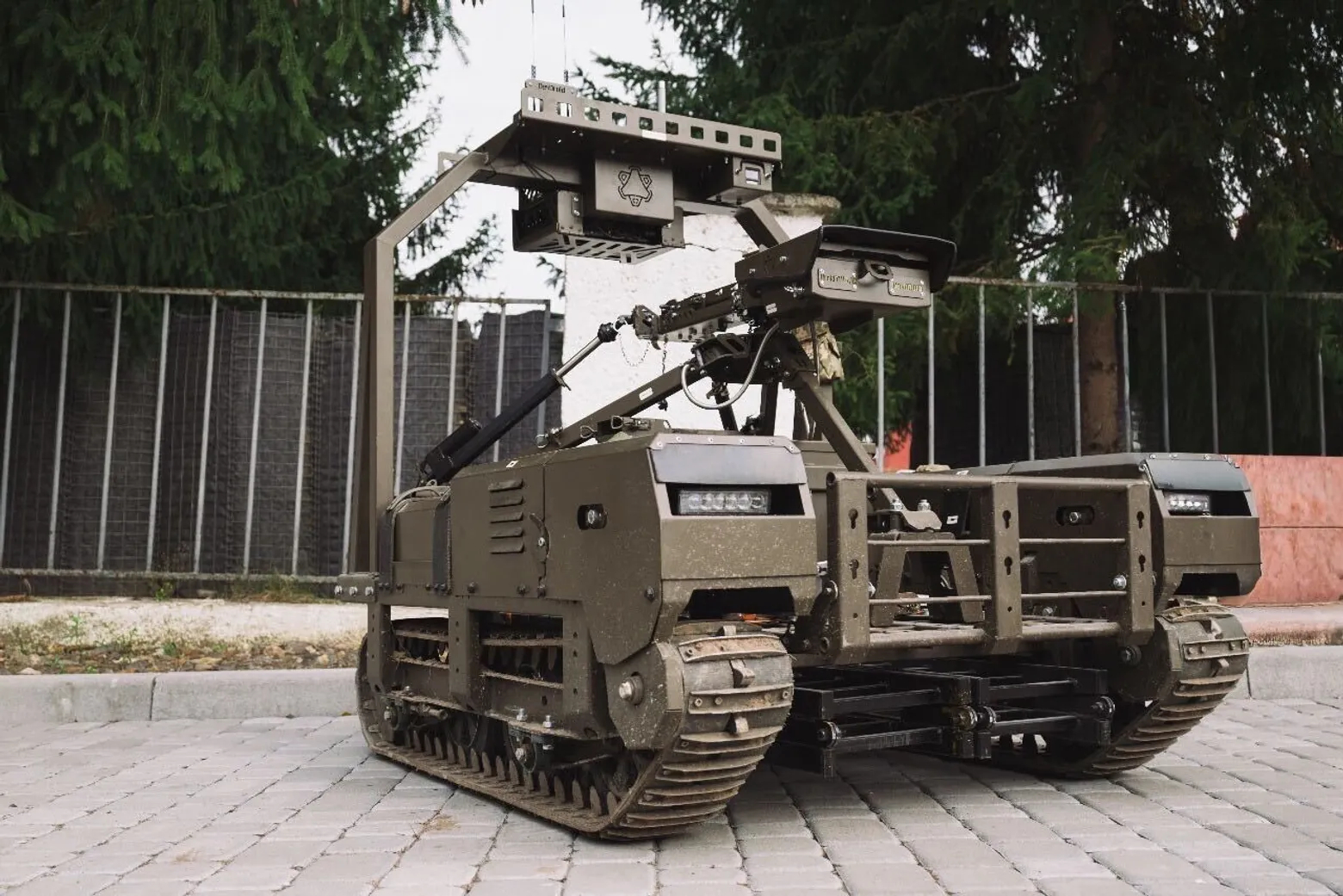
According to LIGA.net, the Ukrainian ground robotic system Droid TW‑7.62, developed by DevDroid, helped a unit repel a Russian assault. The system was operated by an operator from the Disney Squad unit and, according to the company, detected and engaged enemy personnel, which led to the enemy’s withdrawal. This is an example of how technology reduces risks to people and affects tactics in real combat.
What happened
During the operation the robot detected two Russian servicemen in an ambush and killed them. After that Droid TW‑7.62 opened fire on enemy personnel and positions, forcing Russian forces to retreat. According to DevDroid (cited by LIGA.net), thanks to the use of a single ground robotic complex the unit completely repelled the assault.
"The company reported that the complex was operated remotely by an operator and allowed dangerous tasks to be carried out without the direct involvement of personnel."
— DevDroid / LIGA.net
What this system is
Droid TW‑7.62 is a reconnaissance‑strike ground robot adapted for the PKT (KT‑7.62) machine gun. The system is equipped with a ballistic computer and elements of artificial intelligence that help detect and track targets. According to reports, the complex is intended to engage enemy personnel, unarmored vehicles and to conduct battlefield surveillance. Previously, such a robot, according to DevDroid, disabled an enemy at a distance of about 300 meters and captured three Russian servicemen.
Why it matters
Technology minimizes risks. Using robots allows some of the most dangerous tasks to be put at a distance — reducing direct losses among personnel and lessening the psychological burden on fighters.
Tactics are changing. A single robot that combines reconnaissance and firepower alters the balance of forces at a local front: the enemy is forced to rethink assault approaches, plan different countermeasures, and defenders must integrate such platforms into standard operating procedures.
What experts say
Analysts note that the emergence of effective reconnaissance‑strike robots is a marker of the conflict’s evolution: combat operations increasingly include autonomous or remotely controlled systems, and successes on the battlefield depend not only on quantity but on the integration of such platforms into networked fire‑control structures.
Conclusion — what’s next
This episode does not make robots a panacea, but it demonstrates one simple fact: technologies that reduce risks to people and provide a tactical advantage are already operating in real conditions. Now the questions are supply, operator training and integrating such systems into units’ operational logic. Whether these isolated incidents become widespread practice depends on funding, standardization and the command’s ability to embed new tools into the country’s defense apparatus.