Drone Without a Pilot: Dutch Startup Taught "Vovkulaka" to Intercept "Shaheds" Without GPS and Without AI
The Fiducial Defense auto-guidance system, integrated into the Ukrainian interceptor drone "Volkulaka," does not use neural networks — and this is precisely what makes it suitable for real combat conditions where GPS and analog signals are jammed.

By Tetiana Suchkova-Ladik
May 13, 2026 · 2 min read
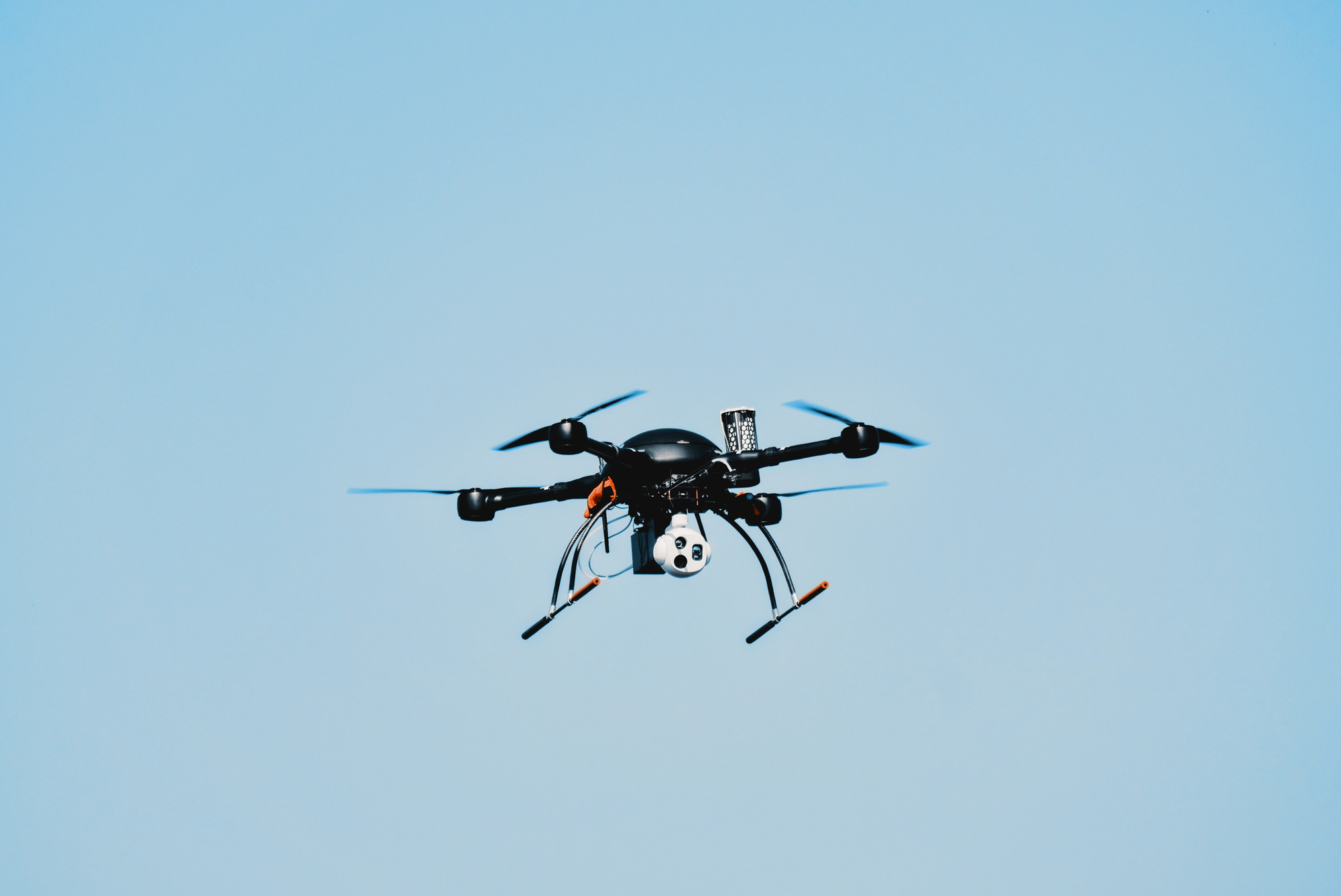
Intercepting a "Shaheed" flying at a speed of 200 km/h while looking at a grainy analog image — this is the task that Ukrainian drone interceptor operators face every night. Dutch startup Fiducial Defense from Delft was solving exactly this problem when it suddenly changed its profile from industrial 3D positioning to defense software in June 2024.
What was tested and where
As part of the Test in Ukraine program implemented by Brave1, the company tested an automatic target guidance system integrated into the Ukrainian interceptor drone "Vovkulaka". According to Brave1, during the tests, the system demonstrated stable detection, tracking, and autonomous interception of aerial targets.
This is not a UFO. An automatic target guidance system by Fiducial Defense has just locked onto an aerial target.
Brave1, Twitter/X, May 12, 2025
Company CEO Andreas Verbruggen had visited Ukraine five times at that point — working directly with units and drone manufacturers. According to him, qualified operators have become "one of the biggest bottlenecks" in the war.
Unexpected choice: without AI
The key difference from most competitors — the system does not use artificial intelligence models. As Verbruggen explains, this is a deliberate engineering decision:
- If an enemy drone changes shape or speed — nothing needs to be retrained.
- The system works the same way day and night "out of the box".
- It runs on cheap hardware — Jetson, Orange Pi and their analogues — which is critical in conditions of unstable supply chains.
Instead, it uses computer vision and its own terminal guidance algorithm: the target is detected, tracked, and the platform autonomously moves to the interception point. In several test launches that Verbruggen showed publicly, the autonomous system reached the interception point faster than a human pilot could react.
Humans remain in the loop for now
Despite being technically ready for full autonomy, the operator is present in the system — for now as a conscious company choice, not as a technical limitation. In parallel, Fiducial is developing navigation under GPS jamming conditions: the drone navigates purely by side camera, without satellite signal.
The Test in Ukraine program has already received applications from 45 foreign companies since its launch — Fiducial became one of the first to complete a full cycle of field tests and receive integration into a serial platform.
The real question now is not technical: if the system already intercepts faster than a human and doesn't require retraining — how much longer will the operator remain in the loop in practice, rather than just on paper in company documents?



