Typing with a Finger on Your Knee Is No Longer a Metaphor. Meta Opens Neural Text Input for All Ray-Ban Display Owners
Neural Handwriting reads wrist muscle contractions rather than screen movements. However, only Americans currently have access to the feature, as international rollout is frozen due to device shortages.

By Tetiana Suchkova-Ladik
May 18, 2026 · 2 min read
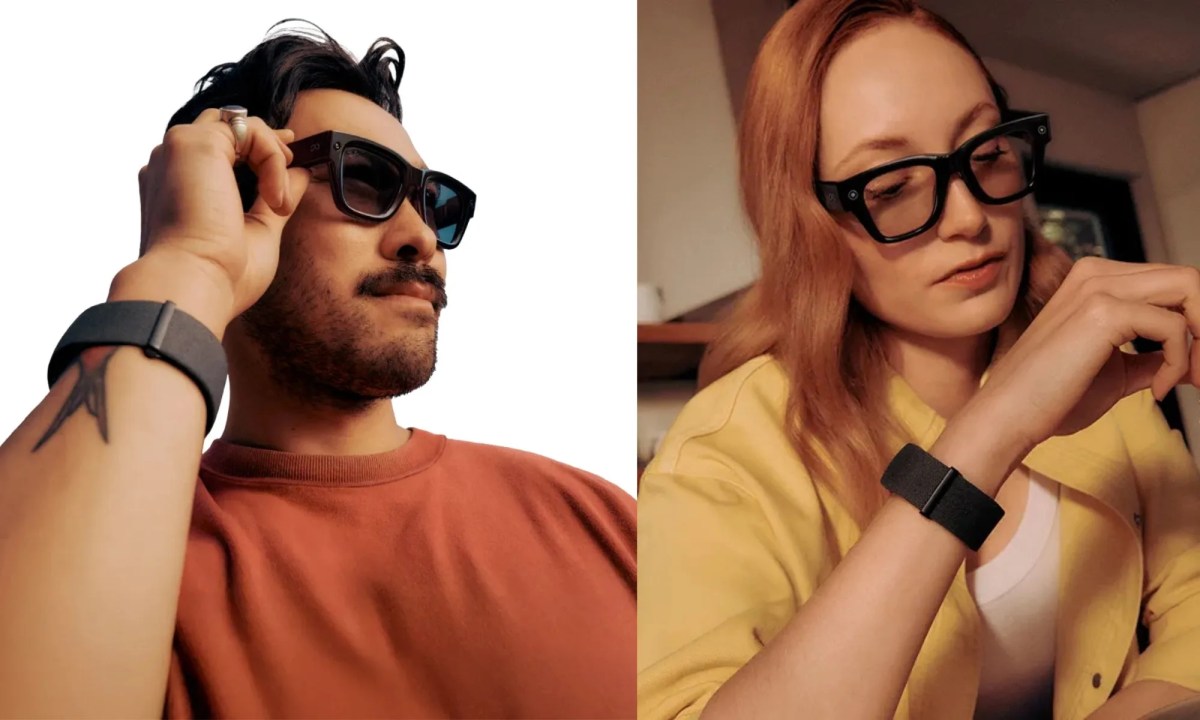
Imagine: you're writing a message by moving your finger across your thigh on the subway, and the glasses display the text right in the lens. This is exactly what Meta is now offering to Ray-Ban Display owners — not as a concept, but as a real feature in an update announced at CES 2026.
Bracelet Instead of Keyboard
The Neural Handwriting feature works through the Neural Band — a bracelet that comes with the glasses. The technology is called surface electromyography (sEMG): electrodes read the micro-contractions of the wrist muscles responsible for finger movements and recognize letters before they are physically "written" on a surface.
"Meta Neural Band — the only wrist-worn device that enables neural text input on any surface"
— official Meta Quest blog
You can write on a table, palm, or knee. The system supports contact search, sending messages, and responding to notifications — without touching your smartphone once.
Who Got It and Who's Waiting
After several months of limited beta testing, Neural Handwriting has been opened to Android and iOS users — but only in WhatsApp, Messenger, and Instagram, and only in English. According to UploadVR, the feature launches through the Early Access program in the Meta AI app.
At the same time, Meta made a surprising move backward: the international launch of Ray-Ban Display — planned for early 2026 in the United Kingdom, France, Italy, and Canada — has been frozen. The official reason: "unprecedented demand and limited inventory." In other words, the company that just expanded functionality simultaneously acknowledged that it cannot manufacture enough devices.
$799 and the Waiting List
Ray-Ban Display with Neural Band costs $799 and is currently sold only offline — at Best Buy, LensCrafters, Sunglass Hut, and Ray-Ban stores in the USA. There are no online sales, but there is a waitlist.
- What already works: Neural Handwriting, pedestrian navigation, screen recording, third-party app support
- What doesn't work outside the USA: the entire device — international launch is frozen with no new date set
- Language support: English only at the time of feature release
Why This Is More Than Just a Gadget
sEMG is not a new idea: it has been researched for years for prosthetics and medical rehabilitation. Meta was the first to scale the technology to the consumer level and embed it in a fashionable accessory. UploadVR called the Neural Band "the best new hardware of 2025" and characterized Ray-Ban Display as "the first generation of mobile computing without looking down."
But there's a practical paradox here: the most interesting feature of the glasses — neural text input — is available only in three Meta apps and only in one language. If by the end of 2026 Meta does not expand language support and does not open third-party APIs for Neural Band, the bracelet will remain an expensive toy for the American WhatsApp market, not a platform — and then competitors with cheaper sEMG solutions will have a real chance.



