Dyson Entered the Market at $5, Selling for $100: What's Behind the Brand's First Handheld Fan
HushJet Mini Cool is not just a new gadget, but Dyson's attempt to colonize a segment long dominated by Chinese no-name devices priced at $5-15. The question is whether consumers are willing to pay ten times more for noise levels of 52 dB and the neck of engineer Jake Dyson.

By Oleg Bazylewicz
April 9, 2026 · 2 min read
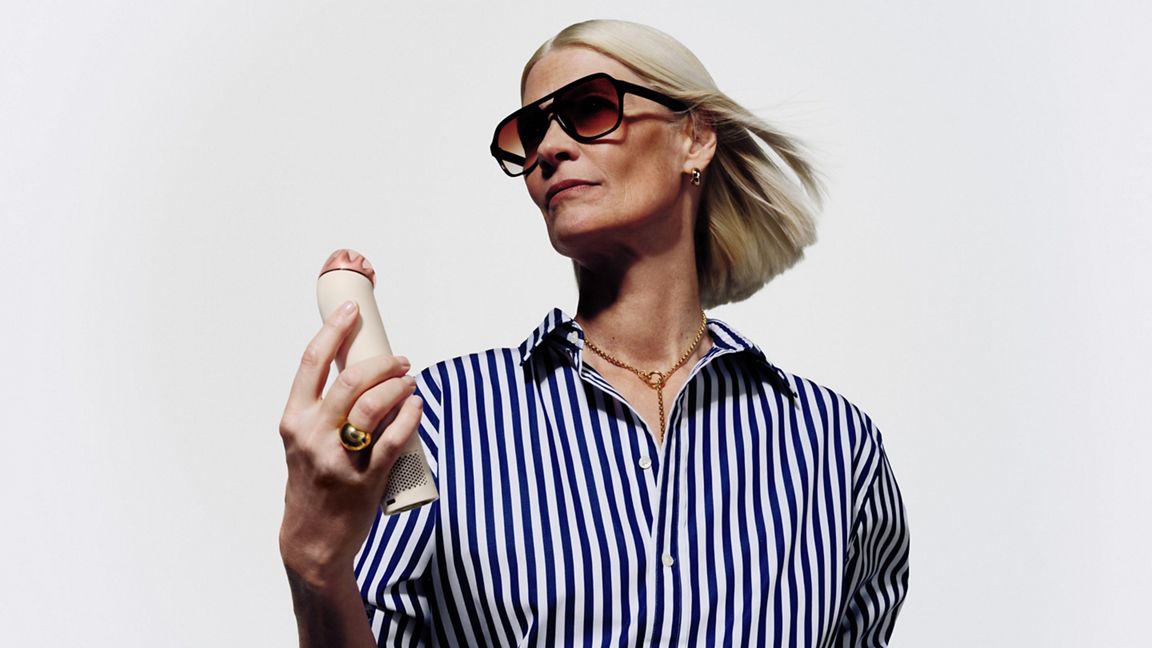
Over 16 years, Dyson has been perfecting the HushJet air delivery system in stationary air purifiers. In May 2025, the company moved this technology into the palm of your hand for the first time — and priced the 212-gram device at $99.99.
What's Inside and Why It's Not an Ordinary Fan
A brushless motor spins up to 65,000 rpm and generates an airflow of up to 25 m/s — approximately 90 km/h directed at a specific point. But speed isn't the main story; acoustics are: the HushJet Mini Cool on minimum speed produces 52 dBA — the level of quiet conversation. On Boost mode, the figure rises to 72.5 dBA, which is still quieter than a typical desktop fan at full power.
A 5,000 mAh battery provides up to six hours of runtime and charges in three hours via USB-C. The package includes a stand, a travel case, and a Neck Dock: a neck mount that transforms the fan into a hands-free wearable device.
"Since 2009, we've been obsessed with airflow. HushJet Mini Cool is the culmination of this journey: powerful airflow, engineered for life on the move."
Jake Dyson, Chief Engineer at Dyson
Where Dyson Plans to Sell and to Whom
The device is available in three color options: Prussian Blue/Rich Copper, Carnelian/Sky, and Stone/Blush. Beyond the basic package, optional accessories will be sold separately: a Universal Mount for strollers and a Grip Clip for backpacks or jackets — Dyson is clearly targeting parents, office workers, and festival-goers.
- USA and UK: available starting May 2025 through the website and official stores
- Australia: launch confirmed at A$169, exact date to be clarified
- Other markets: no official dates yet
What Dyson Doesn't Say Directly
The personal fan market encompasses tens of millions of devices annually, mostly from China at prices ranging from $5 to $30. Dyson enters with a tenfold price premium, relying on the same logic that once worked with vacuum cleaners and hair dryers: technological differentiation plus design as identity. The key difference — here the competitor isn't Miele or Shark, but a nameless USB fan from AliExpress.
Notably, the 38 mm diameter of the HushJet Mini Cool nozzle is the same size as that in the Supersonic hair dryer and the PencilVac vacuum. Dyson is deliberately building a "family DNA" across its product line so that buyers of one device feel familiar with another.
If HushJet Mini Cool sales in the USA reach six figures during the first summer — this will confirm that Dyson's premium logic works even in the sub-$100 segment. If not, the company's next move becomes obvious: a price cut to $69 and partnerships with major retailers like Best Buy or Target.