Dyson-style hair dryer with built-in oil dispenser: Dreame tests an idea that Panasonic has already proven worth $400
Dreame has released a foldable P10 Cake hair dryer with automatic oil application for $88, against a Japanese analog that costs four times more. The question is not about the price: whether the dispenser will work in the budget segment as effectively as in a professional salon setting.

By Tetiana Suchkova-Ladik
May 11, 2026 · 2 min read
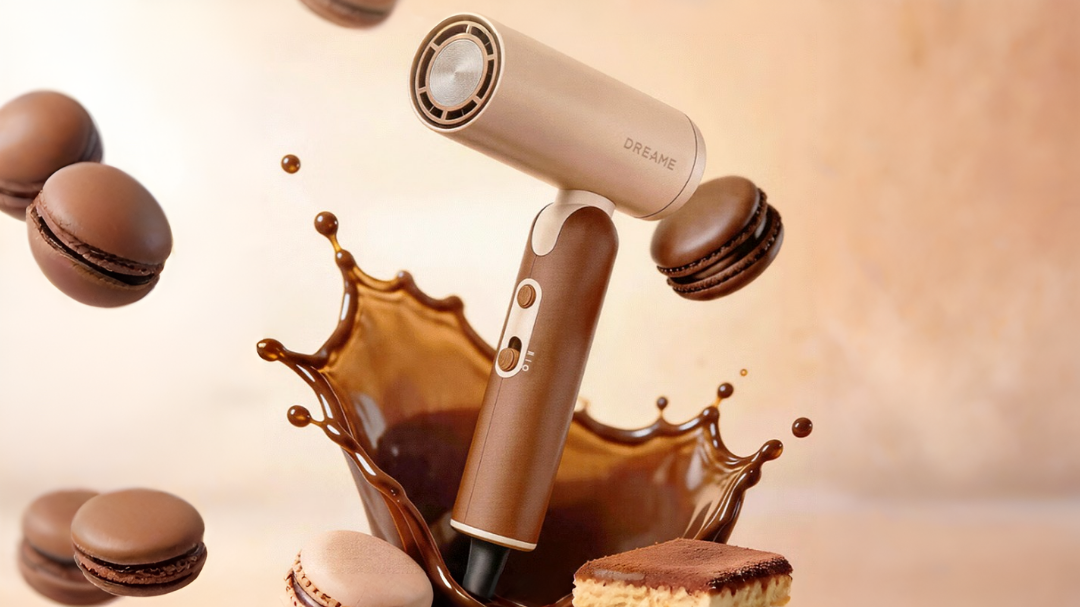
A hair dryer with a built-in oil dispenser sounds like a marketing gimmick — until you remember that Panasonic already implemented this concept in its flagship ELMISTA line in partnership with Japanese salon cosmetics manufacturer Milbon. Dreame did the same thing, but for $88 instead of $400+.
What's Inside
The Pocket P10 Cake weighs 300 grams and folds along a hinge to 180°, transforming into smartphone size. The motor spins up to 110,000 RPM, with airflow reaching 70 m/s. These are the same specs as the "full-size" Dreame Pocket, which TechRadar described as a device that comes "surprisingly close" to professional salon styling.
The key difference of P10 Cake from its predecessor is the built-in hair oil cartridge. During drying, the device automatically dispenses the product. Dreame doesn't disclose what specific oil the system supports or whether it's compatible with third-party products — or only with proprietary cartridges.
"Developing precision spray technology for a hair dryer required an entirely new serum formulation that stably disperses finely sprayed oil components in a water base"
— Panasonic on developing ELMISTA, illustrating the technical complexity of the task itself
Practical Perspective
The integrated dispenser solves a specific problem: even oil application during drying — something nearly impossible to achieve by hand. Independent tests of the Dreame Pocket (without dispenser) showed that the dryer dries short hair in under a minute, long hair in 2–4 minutes. If the dispenser doesn't slow airflow and doesn't clog after a few refills, this is genuinely convenient for daily use.
- Weight: ~300 g, 180° fold
- Motor: 110,000 RPM, airflow up to 70 m/s
- Ionization: 300 million negative ions
- Price: 599 yuan (~$88), currently China market only
- Colors: pastel palette (Dreame doesn't specify details)
What's Missing from the Announcement
Dreame didn't reveal the main thing: whether the oil cartridge is replaceable and what it costs separately. This is where the business model either justifies the low entry price or turns $88 into a subscription for consumables. Panasonic solved this in ELMISTA through partnership with Milbon — tying the dryer to a specific serum brand. If Dreame follows the same path, the actual device cost for users will be higher than the price tag.
If P10 Cake reaches markets beyond China with compatibility for arbitrary oils — it will change the standard for budget travel dryers. If the cartridge turns out to be a closed system, Dreame is simply selling more expensive consumables in a cheap housing.