Garmin tactix 8 Cerakote — 29 days on a single charge: tactical watch for rescuers and military personnel
In the field, where every battery can determine the outcome of an operation, endurance and reliability are matters of safety. Garmin has introduced the tactix 8 Cerakote with a damage‑resistant casing and up to 29 days of battery life. We examine what this delivers in practice and why such solutions are important for our defenders and rescuers.

By Tetiana Suchkova-Ladik
January 23, 2026 · 2 min read
What was unveiled
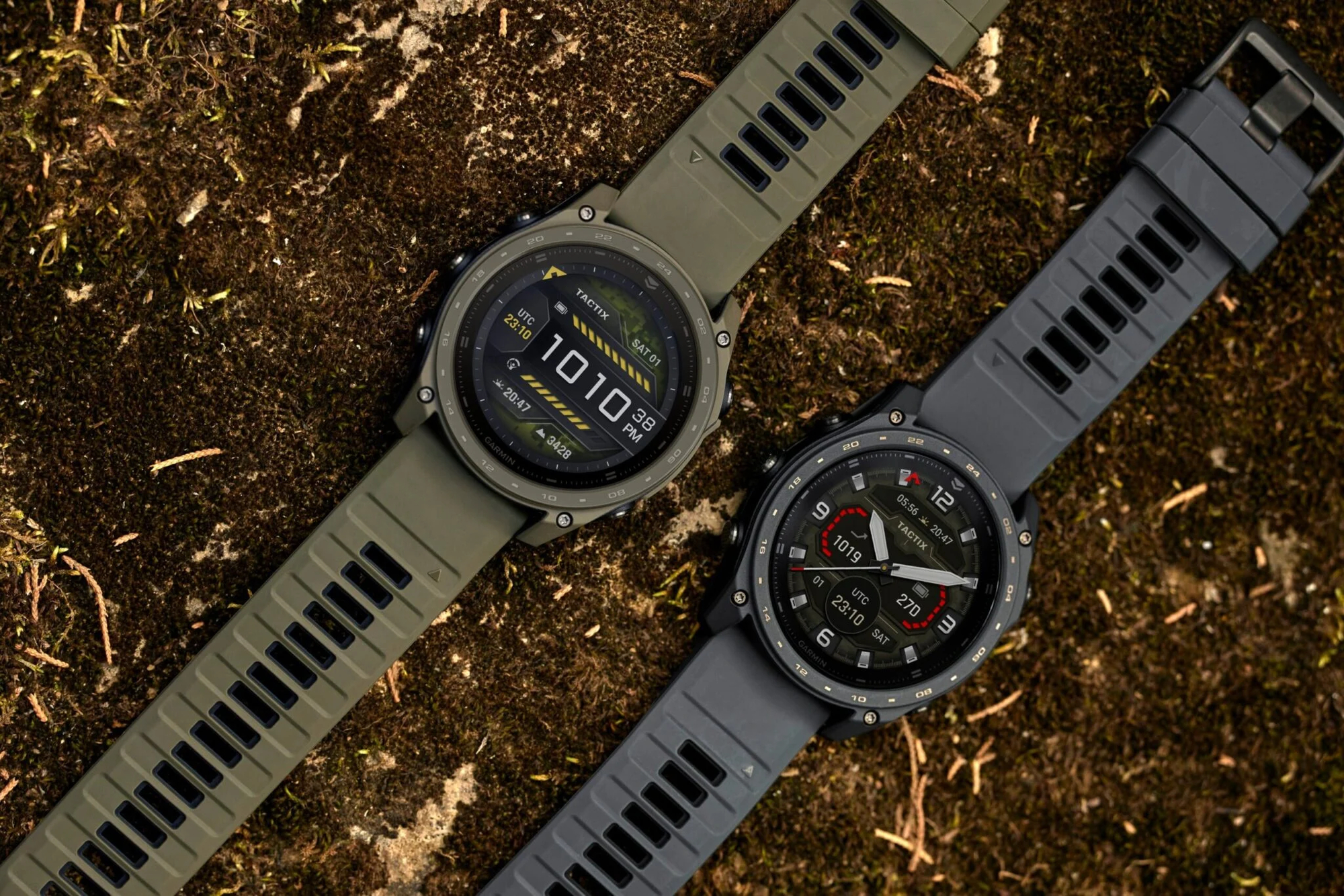
Garmin has officially announced the tactix 8 Cerakote Edition — a tactical smartwatch with a Cerakote coating and a claimed battery life of up to 29 days. The manufacturer positions the model for military personnel, rescuers and professionals working in extreme conditions.
Technical summary
The watch features a 51 mm case, a 1.4‑inch AMOLED display under sapphire glass and a titanium bezel. There is a built‑in LED flashlight. The Cerakote coating — a ceramic‑polymer layer applied by spraying and baking — makes the case more resistant to scratches, chemical exposure and corrosion. The model is available in Slate Gray and Olive Drab.
Among the features: Jumpmaster mode, dual coordinate display, compatibility with night vision devices (NVDs), Stealth Mode, and a ballistic calculator. The device withstands submersion to 40 m, supports training, sleep monitoring, Pulse Ox, Body Battery and real‑time endurance assessment. Navigation is via GPS with SatIQ, topographic and aeronautical maps; it also offers Garmin Pay, calls and notifications with iOS and Android. In the US the price is listed at $1600.
"tactix 8 is built for professionals who operate in extreme conditions and require a reliable tool with extended battery life"
— Garmin (press release)
Why this matters for Ukraine
The technical specifications alone are not revolutionary — context is important. For field units and response teams, autonomy, resistance to environmental effects and features that reduce dependence on surroundings and infrastructure are key. 29 days of battery life reduce the number of recharges needed in active areas, and Stealth Mode and minimizing radio emissions lower detection risks.
The ballistic calculator and dual coordinate display ease aiming and coordination between units. SatIQ and offline maps help maintain orientation when communications or navigation are limited or disrupted.
The $1600 price makes large‑scale procurement difficult for the state budget, but such devices make sense for specialized units, intelligence, quick‑reaction teams and rescuers, where each feature pays off through increased effectiveness and reduced risk.
What’s next
Gadgets like the tactix 8 enhance operational capabilities, but their usefulness depends on logistics, training and integration into operational processes. The question is not only about payment — it is whether such devices can become part of a system that actually helps save lives and improve effectiveness on the ground.