Gemini on Google TV: how AI will change viewing and access to content
At CES 2026, Google unveiled new Gemini features for Google TV — from voice control to interactive educational reviews and automatic picture and sound adjustments. Why this matters now and what Ukrainian viewers should know — briefly and with practical context.

By Tetiana Suchkova-Ladik
January 6, 2026 · 2 min read
What was announced at CES 2026
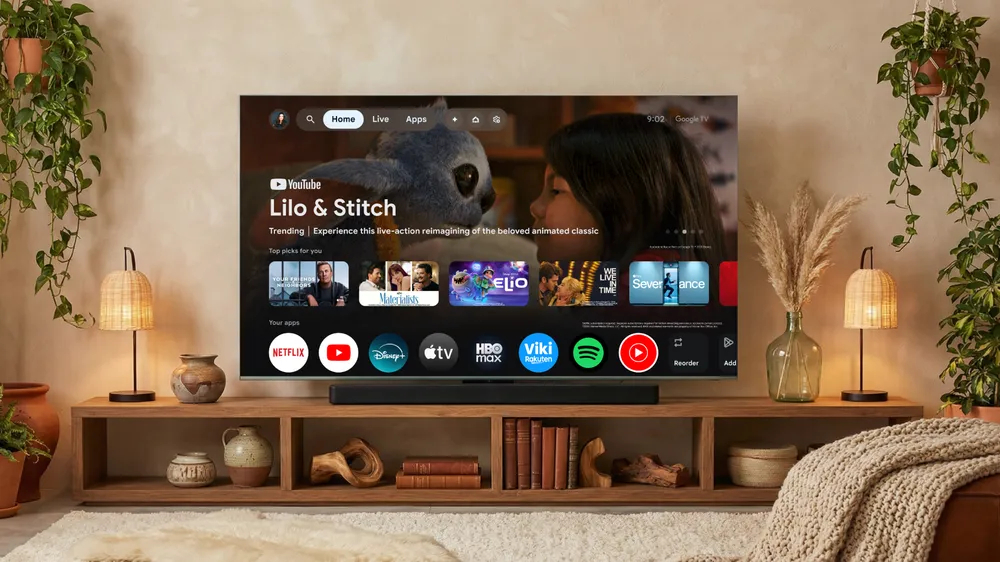
At CES 2026 Google unveiled a new set of artificial intelligence features, Gemini, for the Google TV platform. Highlights include voice control of the TV, searching for movies and series by description or preferences, automatic short episode summaries, and displaying trends in real time.
"Gemini is adapted for large screens and operates in a natural-language format."
— Google official blog
How this will change the viewer experience
Convenient search. Instead of scrolling through long catalogs, you can describe a scene or theme — the AI will find relevant options. This saves time and makes discovering content easier for busy people and families.
Educational format. The TV can show interactive topic overviews with narration and visuals and answer follow-up questions — a format useful for self-education and remote learner support. For Ukraine, where mobility of educational resources is important, this could become a practical tool.
Accessibility and comfort. If the picture is dark or dialogues are muffled — simply report the issue and the system will suggest brightness or sound settings. This matters for older people or those watching in varying lighting conditions.
Technical details and scaling
The first models with Gemini support will appear on some TCL TVs, later expanding to a wider pool of Google TV devices. Operation requires Android TV OS 14 or newer, an internet connection, and a Google account. Google is also integrating Gemini into other categories of devices: reports already mention implementation in Samsung refrigerators and the release of a fast model, Gemini 3 Flash, for processing text, video, and images.
What this means for data security and the local market
Smart services on the big screen increase convenience but also raise questions about personal data processing: voice queries, personal preferences, and access to photos (via integration with Google Photos) may be stored on Google’s servers. CES tech reviews (The Verge, Engadget) highlight the need for transparent privacy settings and local language models to ensure quality performance in different countries.
Conclusion: why this matters to the Ukrainian viewer
Gemini on Google TV is not just about a “smart” remote. It’s a tool for quick access to knowledge, personalized content search, and improved viewing quality. For Ukraine this could mean more effective educational programs, broader access to local content, and a more user-friendly interface for people of all ages. At the same time, it’s important to monitor data storage conditions and support for the Ukrainian language.
The question now falls to manufacturers and regulators: will they be able to ensure localization, transparent privacy policies, and availability of these features for the Ukrainian market?