Tuesday, May 26, 2026
Today's Edition

EveryNews

Stories that matter, signal over noise

Technologies

Google Updates Gemini: New Design and AI Agents Emerge After Google I/O 2026

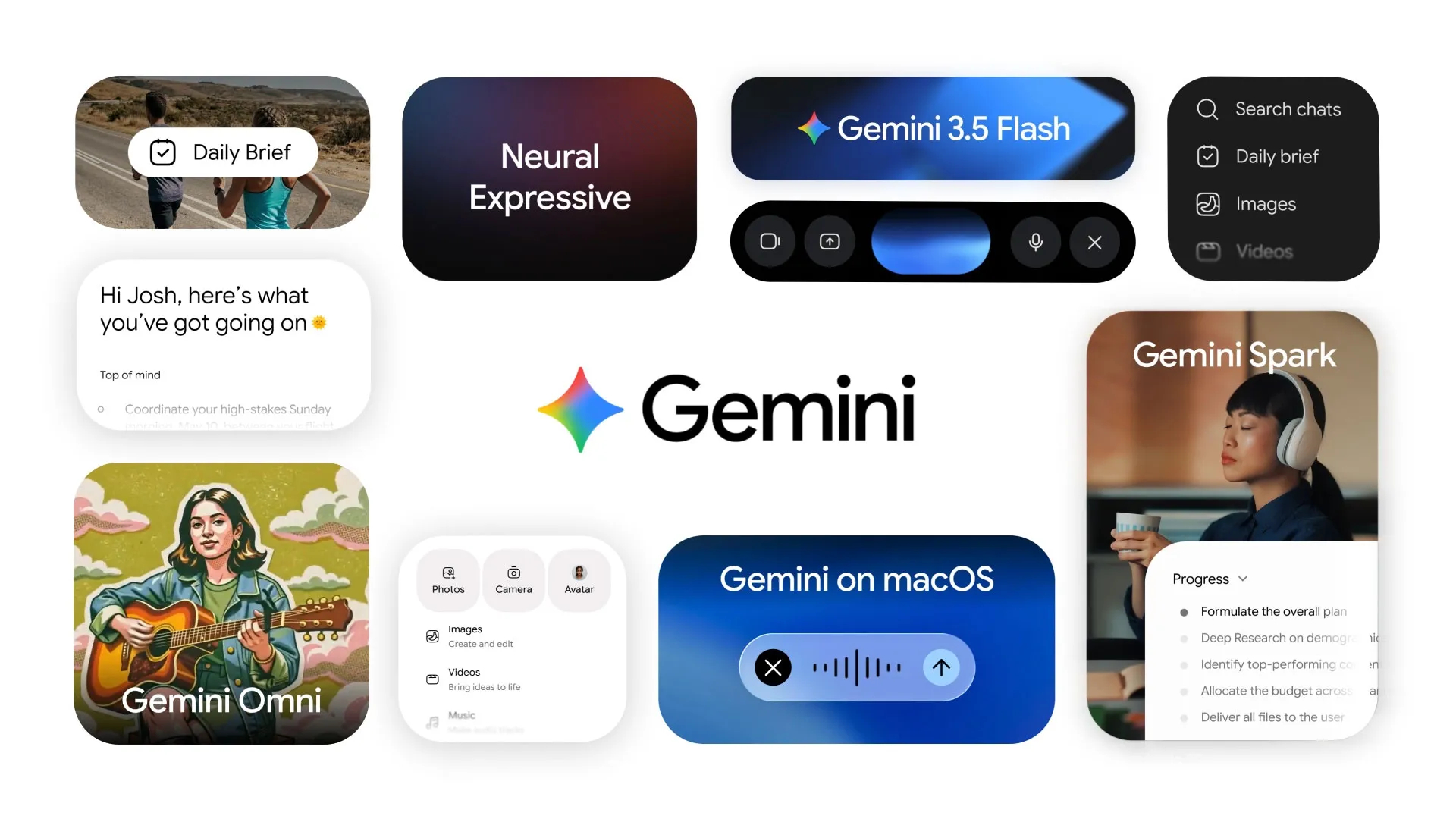
At the Google I/O 2026 conference, the company unveiled a major update to the Gemini app — a redesigned Neural Expressive interface and integrated AI agents. The rollout has already begun for Android and iOS.

Tetiana Suchkova-Ladik

By Tetiana Suchkova-Ladik

May 20, 2026 · 1 min read
Google Updates Gemini: New Design and AI Agents Emerge After Google I/O 2026
Ілюстративне фото: Google

Google introduced the largest Gemini update since the app's launch — and did so at its own annual Google I/O 2026 conference, where the technology industry traditionally sets the tone for discussions in the coming year.

The central change is a new design called Neural Expressive. This is not a cosmetic refresh: rewritten animations, updated typography, and tactile feedback that synchronizes with chatbot responses on smartphones. The idea is to make interaction with AI feel less like working with a text field and more like a dialogue.

The second key change is the integration of AI agents directly into the interface. Agents can perform multi-step tasks: search for information, structure it, and act on behalf of the user within permitted services. Google is not announcing agent functionality for the first time, but this time it is built into the main app rather than existing as a separate experiment.

The update is already being rolled out for Android and iOS — gradually, by region.

Context matters: Google is promoting Gemini simultaneously as a consumer product and as a corporate platform. Neural Expressive is a signal for the first audience, agents for the second. The question is not whether the update looks convincing in a presentation, but whether actual Gemini usage frequency will change among people who already have ChatGPT or Claude as their habit.


Related

Latest

Business

EU Against Google: Why the Latest Fine Could Change More Than Previous Ones

# European Regulators Target Google Again — This Time Over Digital Markets Act Violations. What's Behind the Accusations and Why It Matters Beyond the Corporation European regulators have renewed their scrutiny of Google, this time focusing on alleged violations of the Digital Markets Act. The charges underscore Brussels' increasingly aggressive stance on big tech monopolies and what officials say are anticompetitive practices. The accusations center on how Google leverages its dominance across multiple digital services — from search to advertising to mobile platforms — to disadvantage competitors. Regulators claim the company is using its market power in ways that stifle innovation and limit consumer choice. The case carries significance far beyond Google itself. It signals how the EU is attempting to enforce its landmark Digital Markets Act, legislation designed to curb the gatekeeping power of tech giants. A potential penalty could set precedent for how other large technology companies face similar scrutiny. For consumers and smaller tech firms, the outcome could reshape the digital landscape by creating more room for competition. For Google, fines and operational restrictions could fundamentally alter its business model in Europe, the world's most stringent regulatory market. The case also reflects a broader geopolitical divide, with the EU pursuing a regulatory approach that contrasts sharply with the lighter-touch oversight favored in the United States.

May 26, 2026