Google refused repair — Pixel 8 owner turned it into a console with active cooling
# Pink vertical stripe on Pixel 8 display didn't qualify for Google warranty repair. Instead of scrapping the device, the owner assembled a fully functional retro console with HDMI output, four gamepads, and a computer fan — and it turned out to be a more practical solution than it seems.

By Tetiana Suchkova-Ladik
May 21, 2026 · 2 min read
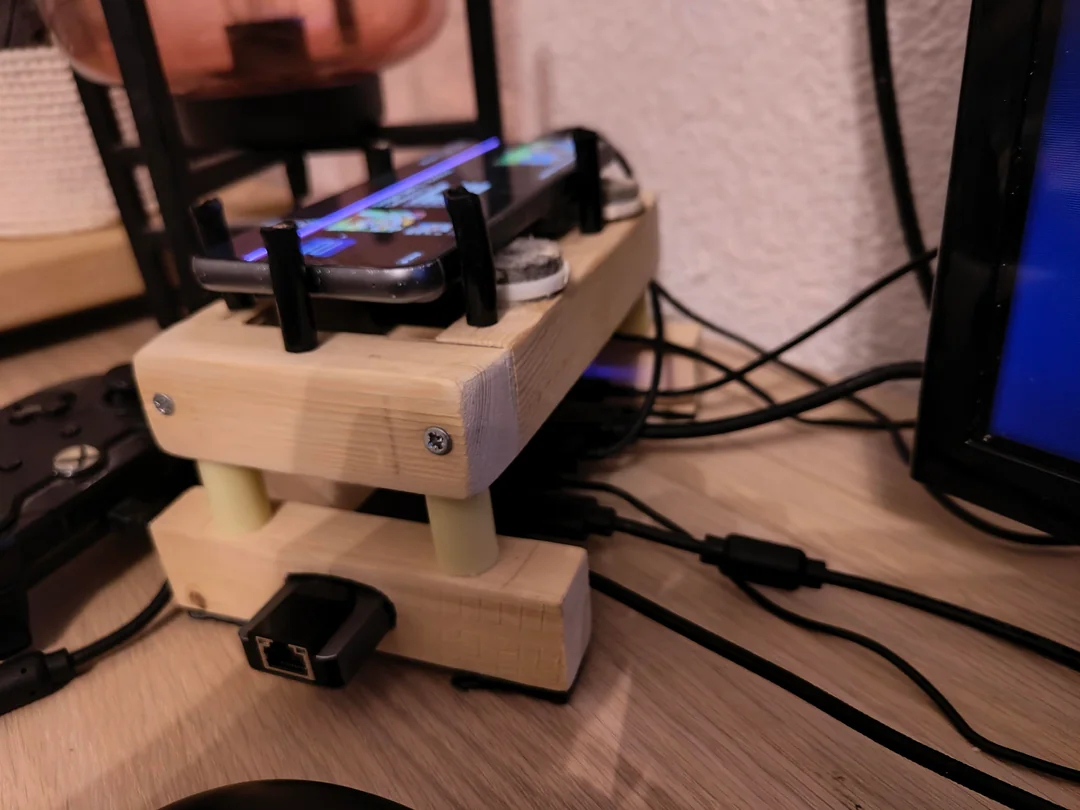
A Reddit user with the handle Prior_Explanation_52 published a project in the r/EmulationonAndroid community that started with a refusal. A persistent pink stripe appeared along the display of his Google Pixel 8 — the phone remained functional, but Google refused to repair it. The standard scenario: send it to recycling, buy a new one.
He chose a different path.
What's inside the project
The Pixel 8 was connected to a television via USB-C HDMI output — built into the Tensor G3 chip, without adapters with latency. Through a 4-port USB hub, they connected wired gamepads for multiple players simultaneously and a mouse. The same hub holds a 50mm computer fan directly above the phone's case — an unconventional solution, but justified: Tensor chips are known for overheating under load, and without active cooling, emulation drops in frame rate.
The software part is built on EmulationStation Desktop Edition (ES-DE) — the interface organizes ROM libraries by console, displays covers, and is controlled by gamepad without touching the screen. The damaged display effectively ceases to exist.
«I had a Google Pixel 8 lying around that was no longer being used because Google couldn't fix it»
Prior_Explanation_52, r/EmulationonAndroid
A detail that's easy to miss
Google simultaneously launched the Extended Repair Program for Pixel 8 — free display replacement for devices with certain screen defects. However, the program has a condition: the device must not have cracks or physical damage. If Prior_Explanation_52's phone failed inspection precisely because of this — Google's refusal to repair it looks different: not corporate indifference, but a standard exclusive warranty condition.
This doesn't change the outcome of the project, but it changes its frame: not «Google abandoned the user», but «warranty policy doesn't cover certain device conditions — and some people adapt better than expected».
Why this is more than a DIY curiosity
- The Tensor G3 in Pixel 8 is more powerful than most budget Android devices and confidently handles emulators up to PS2/GameCube level.
- HDMI over USB-C without additional bridges — a rarity even among 2023 flagship devices.
- ES-DE transforms Android into a system that doesn't require a touchscreen at all.
- Active cooling via hub — a solution that removes the main limitation of mobile emulation: thermal throttling.
A smartphone with a «defective» display received a second cycle of use without any expenses on new hardware. The question is practical: if Google expands the conditions of the Extended Repair Program to devices with physical damage — will the incentive for such projects disappear, or have people already learned not to wait for repairs?