Google Is Killing Chromebook and Starting From Scratch — But Without Prices and Processors
Google has announced a new Googlebook laptop category based on a merger of Android and ChromeOS with Gemini at the heart of the system. Five manufacturers have confirmed their participation, but no prices, specifications, or launch regions have been disclosed yet.

By Tetiana Suchkova-Ladik
May 13, 2026 · 2 min read
More than 15 years ago, Google launched the Chromebook — a laptop for the cloud world. Now the company is betting that the next platform is not an operating system, but a system of intelligence. Thus, Googlebook was born.
What changed under the hood
Googlebook is not ChromeOS with a chatbot added. Google combined Android, ChromeOS, and Gemini Intelligence into a single platform oriented toward premium hardware — unlike Chromebooks, which for years have been associated with budget devices for schools. In fact, this confirms an old rumor about the merger of ChromeOS and Android into a single OS, known in insider circles as "Aluminium OS."
Google will not be releasing its own laptops — the company is working with partners from the start: Acer, ASUS, Lenovo, Dell, and HP, all of whom have previously released Chromebooks. Of six Google's Chromebook partners, Samsung is the only one that has not yet confirmed participation.
Magic Pointer: cursor as interface
The central feature of Googlebook is Magic Pointer, developed in collaboration with Google DeepMind. Simply move the cursor over anything on the screen — and Gemini will suggest an action: for example, upon seeing a date in an email, it will automatically offer to create an event in Calendar. This is the first attempt to transform the mouse pointer itself into an entry point for AI, rather than a separate button or panel.
"Googlebook is the first laptop designed from scratch for Gemini Intelligence, to provide personal and proactive assistance where and when it's needed"
Google, official announcement, May 2025
What else the system can do
- Create your Widget: Through Gemini, you can build custom widgets — for example, a single panel with flights, hotels, and a countdown to a family trip, pulling data from Gmail and Calendar.
- Cast My Apps: Googlebook runs applications from an Android smartphone directly on the laptop screen — without manual file transfer or emulation.
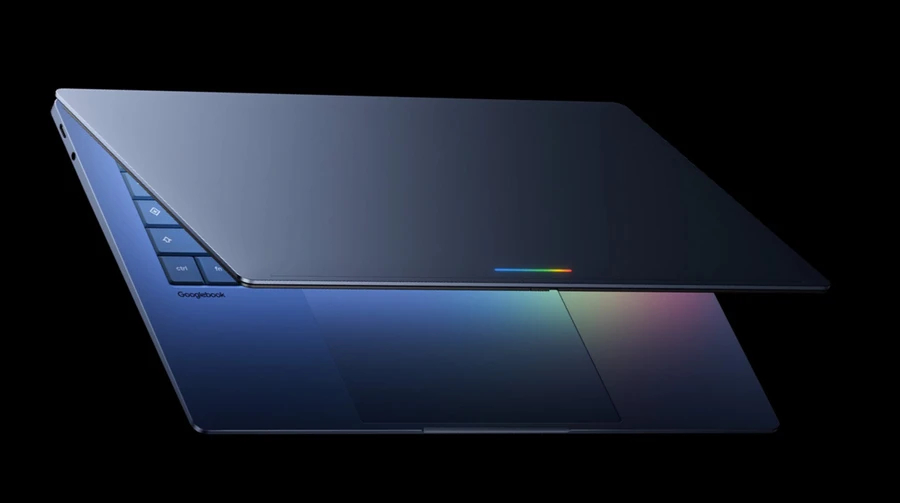
- Glowbar: Each Googlebook's lid features a colored "glowbar," a physical identifier of the platform, a nod to the iconic Chromebook Pixel.
What remained off-screen
Google did not confirm chip platforms, model names, prices, or launch regions. Competitors are already on the shelves: MacBook from Apple and a wave of Windows AI PCs on Snapdragon X. Googlebook is entering a market where "AI in a laptop" is already old news — the question is whether deep integration with the Android ecosystem will become a real advantage, not just a marketing slogan.
If manufacturers come out in the fall with prices comparable to premium Windows machines, not the Chromebook segment — this would mean Google is betting on the corporate market, where Microsoft still dominates. If Googlebook costs less than $800 — the battle will be fought for the same students and teachers that Chromebook once conquered.