Honor Magic 8 Pro Air: ultra-thin flagship with a 5,500 mAh battery — a new benchmark for portability
Honor unveiled in China a device just 6.1 mm thick and weighing 155 g, yet equipped with a 5,500 mAh battery. We explain why this is not merely a design record but a genuine practical benefit for users, and how it reshapes competition in the market.

By Tetiana Suchkova-Ladik
January 19, 2026 · 2 min read
In Brief
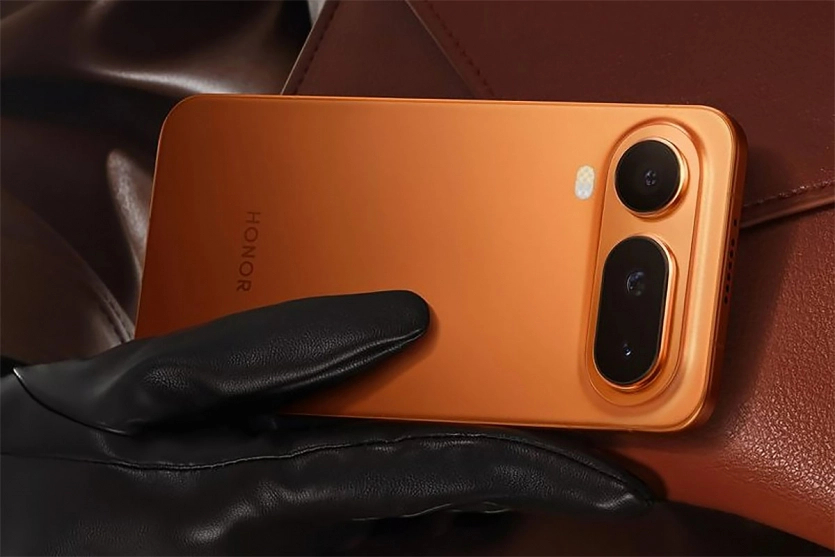
The Honor Magic 8 Pro Air combines a thin body (6.1 mm) with an impressive 5,500 mAh battery, challenging conventional assumptions about the trade-off between portability and endurance. For comparison: the iPhone Air is 5.6 mm thick but has a battery of only about 3,124 mAh.
"We aimed to combine an elegant form factor and real battery life without compromising performance"
— Honor, device presentation
What’s inside and why it matters
The device runs on the flagship MediaTek Dimensity 9500 chip and is available in configurations up to 16 GB of RAM and 1 TB of storage. This means the thin body was not achieved at the expense of performance — the smartphone is aimed at demanding users.
Battery life and charging
The key technical detail is a 5,500 mAh battery in a 6.1 mm body weighing 155 g. Honor also announced support for 80 W wired fast charging and 50 W wireless. For users this means less worry about running out of power during the day and faster top-ups when power is available.
Display, protection and convenience
The display with 1.08 mm bezels supports 120 Hz, and a built-in 3D ultrasonic fingerprint scanner plus PWM dimming at 4,320 Hz are intended to reduce eye strain. The device received water and dust protection to IP68/IP69 standards, boosting its reliability in field conditions and while traveling.
Cameras and multimedia
The Magic 8 Pro Air has three main cameras: a 50 MP primary (f/1.6), a 64 MP telephoto with 3.2× zoom, and a 50 MP ultra-wide module. The front camera is 50 MP. This configuration makes the device versatile for photo and video without the need for bulky gear.
Price and availability
Starting price in China is ¥4,499 (~$645); the 1 TB version is ¥5,499 (~$789). International release dates have not yet been announced.
What it means for users and the market
First, Honor’s technical solution pushes competitors to rethink the balance between thickness and battery. Second, for users — especially in countries with unstable access to power or an active mobile lifestyle — a large battery in a thin body means longer use without sacrificing portability.
Market analysts note that such models increase competition in the upper mid-range segment, which was previously dominated by brands focusing either on design or on battery life. Honor offers a compromise that may attract an audience that values practicality.
Conclusion
The Magic 8 Pro Air is not just a showcase of engineering skill, but a market signal: a thin body and a large battery are no longer mutually exclusive characteristics. For Ukrainian users this means access to more practical solutions that better meet everyday challenges. The remaining questions are international launch dates and supply — and the real impact on the local market will depend on those factors.