Huawei launches a €3,299 gold smartwatch in Europe — a premium play in the wearables market
Huawei has launched sales of the Watch Ultimate Design Royal Gold in Spain, France and Germany — it’s not just an expensive accessory but a marker of a trend: eSIM and features for extreme conditions are becoming hallmarks of the premium segment.

By Tetiana Suchkova-Ladik
January 20, 2026 · 2 min read
What happened
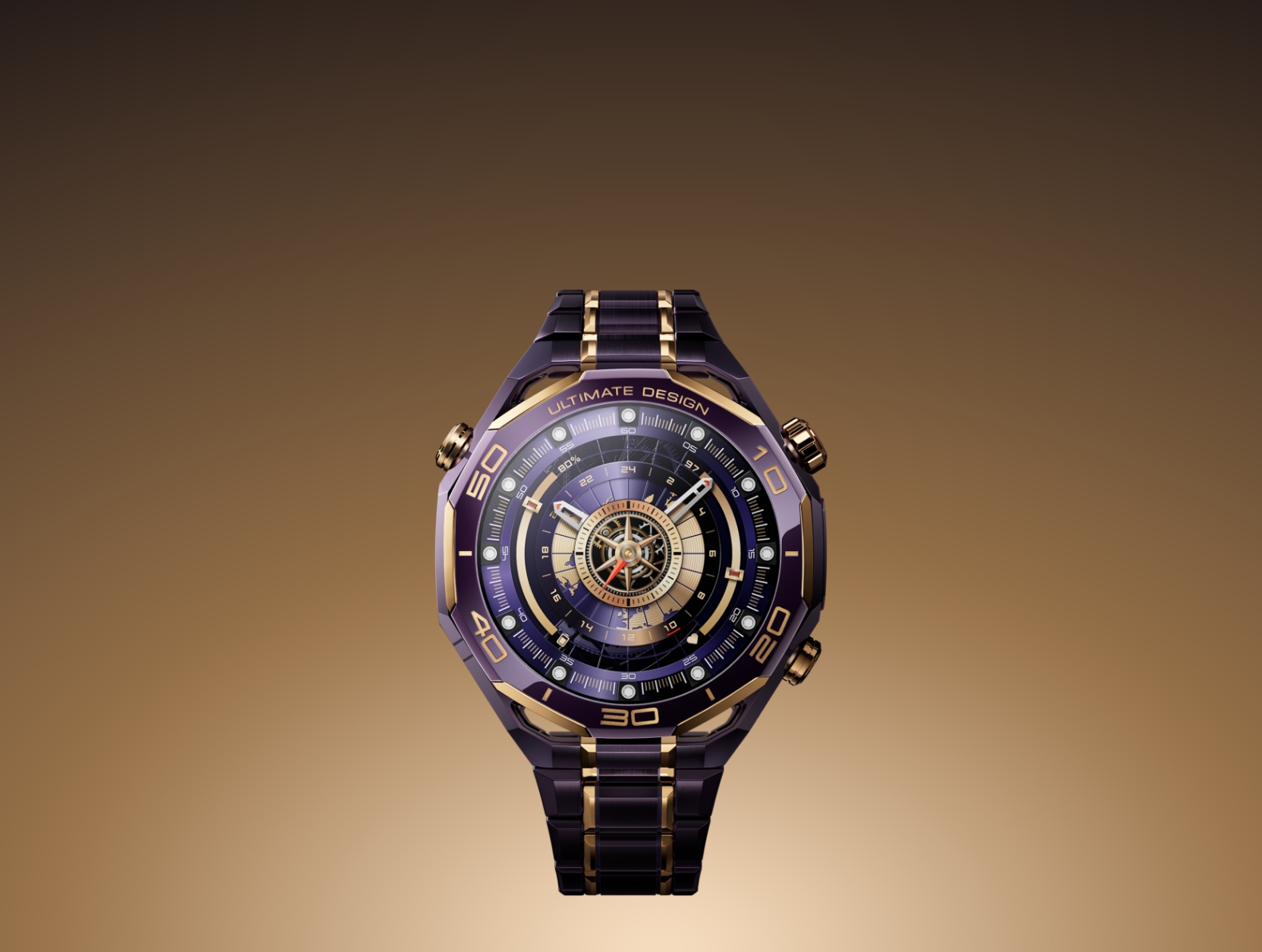
Huawei has begun official sales of the smartwatch Watch Ultimate Design Royal Gold in Europe — Spain, France and Germany are named among the first markets. The model was first unveiled in China at the end of 2025; it is now available to Western buyers at a price of €3,299 (in the UK — about £3,000, with sales expected to start shortly).
What’s inside — technical markers of premium
The watch’s case is made from a zirconium‑based liquid metal with an 18K/24K gold finish, and the display is protected by sapphire glass. The device features a 1.5" LTPO AMOLED display, eSIM support and a purple‑gold strap with a titanium coating.
Functionally, the watch offers a health suite — Health Glance assesses up to 10 metrics (heart rate, SpO2, stress, etc.), as well as GPS, activity tracking, music storage and gesture control. The device is rated for dives to 150 meters and includes an underwater short‑message exchange feature — there are profiles for diving and active recreation.
"Watch Ultimate Design Royal Gold combines design heritage and technical capabilities, targeting those who seek a blend of luxury and autonomy"
— Huawei press service
Price, segment and market
The €3,299 price positions the model not as a mass‑market item but in a narrower premium sector. Wearables market analysts note that the arrival of such solutions indicates two trends: first, eSIM and advanced autonomy are becoming expected options in high‑end gadgets; second, manufacturers are expanding the range of luxury variants to increase margins.
What it means for users and for Ukraine
For the European buyer — it’s another option in the premium segment. For Ukraine, a different sign is important: even amid global technological competition, manufacturers continue to push advanced connectivity capabilities (eSIM) and protected profiles for extreme conditions. This means the shift toward standards that support autonomy and mobility is accelerating — and issues of compatibility, cybersecurity and regulatory oversight are becoming increasingly important for the Ukrainian market and for state services that integrate such devices into security ecosystems.
Brief summary
Watch Ultimate Design Royal Gold is not only about price and materials, but an indicator of the direction of the wearables market: premium design + eSIM + profiles for extreme conditions. For Ukrainian users and organizations, it is important to monitor how such devices fit into privacy and data‑security considerations, and to assess them not only as status symbols but as technological links in a broader communications infrastructure.