Huawei launches smartwatches on global market with sapphire glass for £250 — and one for £3,499 with 99 diamonds
Watch Fit 5 Pro claims a place as a budget alternative to Apple Watch, while Watch GT Runner 2 Racing Legend Edition is aimed at serious runners. But there is another model in the lineup — and its price speaks for itself.

By Tetiana Suchkova-Ladik
May 7, 2026 · 2 min read
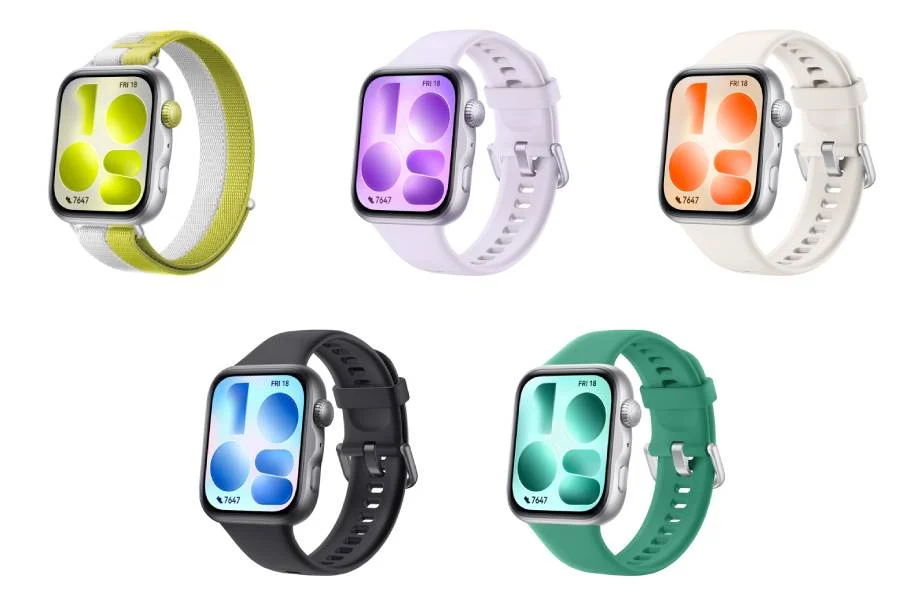
Huawei simultaneously launched three different products to the global market from one event — and this set perfectly reflects the brand's ambitions: from the mass market to ultra-luxury.
Fit 5 and Fit 5 Pro: betting on design against Apple
The standard Watch Fit 5 costs £159.99 and received an AMOLED display with a diagonal of 1.82 inches. The Pro version at £249.99 already offers 1.92 inches, sapphire glass, narrower bezels, and peak brightness of 3,000 nits. Both models support Android and iOS, which immediately expands the audience.
Reviewers from Tech Advisor note that the Fit 5 Pro "will not avoid comparisons with Apple Watch" — but it has updates that allow it to stand out. In terms of screen brightness and at £249, it is significantly cheaper than the Apple Watch SE (from £219 without sapphire and without such nit levels). For those who want a premium screen without a premium price — the logic is there.
Until June 21, Huawei offers bonuses when purchasing: a £30 discount, an additional strap, and Huawei Scale 3 weights as a gift.
GT Runner 2 Racing Legend Edition: for those who count steps in kilometers
Watch GT Runner 2 Racing Legend Edition at £349.99 — is a narrowly specialized product. Titanium case weighing 34.5g and 10.7mm thick, antenna for accurate distance and pace tracking, ECG monitoring and heart rate variability. The watch comes with a three-month subscription to Huawei Health+ with access to training plans and routes of cities around the world.
"Feel every breath, every heartbeat. Push the limits. Run your best run"
— advertising slogan for Huawei Watch GT Runner 2 from the brand's official website
For comparison: the Garmin Forerunner 265 — a direct competitor in this niche — costs around £450. The Runner 2 Racing Legend is more valuable if the Huawei ecosystem suits you.
And one watch for £3,499
On the same day, Huawei launched the Watch Ultimate Design Spring Edition — with 99 natural diamonds and a sapphire crystal with diamond cut. The brand positions it as a "masterpiece of wearable art" in honor of female strength. This is not a mass-market product — it is a marketing signal: Huawei wants to be present in every price segment simultaneously.
What this means in practice
The wearables market in 2025 is increasingly clearly divided into two poles: ecosystem locks (Apple — only for iOS, Samsung — best with Android) and cross-platform alternatives, where Huawei, Garmin, and Amazfit compete on price and specifications. The Watch Fit 5 Pro fits exactly into this logic.
The question is different: if Huawei can maintain screen and sensor quality after the first mass reviews — will £249 become a new pressure point on the Apple Watch SE? The answer will come by the end of summer, when the first independent long-term tests confirm or refute the claimed 10-day battery life.



