Hyunmoo‑V in border units: a ballistic missile for bunker‑busting and what it means for regional security
South Korea is deploying the Hyunmoo‑V near the border with North Korea — not just a technical upgrade but a signal of a shift in the balance of power in the region. We examine why this matters and what lessons Ukraine should draw.

By Tetiana Suchkova-Ladik
January 20, 2026 · 2 min read
What happened
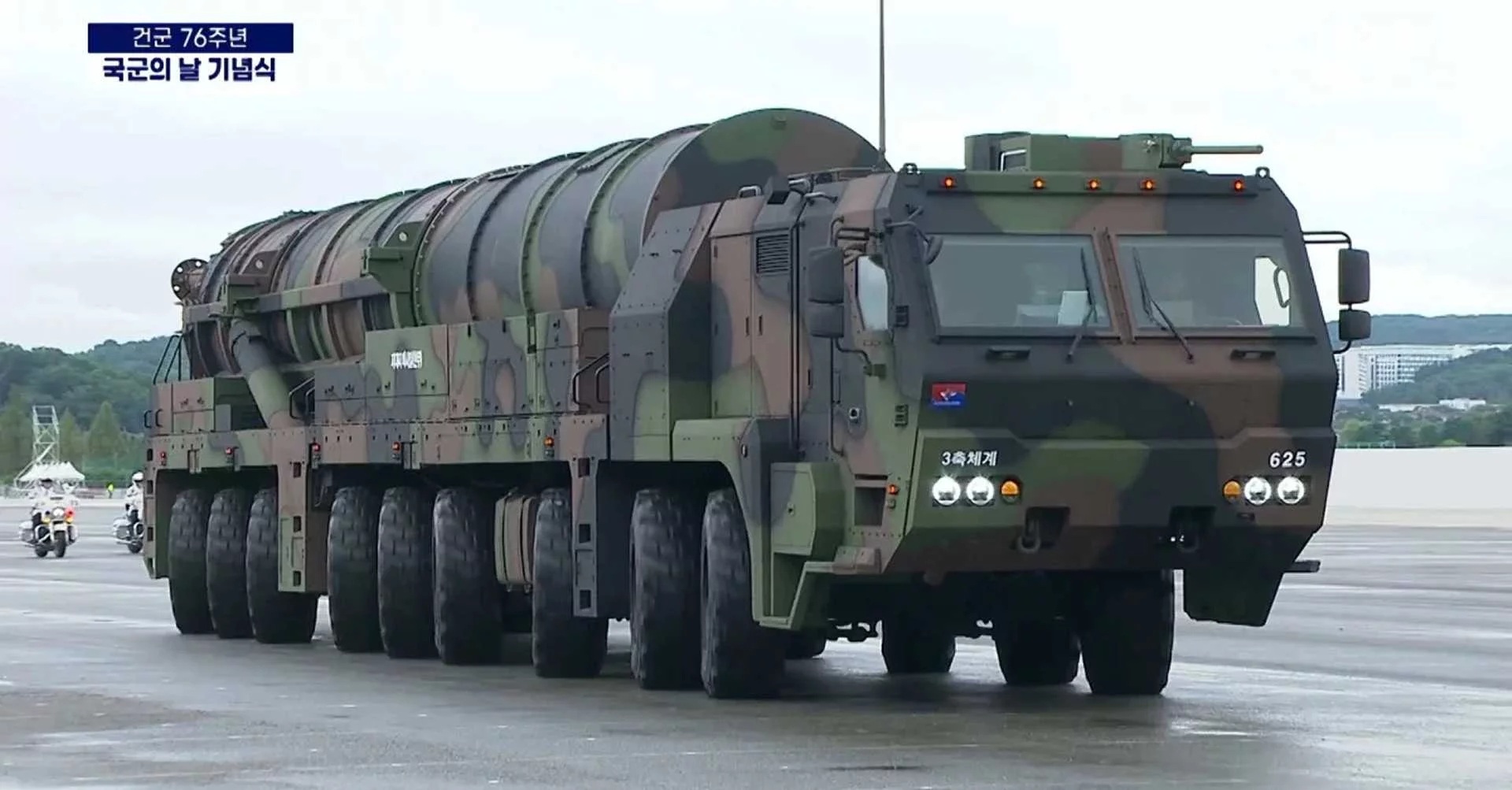
South Korea has begun deploying a new ballistic missile, the Hyunmoo‑V, to units near the border with North Korea. Yonhap reports that the system is aimed at striking hardened underground facilities — bunkers and command posts.
"South Korea has begun deploying a new ballistic missile, the Hyunmoo‑V, to units near the border with North Korea. This is the country's most powerful missile for strikes against hardened underground targets."
— Yonhap
Technical details
According to available reports, the Hyunmoo‑V can carry a warhead weighing up to 9 tons and strike targets at distances of at least 300 km. If the warhead mass is reduced, sources indicate a potential range of up to 5,500 km — meaning the missile's configuration is highly dependent on mission requirements and payload. The system is reported to be highly accurate; its penetrating effect is provided by a high terminal velocity, enabling it to penetrate concrete and rock.
Why this happened
The deployment follows the lifting of previous restrictions on South Korean missiles — the development and acceleration of the program are explained by a desire to strengthen deterrence vis‑à‑vis Pyongyang and to consolidate an advantage in the ability to strike the enemy's deeply buried facilities. At the same time, Seoul continues to modernize its aviation (KF‑21 tests) — part of a broader program to enhance strike and defensive capabilities.
What this means for regional security
The Hyunmoo‑V changes the balance of power not only technically but politically. First, it strengthens **mutual deterrence** between the South and the North: the ability to strike hardened targets forces a reassessment of escalation scenarios. Second, such capabilities encourage neighbors (and major powers) to accelerate their own intelligence, air and missile defense (AMD), and countermeasure programs — an obvious domino effect for the regional arms race.
Lessons for Ukraine
For Ukraine the key takeaway: modern war is not only maneuvering on the front line but the ability to affect deeply protected elements of an adversary's infrastructure. The development of systems similar to the Hyunmoo‑V underscores the importance of **deep strike capabilities**, precise target correction, and secure intelligence channels. At the same time, it is a reminder of the need for international cooperation in technologies and sanctioned deliveries that strengthen defensive capacity.
Conclusion
The Hyunmoo‑V is not just a new platform but a marker of a trend: states are building capabilities for targeted strikes against deeply buried targets, shifting the deterrence balance. For Ukraine, this is another argument in favor of investing in deep strike systems and intelligence: without them, modern defense risks remaining reactive rather than preventive. As East Asia re‑equips, partners and analysts are closely watching the consequences of such modernization for strategic stability.