Instagram Launches Filter-Free App — Late to the Trend It Itself Destroyed
Instants — Meta's new app for spontaneous sharing of disappearing photos. The problem is that Instagram Stories have been doing the same thing for nine years, and BeReal, which popularized it, has already risen and fallen.

By Tetiana Suchkova-Ladik
April 24, 2026 · 2 min read
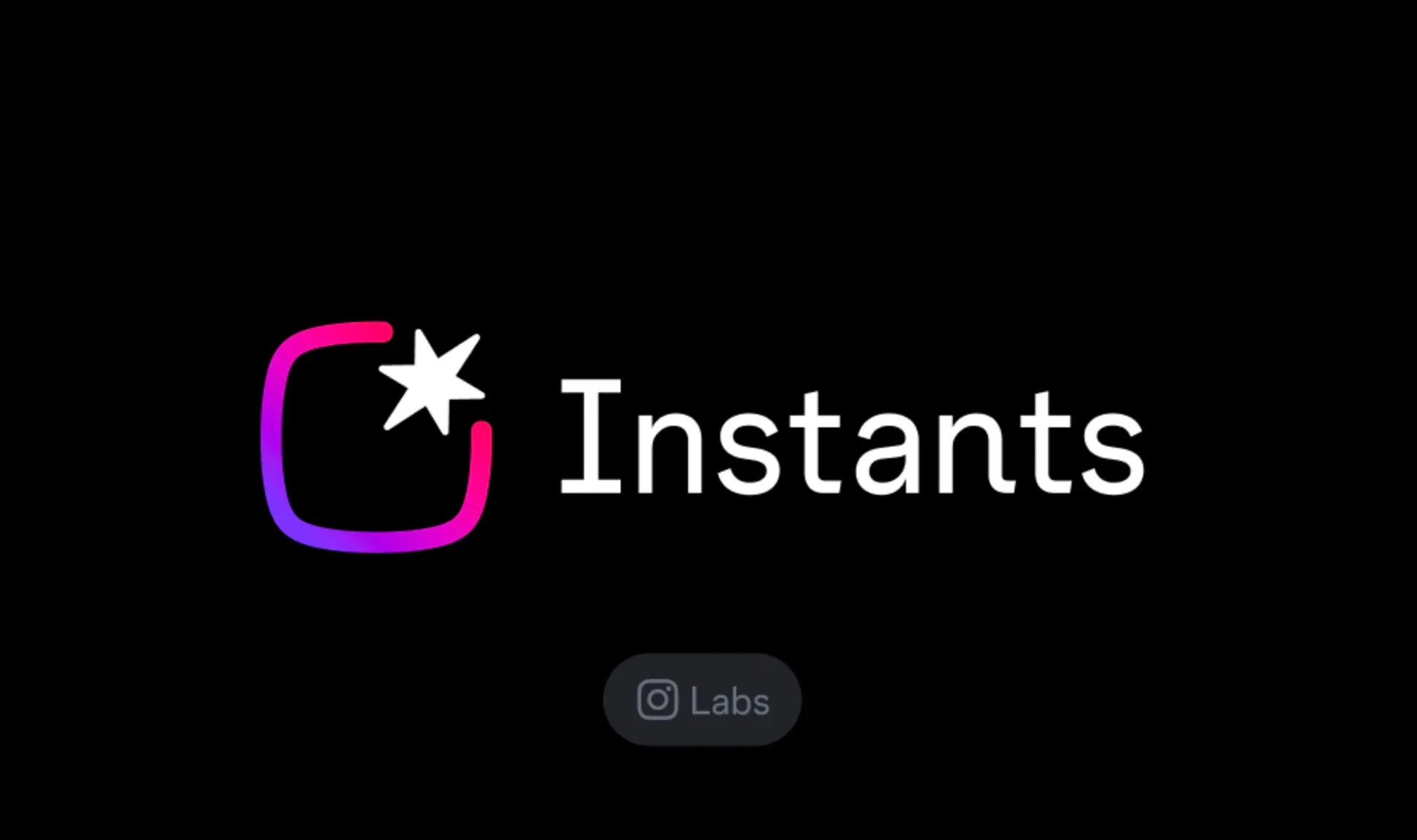
Meta is testing a separate Instants app in Spain and Italy. The mechanics are simple to the point of minimalism: one tap — photo, no editing, no uploads from the gallery. The shot is viewed once and disappears after 24 hours. The only option is to add text.
Sharing is only possible with mutual followers or a close friends list. A notable detail: these lists are synchronized with the main Instagram — there is no need to configure anything separately. The app is available on iOS and Android and can work both independently and as a function within the main app.
"We are testing the Instants app to give people a stress-free way to share moments with friends. We are exploring several versions and will listen to the community"
— Instagram press service, TechCrunch
Authenticity as a product
Instants appears at a time when Instagram itself has long transformed into something else: advertising, influencers, algorithmic recommendations of strangers. The app is an attempt to return to the original idea of a social network: sharing with friends, not performing before an audience.
But this niche has already been attempted by BeReal — a French startup that offered a daily unfiltered photo from two cameras simultaneously. At its peak in September 2022, the app was downloaded 14.7 million times per month. Then the wave subsided. Research shows that despite a huge installation base, only about 9% of active Android users opened BeReal daily — the rest tried and forgot.
The paradox is that BeReal lost momentum partly due to the reaction of the tech giants themselves. Snapchat launched a dual camera feature in April 2022, Instagram announced "Candid Stories" — and the competitor found itself in the shadow of those it was supposed to displace.
How Instants differs — and how it doesn't
- No editing or filters — photos only from the camera, no archive shots
- One-time viewing — after viewing, the content cannot be opened again
- Disappears after 24 hours — like Stories, but without the ability to save to Highlights
- Only mutual followers — not a public broadcast, but a narrow circle
All of this already exists in Instagram Stories, which have been around since 2016. The difference is only that Instants removes any possibility of "polishing" the moment before publishing. Stories allow you to choose from the gallery, add stickers, change lighting. Instants does not.
This is either radical minimalism or a marketing wrapper for a feature that already exists. The answer depends on whether there is demand specifically for the technical inability to edit — rather than just a cultural norm of "posting as is".
If Meta rolls out Instants globally, the key indicator will not be the number of downloads in the first month — but the share of daily active users after six months. BeReal at its peak had millions of installations and 9% DAU. If Instants does not surpass this threshold, it will mean that the problem is not with the app, but with the fact that people actually want to edit — they just won't admit it.