iPad Air with the M4: What Will Really Change for Work, Education and a Ukrainian's Budget
Apple updated the iPad Air — M4 chip, Wi‑Fi 7, better battery life and the same $599. We break down why this matters for professionals, schools and those working in field conditions in Ukraine.

By Tetiana Suchkova-Ladik
March 2, 2026 · 2 min read
Brief — why it’s worth noting
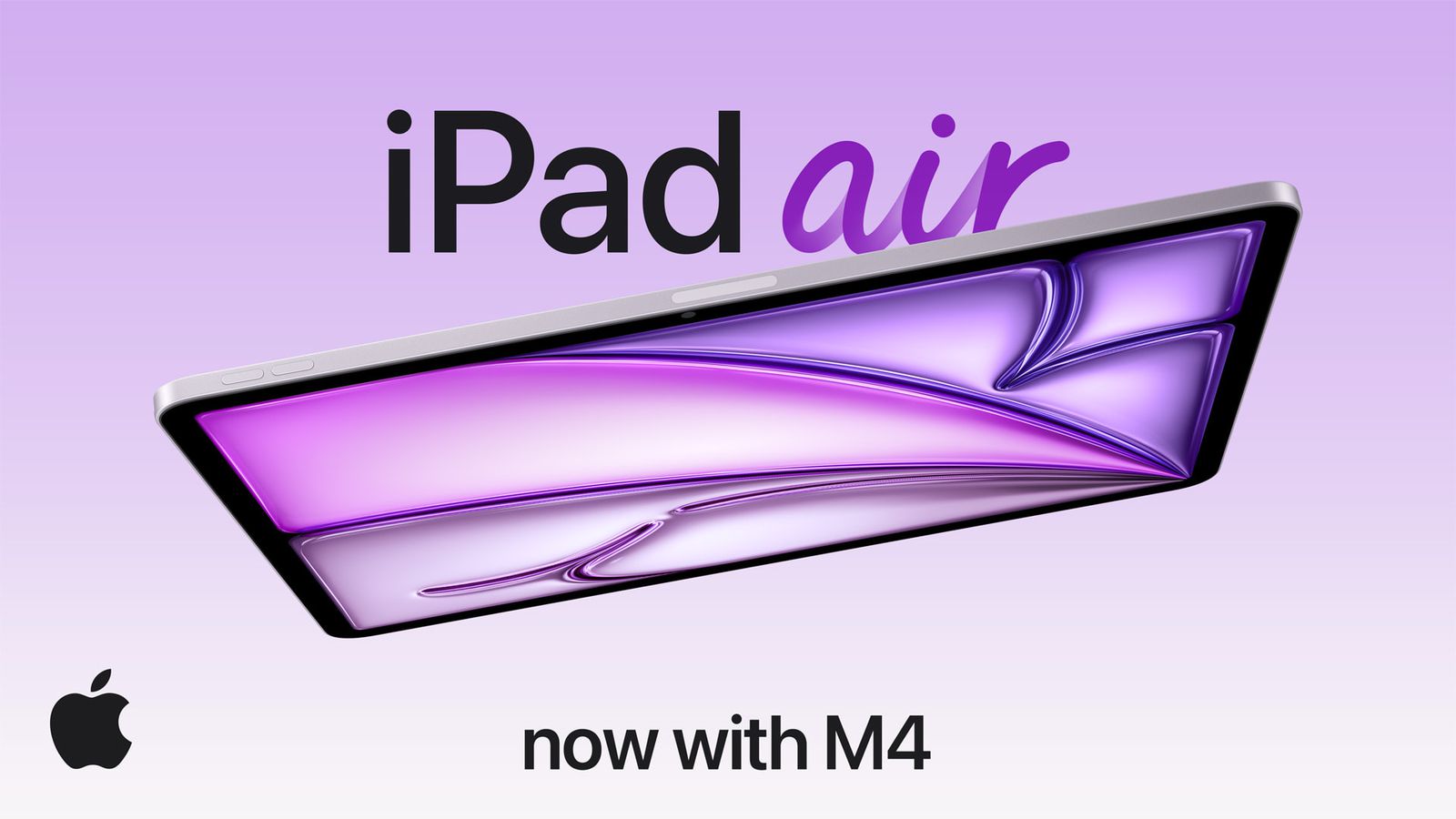
Apple has unveiled an updated iPad Air with the M4 chip, increased memory capacity and support for iPadOS 26. For the user this means up to 30% higher performance compared to the M3 model and up to 2.3× faster performance versus the M1 version. The starting price remains unchanged — from $599 for the 11" and from $799 for the 13".
What’s new inside and why it matters
Key updates are the 8‑core M4 processor and a 9‑core GPU with hardware support for advanced light-and-shadow rendering. Apple says 3D rendering is more than 4 times faster compared to the M1 — important for designers, video editors and AR content developers.
New wireless chips N1 and C1X enable support for Wi‑Fi 7, Bluetooth 6 and faster 5G connections in modem-equipped versions. Apple estimates up to a 50% increase in mobile internet speeds and a 30% reduction in power consumption compared to the previous generation — a practical bonus for those working in the field or in regions with unstable network access.
"iPad Air now combines portability and power for content creation, graphics work and learning — while the device’s price has not increased"
— Apple (press release)
Configurations, peripherals and practical scenarios
The device will be available in 11" and 13" versions, in four colors: Blue, Purple, Starlight and Space Gray. Storage options range from 128 GB to 1 TB. The tablet is compatible with Apple Pencil Pro, Apple Pencil (USB‑C) and the updated Magic Keyboard with trackpad — making it a full-fledged laptop replacement for many professional tasks.
What this means for Ukraine: no hype, just facts
1) For education: increased performance and larger memory capacities allow running complex educational apps and simulations. This is important for STEM programs and for training specialists in IT and the creative industries.
2) For journalists and volunteers: better rendering, faster networks and lower power consumption — real advantages when working in the field or during emergency deployments.
3) For business: keeping the starting price while upgrading the hardware platform lowers the barrier to refreshing device fleets and delivers more "power per workstation" for the same money.
Price, availability and what to expect next
Apple has kept prices at the predecessor’s level — a strategic move to make a more powerful device accessible without an additional financial barrier. For the Ukrainian market, this means that with a stable dollar rate the upgrade could be a realistic option for companies, educational institutions and professionals.
Conclusion
The updated iPad Air is not a dramatic revolution, but a noticeable step forward in balanced performance and mobility. For those who value content creation, handling resource‑intensive tasks and reliable work under limited connectivity, the new model has practical value. Now the question is for the buyer: do you need this extra power today, or is it better to wait for discounts or local offers for business and education?