iPhone 17 Pro Max Passed NASA Certification — And It's More Complex Than It Seems
# Artemis II Astronauts Film Earth with Smartphone Disconnected from Internet and Without Bluetooth. How an iPhone Ended Up in Space — and Why It Took Months of Testing. Aboard the Orion spacecraft, Artemis II astronauts are filming Earth with a smartphone that cannot connect to the internet and has no Bluetooth capability. How an iPhone made it to space — and why it required months of testing.

By Tetiana Suchkova-Ladik
April 6, 2026 · 2 min read
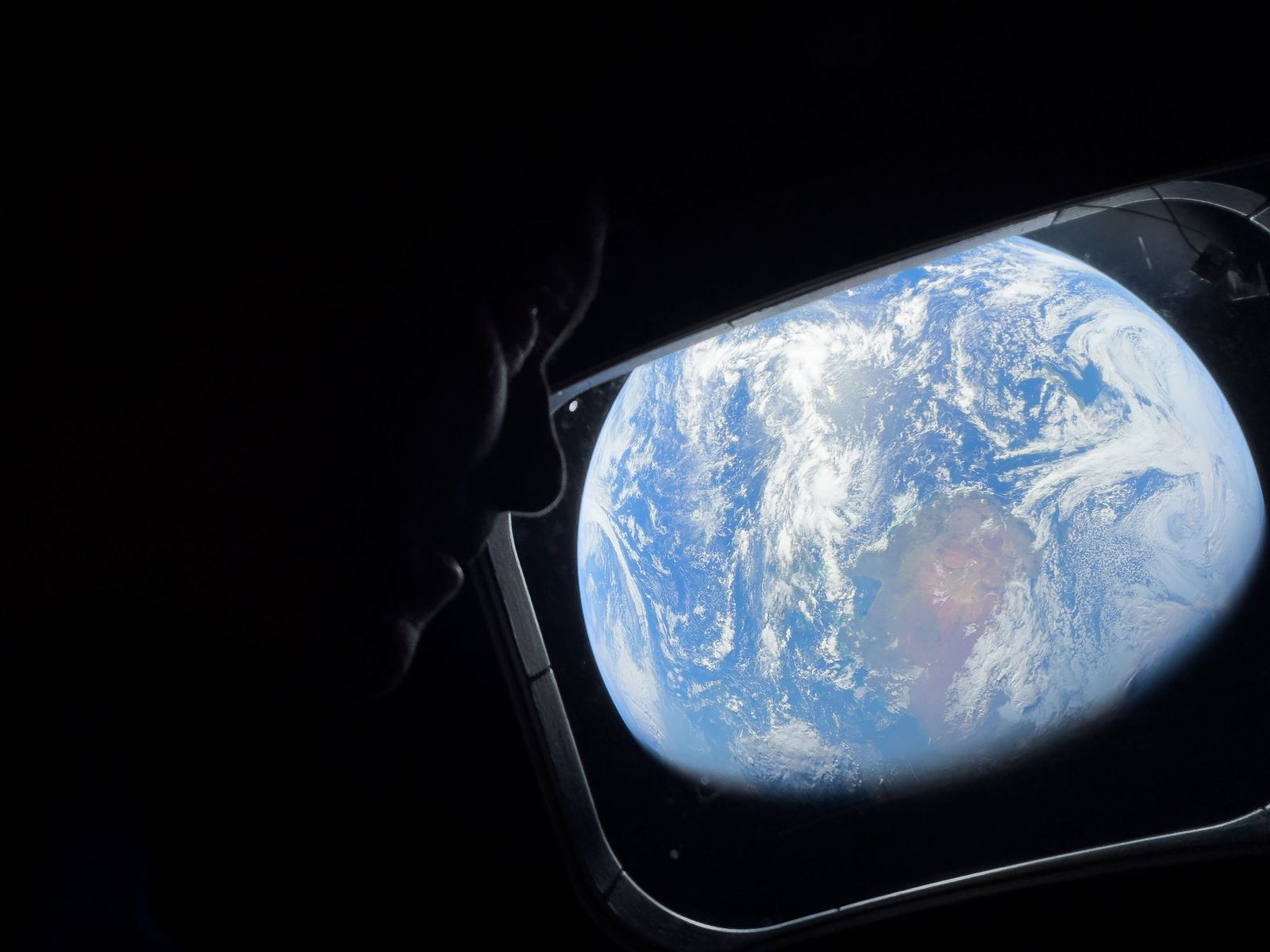
On the second day of the Artemis II mission, April 2, Commander Reid Wiseman and specialist Christina Koch took several photographs of Earth through the Orion spacecraft's window. The metadata of the photographs on NASA Flickr confirmed: shot with the front camera of an iPhone 17 Pro Max. This is the first case where a consumer smartphone has officially documented a crewed mission to deep space.
Why iPhone 17 — and only for photos
In February 2026, NASA announced that the iPhone 17 Pro Max for the first time received full qualification for extended use in orbit and beyond. Each of the four crew members received their own device. However, the functionality was intentionally limited: as the agency confirmed to the New York Times, the smartphones on board have no internet access and Bluetooth is disabled. Camera and local storage only.
Four phases — to ensure glass doesn't kill an astronaut
Tobias Niederwieser, research assistant at BioServe Space Technologies, an institute that previously went through similar approvals for cargo on Artemis I, described the certification process. According to him, the procedure is "quite lengthy and complex" and consists of four phases.
- Phase 1. Introduction to NASA's safety panel — initial equipment assessment.
- Phase 2. Analysis of potential hazards: moving parts, materials that could shatter. The screen glass is a separate item: fragments in zero gravity could get into an astronaut's face or block mechanisms.
- Phase 3. Development of risk mitigation plans.
- Phase 4. NASA validation tests to confirm the effectiveness of the measures.
Apple officially stated that it did not participate in the approval process — this was NASA's initiative. At the same time, the company acknowledged: Artemis II was the first case where its device received full qualification for extended use beyond Earth.
Nikon from 2016 alongside iPhone 2025
In parallel on board — a Nikon DSLR from 2016 and several GoPro cameras from a decade ago. These are considered the primary photographic equipment of the mission. The iPhone is a personal tool for the crew to document, not a replacement, but a supplement.
"The first time a smartphone in the pocket of most people photographs Earth from thousands of kilometers away."
Cult of Mac on Artemis II photos
NASA published the photographs in the "Journey to the Moon" gallery — along with a shot of the full Earth disk, where the aurora is visible over both poles and zodiacal light. This frame was taken shortly after the engine burn to set trajectory toward the Moon.
If NASA allows publishing video from the iPhone after the mission is completed — this would become the first consumer video from deep space. Whether the agency takes such a step depends on how the crew documents the return journey and how well the material meets the mission's public communication standards.