KAAN P1: Turkey unveils updated fighter prototype ahead of serial production
Turkish Aerospace Industries presented the second KAAN prototype — modifications to the fuselage, air intakes and landing gear are intended to improve stealth and create space for modern weaponry. Why this matters now: engines, exports and lessons for the domestic defense industry.

By Tetiana Suchkova-Ladik
February 17, 2026 · 3 min read
In the big aviation game, technical decisions matter more than the show
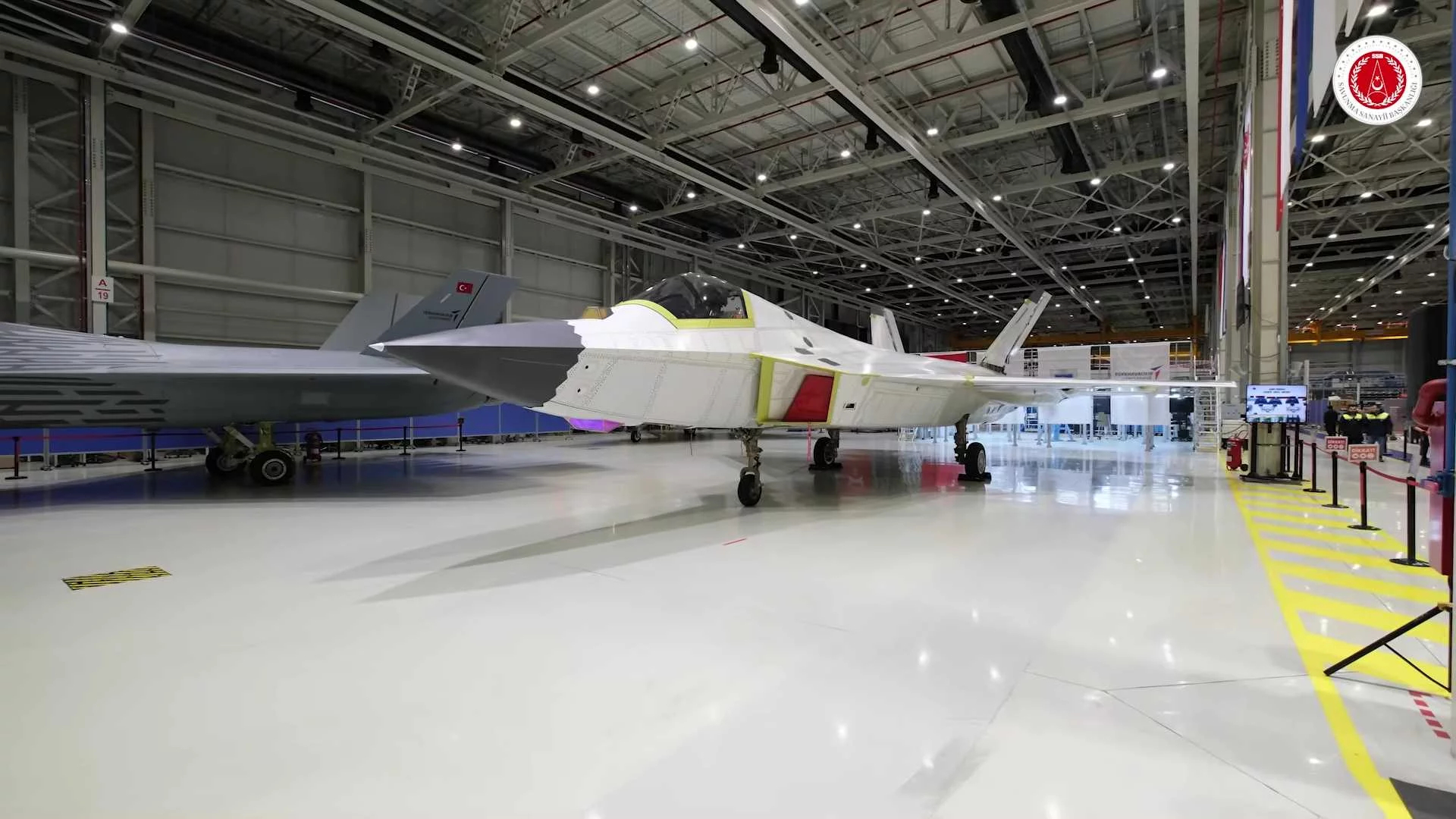
Turkish Aerospace Industries (TAI) has officially unveiled the second prototype of its fifth-generation fighter, KAAN — P1. An official statement from the Turkish Defence Industry Agency confirms: P1 differs from the first aircraft, P0 (first flight in 2024), by changes to the fuselage shape, relocated air intakes, a greater distance between engines, and a different landing gear arrangement. These technical corrections are not about aesthetics — they are an attempt to improve low observability and increase internal volumes for equipment and armament.
What specifically changed in P1
Key P1 updates from the press release and technical specifications:
Fuselage shape — redesigned for a better radar profile.
Air intakes and engine spacing — relocated and increased to optimize airflow and reduce interference between engines.
Landing gear — reconfigured placement that allows for more space in internal bays for weapons and sensors.
"The upgrades are aimed at enhancing low observability and creating additional volumes for modern sensors and armament"
— Turkish Defence Industry Agency
Systems, schedule and export
KAAN is positioned as a twin-engine multirole 5th-generation fighter, intended to partially replace the F-4 and some F-16s in the Turkish Air Force. Claimed performance: up to Mach 1.8, a ceiling of around 55,000 feet, and a maximum takeoff weight of about 34.7 tonnes. The design foresees internal weapons bays, an integrated electronic warfare system and a modern sensor suite.
Current plan: in 2026 the prototypes will enter an expanded ground and flight test program, with series deliveries scheduled to begin in 2029. The first production aircraft will receive American F110-GE-129 engines, with a later prospect of switching to the Turkish TF35000 engine. At the same time, Ankara is pushing the export component: there is already a contract with Indonesia for 48 aircraft.
Why this matters
There are three main implications that will be felt regionally and in the global arms market:
1) Strategic autonomy. The two-path engine approach (initially F110, then TF35000) is a means to accelerate entry into serial production while preserving the long-term goal of independence. This model is attractive to other countries seeking to combine a rapid program launch with their own technological build-up.
2) Export competition. The signed contract with Indonesia for 48 aircraft is a market marker: KAAN is already more than a paper project and a contender for large orders. This gives Ankara both economic and political leverage.
3) Lessons for Ukraine. Turkey shows how to combine foreign technologies with a domestic industrial strategy to speed up serial production. For Ukraine, this is an important example: developing indigenous engines and sensors is key to long-term operational independence and export potential.
Global context
Parallel events in global aviation — the first spotted flight of a J-20A with WS-15 engines and the delivery of three F-35I Adir fighters to Israel — show that fighter fleet renewals are occurring on all fronts. For manufacturers like TAI, this means intensified competition and the need to rapidly turn prototypes into reliable combat aircraft.
Conclusion
P1 is not the final stage of the KAAN project, but it is an important technical step toward production. If 2026 testing validates what is built into P1, and the engine strategy remains realistic, 2029 could be the year of the first serial deliveries and major export competition. The question for partners and competitors is whether KAAN will withstand the test of time and the market when trials confirm the claimed characteristics.