China tested the Atlas swarm: up to 96 drones under single control — a new challenge for air defense systems
On March 25, Chinese state media showed the full cycle of the Atlas swarm’s operation — from reconnaissance to strike. This was not just a display of hardware: swarm tactics are changing the rules of airspace defense. We examine what was shown and what conclusions air defense systems must draw.

By Tetiana Suchkova-Ladik
March 25, 2026 · 2 min read
A systemic demonstration, not an isolated launch
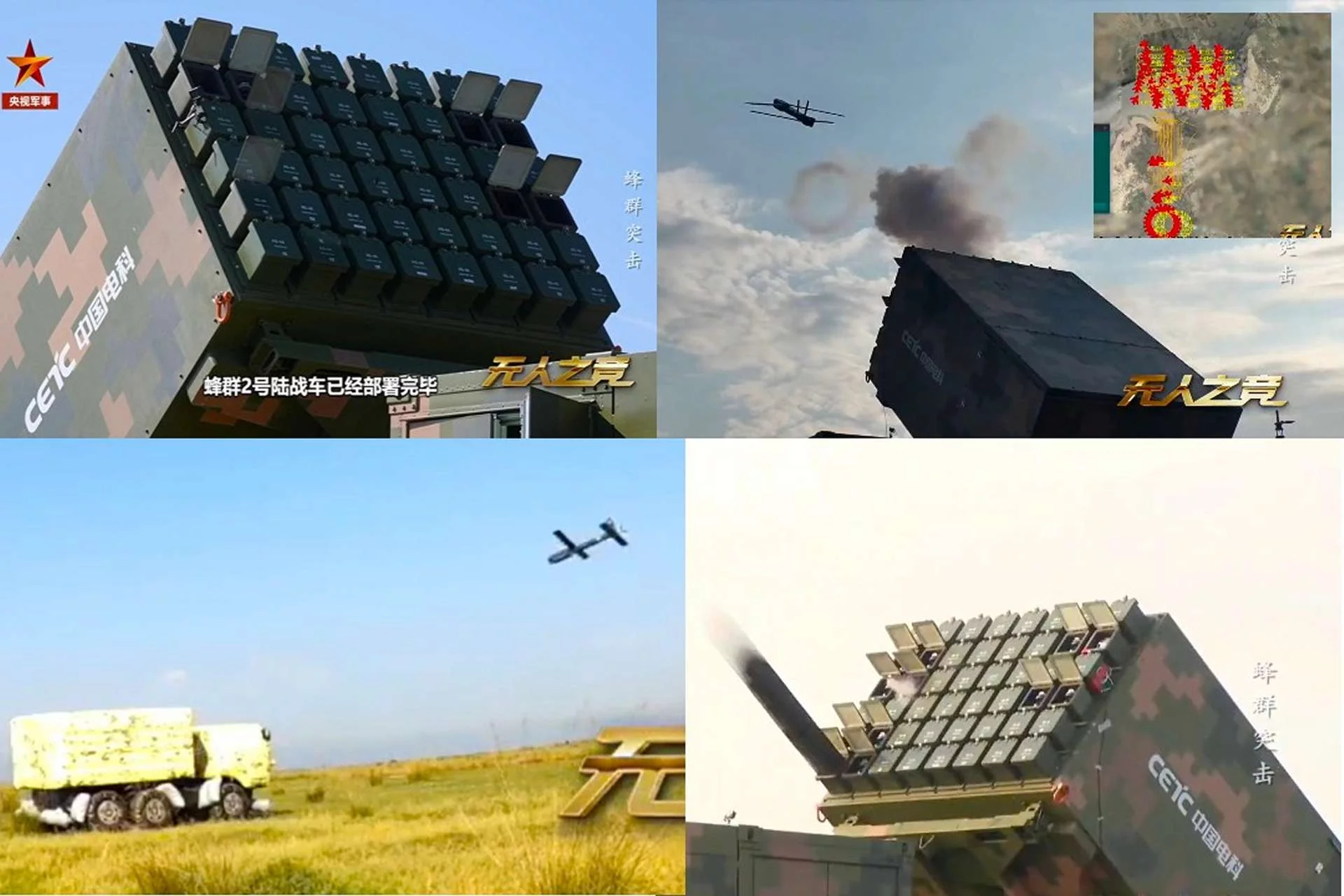
Systemic work has come to the fore: on March 25 state media showed how the Atlas swarm performs the full cycle — from target detection to engagement. This is not a collection of separate platforms, but an integrated system where each phase (reconnaissance, suppression of air defenses, strike) is subordinated to a single logic.
What exactly was demonstrated
According to Global Times, at the core of the complex is the combat vehicle Swarm-2, which launches up to 48 drones, and a single command post can coordinate up to 96 platforms simultaneously. Launches occur in stages: first reconnaissance, then suppression of air-defense assets, and only afterwards — strike waves.
"Atlas demonstrates the full cycle of operation — from searching for a target to destroying it",
— Global Times
Swarm technology: not by numbers, but by coordination
The key here is the software layer: algorithms allow drones to exchange data, avoid collisions, and reconfigure in real time. In effect each platform receives an element of "digital intelligence", enabling a single operator to control dozens of targets simultaneously and synchronize attacks in waves from different directions.
Context — not just hardware
At the same time, footage has appeared online of the Chinese fighter J-16D with EW (electronic warfare) pods and new missiles, as well as a tiltrotor-type drone with a range of about 4000 km. Together these elements underscore a push toward combined solutions: strike drones, EW and aviation operating within a single tactical scenario.
"This is not an immediate revolution — it's an evolutionary enhancement of coordination and of the burden on air defenses",
— Anna Kovalenko, analyst at RazomUA
What this means for air-defense systems
A swarm complicates the classic interception model: instead of a few large targets, air defenses face numerous targets, waves and maneuvering. This increases the need for multi-layered defense, rapid data filtering and targeting of enemy command-and-control and communications nodes, not just individual drones.
Practical takeaways for our defenders
Ukrainian systems should account for several priorities: strengthen multi-sensor reconnaissance (radio, optics, EW reconnaissance), develop countermeasures to disrupt swarm C2, and integrate mobile assets that can intercept wave attacks. Investments in software for automated target filtering and priority zoning may be as important as new interception systems.
Brief conclusion
The Atlas demonstration signals not only an increase in the number of drones, but a shift in emphasis toward coordination and automation. While attention for many is drawn to individual platforms, the more important work is occurring in algorithms and network architecture. Whether defensive structures can adapt in time is not only a matter of technology, but of strategic priorities and funding.