The Man Who Created the Zone Is Leaving It — and Has Been Preparing His Exit for a Year
Sergiy Hryhorovych is leaving GSC Game World and the S.T.A.L.K.E.R. franchise, but his new project S.T.R.A.N.G.E.R. Bermuda SOS was not a spontaneous decision: his wife registered the trademark a year ago, before the official announcement.

By Tetiana Suchkova-Ladik
April 6, 2026 · 2 min read
Sergiy Grygorovych founded GSC Game World in 1995 in Kyiv, turned it into a studio with a world-renowned name thanks to the Cossacks and S.T.A.L.K.E.R. series — and left it in 2024. He only spoke publicly about his next step in February 2026.
An Exit That Was Being Prepared for a Year
The official announcement of S.T.R.A.N.G.E.R. Bermuda SOS appeared on February 26, 2026, through Interfax-Ukraine. However, according to IP office data, Grygorovych's wife Lesya filed an application to register the S.T.R.A.N.G.E.R. trademark back in March 2025 — that is, a year before the public announcement. Grygorovych himself clarified that he started assembling a team and directly developing the game on February 12, 2026, but the idea was born earlier — even before S.T.A.L.K.E.R. 2 was completed.
"We are creating not just a game, but an immersive leap. S.T.R.A.N.G.E.R. will incorporate everything best that we have developed over more than 33 years of work by various teams of the company, but at the same time will offer fans technologies and approaches that the industry has not yet seen."
Sergiy Grygorovych, founder of GSC Game World
What Is Known About the New Game
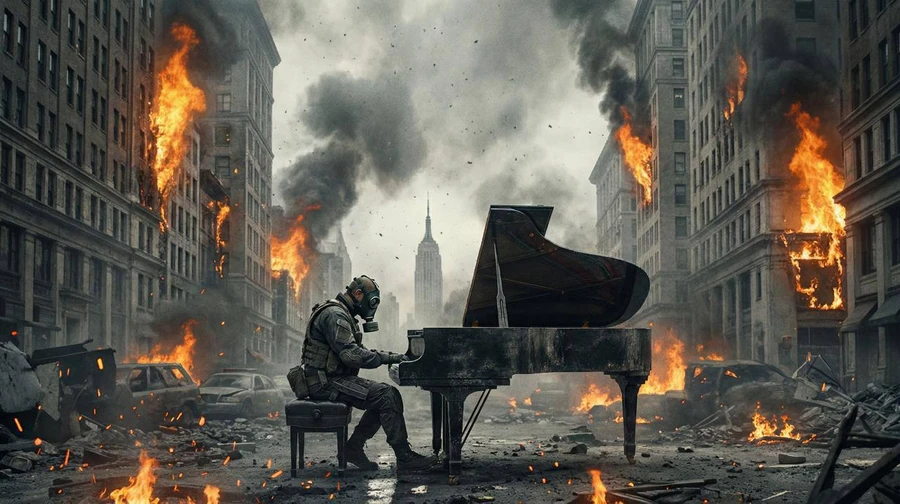
S.T.R.A.N.G.E.R. Bermuda SOS is a sci-fi RPG set in a post-apocalyptic world following a global nuclear catastrophe. Grygorovych promises active use of artificial intelligence, but there are no specifics yet: it is unclear whether this refers to content generation, NPC behavior, or procedural environment. At the same time, he mentioned participation in some cryptocurrency project — also without details.
Grygorovych estimates the budget at several tens of millions of dollars. For comparison: the first S.T.A.L.K.E.R. cost about $2 million, the second — $70 million. The project is at an early stage; there is no release date.
GSC Without Its Founder
GSC Game World studio continues to operate without Grygorovych. In November 2024, S.T.A.L.K.E.R. 2: Heart of Chornobyl was released, which, according to Grygorovych himself, recouped its costs on the first day of sales. In March 2026, the game was released on PlayStation 5 and received a nomination for the BAFTA Games Awards 2026.
So Grygorovych is leaving the franchise at a moment when it is commercially more successful than ever. This is either a conscious decision to leave at the peak — or a sign of internal conflict with the team, about which nothing is publicly known.
The key question is not "will S.T.R.A.N.G.E.R. be released," but rather this: if Grygorovych is truly assembling a new studio from scratch with a budget in the tens of millions — where is the money coming from and who is the investor? So far, this is the only thing he has not named.