Musk wanted to transfer OpenAI to his children — Altman called it a "moment that made my hair stand on end"
# Federal Court in Oakland: Sam Altman Reveals How Elon Musk's 2017 Inheritance Proposal Convinced OpenAI Founders to Deny Him Control In a federal court in Oakland, Sam Altman disclosed how Elon Musk proposed in 2017 that OpenAI be passed down to his children—and why this proposal specifically convinced the company's founders to refuse him control. At stake are over $130 billion and the company's future IPO.

By Tetiana Suchkova-Ladik
May 13, 2026 · 3 min read
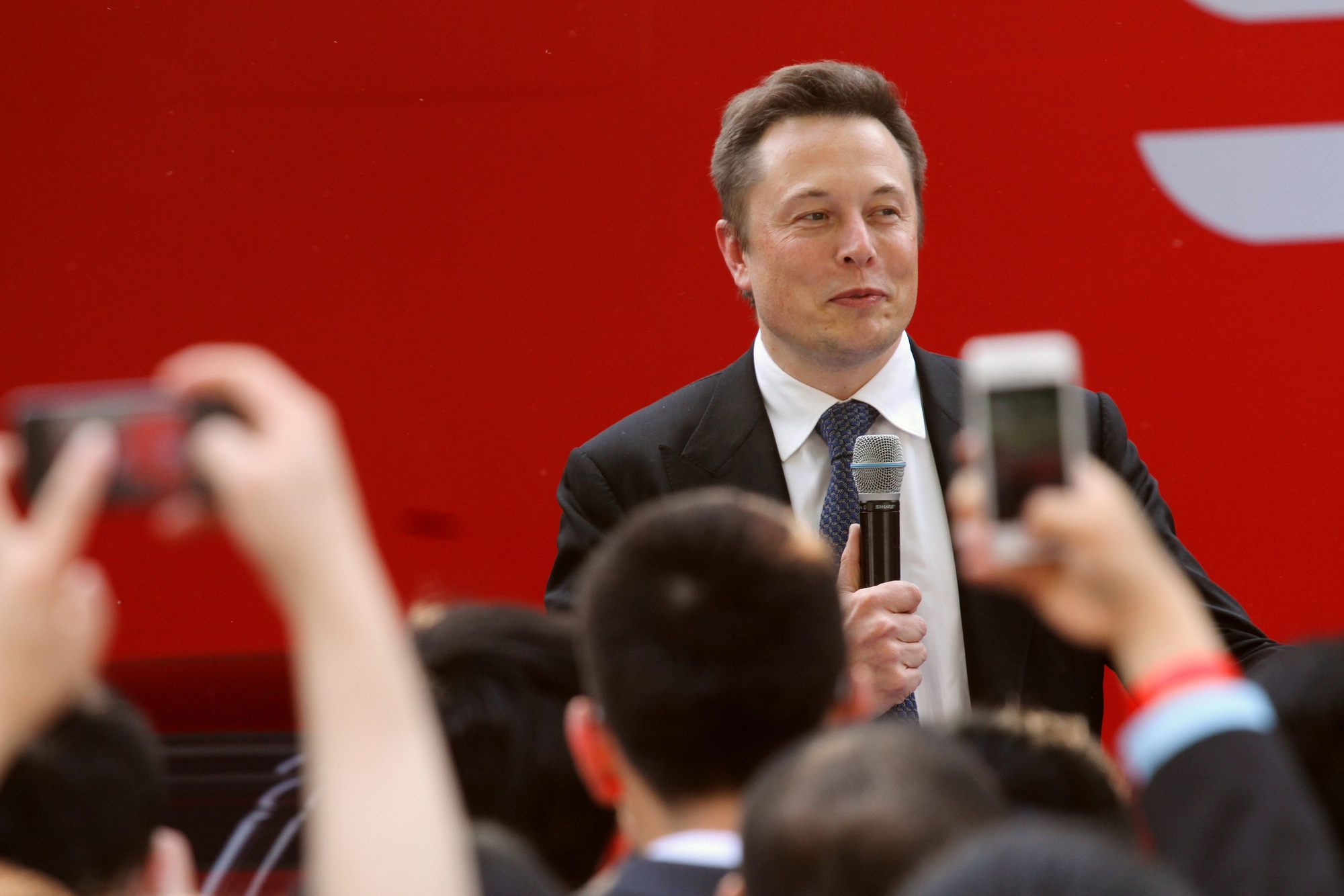
Federal Court in Oakland, California. Third week of the Musk v. Altman trial. OpenAI CEO Sam Altman testifies for nearly four hours — and the sharpest moment concerns not money, but legacy.
"Maybe OpenAI will pass to my children"
2017. OpenAI founders argue over how to raise financing for increasingly expensive artificial intelligence research. Musk insists on creating a commercial structure with full control in his hands. Someone present asks a simple question: what will happen to the company if he dies while in power?
"Maybe OpenAI should pass to my children."
— Elon Musk, according to Altman's testimony in court (TechCrunch, May 12, 2026)
Altman called this a "particularly hair-raising moment" — a moment that made the hair stand on end. That's when, according to him, it became clear: entrusting Musk with control over an organization designed to develop AGI in the interests of all humanity was unacceptable.
What is this trial and why is it important
Musk filed a lawsuit in 2024. His argument: he donated $38 million to OpenAI as a nonprofit organization, but the founders — Altman and company president Greg Brockman — violated their obligations by transforming it into a commercial structure for personal enrichment. According to CNN, Musk is demanding a return of over $130 billion to the nonprofit arm, the resignation of Altman and Brockman, and the cancellation of the restructuring.
If the court rules in Musk's favor, OpenAI's IPO, scheduled for the end of 2026 with a valuation of around $1 trillion, will face serious jeopardy.
Altman: "Musk tried to destroy the company"
During testimony, Altman rejected Musk's thesis about "theft of a charitable organization":
"We created one of the world's largest charitable foundations. That foundation is doing incredible work and will do even more."
— Sam Altman, Federal Court in Oakland (TechCrunch)
According to Altman, it was Musk who sought "total control" over any commercial structure of OpenAI with a promise to gradually reduce it — but the founders didn't believe that would actually happen. Additionally, Altman testified that Musk "demotivated" key researchers by publicly ranking their achievements — and that his departure in 2018 actually boosted team morale. As NPR reports, Altman also stated: "Musk tried to destroy the company" — launching competitor xAI, attempting to poach employees, and, according to Altman, engaging in "business interference."
What the other side says
Musk's lawyers focused on one specific fact: the OpenAI nonprofit foundation, despite assets of around $200 billion, had no full-time employees until early 2026. Board Chair Brett Taylor explained the delay as the technical complexity of converting OpenAI shares into actual cash — a problem only solved during the 2025 restructuring. Musk also admitted in court that xAI uses distillation technique based on OpenAI models — which plaintiff's lawyers are trying to use as evidence of unfair competition.
A key witness for both sides has been Shivon Zilis — former OpenAI board member and mother of Musk's four children — who participated in critical six-week negotiations about the company's structure.
Timeline of key events
- 2015 — Musk, Altman, and Brockman found OpenAI as a nonprofit organization
- 2017 — dispute over control; moment with "legacy for children"
- 2018 — Musk leaves OpenAI board, founds xAI
- 2024 — Musk files lawsuit
- 2025 — OpenAI restructuring; foundation finally gets staff employees
- May 2026 — trial in Oakland, closing arguments scheduled for Thursday
Judge Yvonne Gonzalez Rogers and the advisory jury must render a decision the following week after closing arguments. If the court decides that fiduciary duties were breached — the question of who really "stole" this organization will cease to be rhetorical: it will have a concrete price of $130+ billion and concrete defendants.