Microsoft Commissioned a Study That "Beat" MacBook Neo. But There's a Catch
Signal65 compared four Windows laptops with Apple's new MacBook Neo — and found advantages. The research was commissioned by Microsoft itself, which raises questions about the independence of the findings.

By Tetiana Suchkova-Ladik
May 14, 2026 · 3 min read
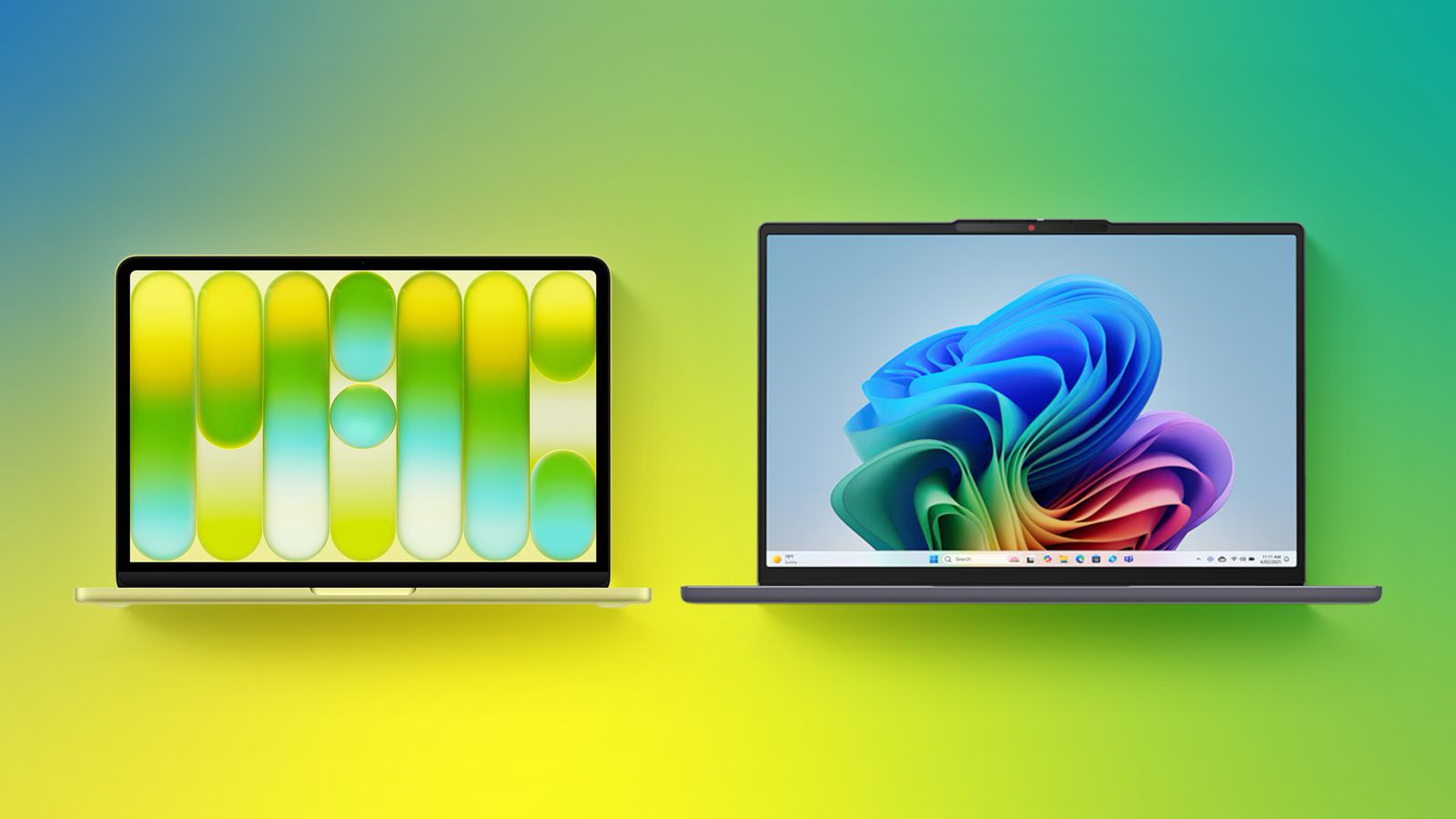
When Apple released the MacBook Neo for $599 in March 2025, the market reaction proved sharper than expected. The budget notebook segment under $700 represents approximately 75 million devices annually, or 40% of the entire notebook market, and has belonged to Windows and ChromeOS for decades. Apple's entry into this segment forced manufacturers to act quickly.
Microsoft responded unconventionally: it commissioned research from Signal65, which compared the MacBook Neo with four Windows notebooks — Lenovo IdeaPad Slim 3x, Lenovo Yoga 7i, HP OmniBook 5, and HP OmniBook X Flip. The results, as expected, favored Windows.
What the research showed
The star of the report was the Lenovo IdeaPad Slim 3x priced from $549 — the only one of the four notebooks that realistically competes with MacBook Neo on price. According to Signal65, it offers twice as much RAM, a larger screen (15 inches versus 13), more ports, and a faster multi-threaded processor by Cinebench tests.
Battery life is a separate argument. In Tom's Guide testing, the IdeaPad Slim 3x lasted 16 hours 29 minutes compared to 13 hours 28 minutes on the MacBook Neo — a 56% difference that Signal65 actively promotes in its materials. The physical explanation is simple: a 15-inch chassis simply has more room for a battery.
What the research overlooks
Three of the four notebooks in the report cost between $749 and $1029 — significantly more expensive than the MacBook Neo. The Lenovo Yoga 7i and HP OmniBook X Flip sell for $1099 and $949 respectively. Comparing devices from different price categories as "equal alternatives" is a typical marketing research technique.
Additionally, Signal65 states that the IdeaPad Slim 3x has 512 GB of storage, while the base model at $549 actually ships with 256 GB — the same amount as the MacBook Neo.
"MacBook Neo will significantly impact the PC budget segment, especially in education, which represents approximately 13.4 million devices annually"
Francisco Jeronimo, IDC Vice President for Client Devices
The MacBook Neo has already caused shortages: Apple quickly exhausted inventory and doubled production orders. Analyst Ming-Chi Kuo noted that the new device "opens the door for Apple in the mass market" and will create margin pressure for competitors in the long term.
Context: why this is more than marketing
Commissioned research is a common practice in the industry, but its value depends on methodology and transparency. Signal65 does not hide who commissioned the report, but does not publish the full testing methodology for performance. The conclusion about a "92% faster multi-threaded CPU" is based on synthetic Cinebench tests, which correlate poorly with real tasks for most users — video viewing, browsing, office documents.
Meanwhile, MacBook Neo has obvious advantages that the report acknowledges in passing: lower weight, higher-quality trackpad, better-quality display, and the Apple Intelligence ecosystem — features that are difficult to measure in a Cinebench table.
According to IDC, global PC shipments in 2025 totaled approximately 285 million devices, with Apple holding less than 10% of the market. If MacBook Neo allows it to grow significantly in the largest price segment by volume — Microsoft's and Windows manufacturers' response will become systemic rather than limited to a single research report.
If by the end of 2025 Apple maintains the MacBook Neo's price and ensures stable supplies — will Windows manufacturers be able to respond not with marketing reports, but with real price cuts in the same segment?