Moto Tag 2: World's First Bluetooth 6.0 Tracker — But the Main Feature Works Only with One Smartphone
Motorola Introduced Moto Tag 2 with UWB, Bluetooth 6.0, and Battery Life Up to 600 Days. The Catch: The Most Interesting Feature — Channel Sounding — is Initially Supported Only by the Pixel 10 Series.

By Tetiana Suchkova-Ladik
May 13, 2026 · 2 min read
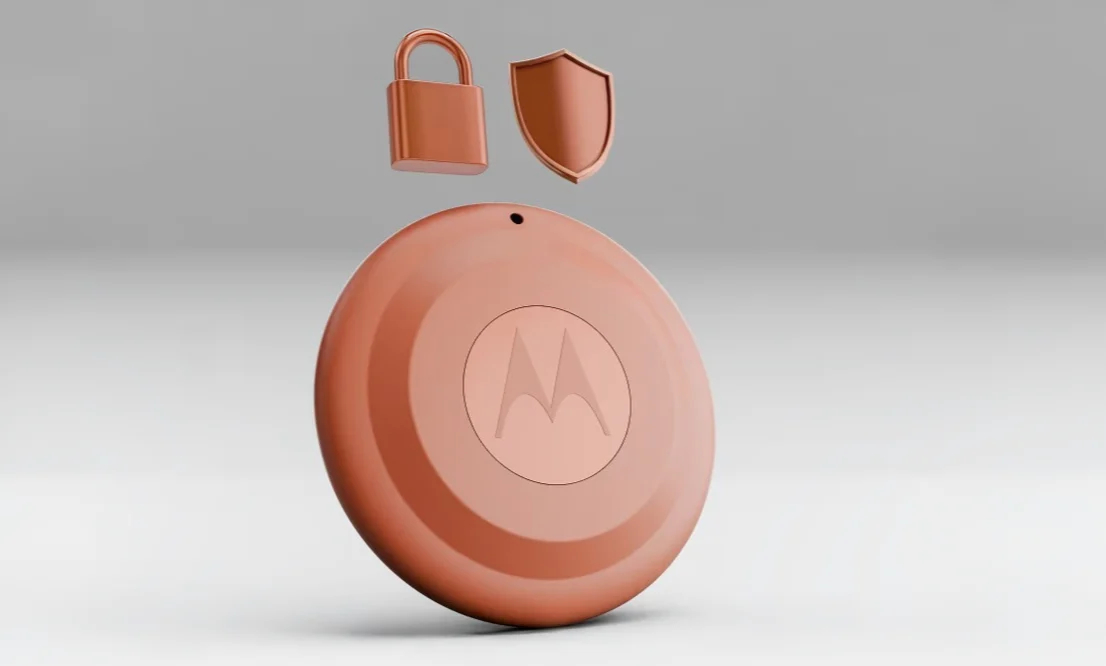
At CES 2026, Motorola unveiled the Moto Tag 2 — the first mass-produced tracker with Bluetooth 6.0. On paper, the list of advantages over AirTag looks convincing: Ultra-Wideband, new Channel Sounding navigation, IP68, CR2032 battery lasting over 500 days. In practice, the picture is more complex.
What actually works right after purchase
UWB navigation — the part that functions without limitations. According to hotairtag.com, in testing the first generation Moto Tag on Pixel 8 Pro, UWB already solved the problem of "exactly where the object is" within a 10-meter radius: the phone showed direction and distance, not just "nearby." The Moto Tag 2 inherits this capability and adds compatibility with Google Find Hub — the Android ecosystem's equivalent to Apple Find My.
Battery life has increased by approximately 37%: from 365 days in the first generation to over 500 thanks to lower power consumption of Bluetooth 6.0. According to the same publication, this means battery replacement once every 16 months instead of annually. IP68 instead of IP67 — submersion to 1.5 meters versus 1 meter.
Where the asterisks appear
Channel Sounding — the technology for precise distance determination via Bluetooth — is the main marketing argument for Moto Tag 2. However, as 9to5Google reports citing Motorola's CES briefing, the feature activates only on smartphones with Bluetooth 6.0 and Android 16. At launch, this effectively means the Pixel 10 series and a narrow circle of Snapdragon 8 Elite Gen 2 flagships coming later in 2026. Even last year's Motorola Razr Ultra didn't make the list.
"Channel Sounding is available only on smartphones with Bluetooth 6.0 and Android 16 — even last year's Razr Ultra is not supported"
9to5Google, CES 2026
Users on Pixel 8/9, Galaxy S24 and most other Android devices will get behavior identical to the first generation Moto Tag: Bluetooth 5.x + UWB where hardware supports it.
Price and availability
According to Gizmochina, the tracker has already appeared in the UK and Germany for £29.99 and €40 respectively — broader release is expected later. For comparison: AirTag costs $19-29 depending on the market, but is tied to iPhone. On the Android market, direct competitors with UWB are few and far between.
Who should consider this now
- Pixel 10 / 2026 flagships — full feature set, including Channel Sounding.
- Android devices with UWB (Pixel 8+, Galaxy S21+) — precise UWB navigation + Find Hub network, Channel Sounding unavailable.
- Android without UWB — standard Bluetooth tracker with long battery life and Find Hub.
Motorola correctly describes the Moto Tag 2 as a tracker with a "future" feature: the hardware is ready, but the Android 16 ecosystem is only gaining momentum. The practical question remains: if Channel Sounding only works widely by the end of 2026 — will Motorola manage to maintain its price advantage before Samsung and Google release their own trackers with the same standard?