MQ-20 Avenger autonomously intercepted a target — what it means for air security and defense
Tests on January 18 in California showed that the American MQ‑20 drone planned a route, detected and “attacked” a manned aircraft in a training scenario. We examine why this is important for air-defense systems, electronic warfare, and for Ukraine as a whole.

By Tetiana Suchkova-Ladik
January 19, 2026 · 2 min read
What happened
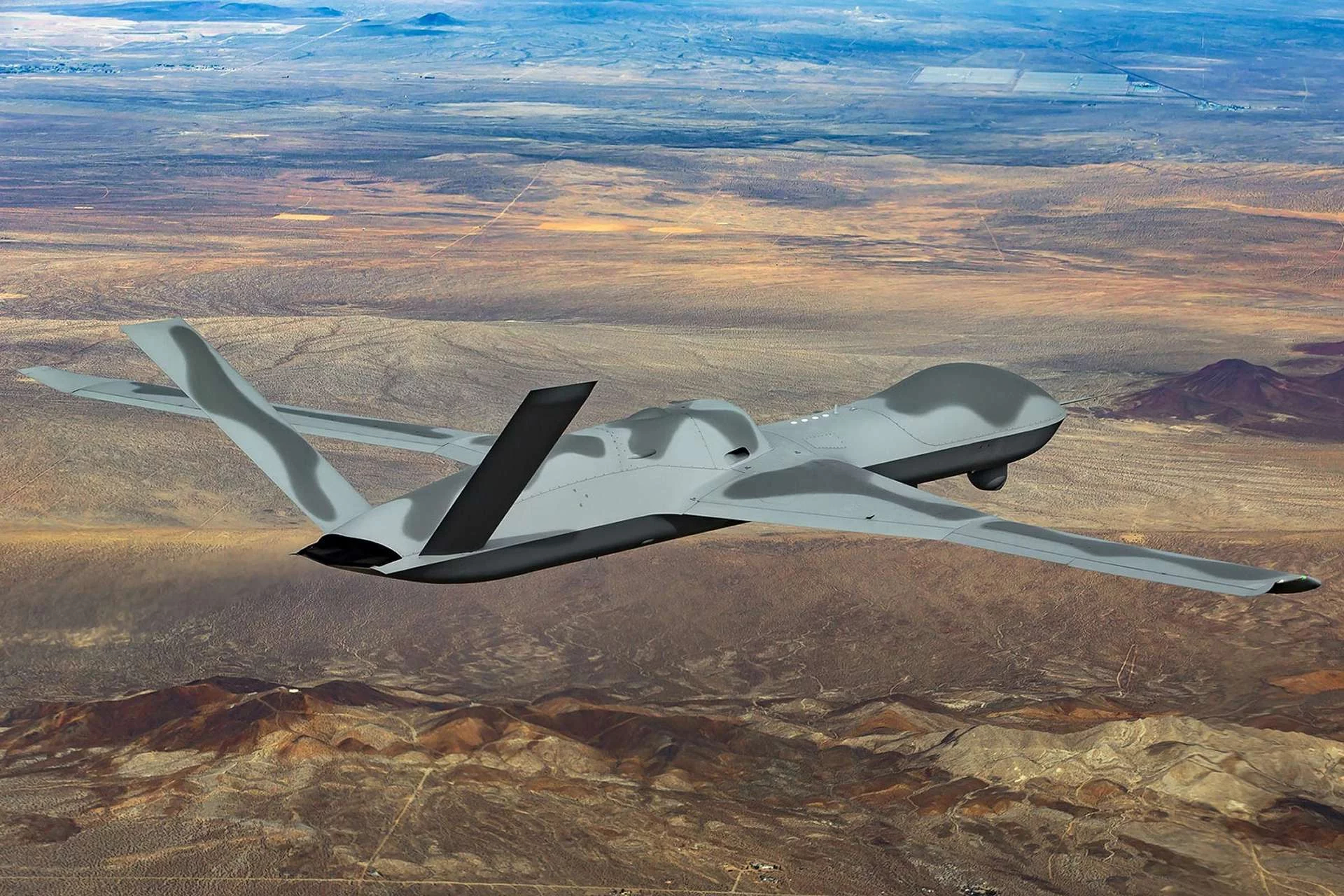
On January 18, 2026, in California, General Atomics conducted a test of the MQ‑20 Avenger unmanned vehicle. According to the manufacturer, the drone operated autonomously: it planned its route independently, detected a target using an infrared sensor, calculated an intercept trajectory and carried out a virtual strike — without manual operator intervention. No actual munitions were used; the test took place within airspace designated by ground coordination.
"The flight on January 18 in California demonstrated the MQ‑20's ability to independently plan a route, detect a target and execute an attack without direct operator intervention."
— General Atomics (press release)
Technical details — what is known
The MQ‑20 is a jet-powered unmanned aerial vehicle with an endurance of over 20 hours and a payload capacity of more than 1 ton. It is used as a platform for testing artificial intelligence and autonomous control systems. During the test the drone used infrared sensors for detection and targeting; a simulated strike was used instead of real munitions.
Why this matters for Ukraine
Autonomous combat capabilities change the terms of the debate on air security. For Ukraine this has several practical implications: first, the importance of electronic and cyber countermeasures increases — the ability to jam, deceive, or attack sensors and control links. Second, autonomy heightens the need for integrated early‑warning systems that operate across a wide range of frequencies and sensors. Third, it is another signal for partners: investments in counter‑drone capabilities and air defense remain a priority to retain control of the skies.
Limits of the test and risks
It is important to remember this was a controlled experiment. The drone operated within designated airspace parameters and did not use real munitions. Autonomous systems in field conditions face a different set of challenges: complex sensing environments, unpredictable behavior of civilian aircraft, and interference or jamming signals. There is also the question of rules of engagement: who bears responsibility for a decision made by an autonomous weapon system?
Conclusion — what to do next
This test is a sign of technological progress, but not a verdict. For Ukraine the practical implications are clear: accelerate development of counter‑UAV measures, consolidate intelligence‑sharing with partners, and invest in layered air defenses and electronic protection. An effective response is a combination of tactics, technology and diplomacy: while the adversary refines its tools, our task is to make them less effective and more costly to employ.
The question remains open: how will the balance of power change when autonomous systems become a routine element of aerial campaigns, and will states manage to adapt to the new rules of the game in time?