Diia.Education launches AI mentor on Gemini — how to activate it and why it matters
The new digital mentor, created in partnership with Google.org and based on Gemini, is already helping students grasp courses faster and compile study notes. In short — how to enable it, what will change, and what’s next for Ukrainian education.

By Tetiana Suchkova-Ladik
December 30, 2025 · 2 min read
What happened
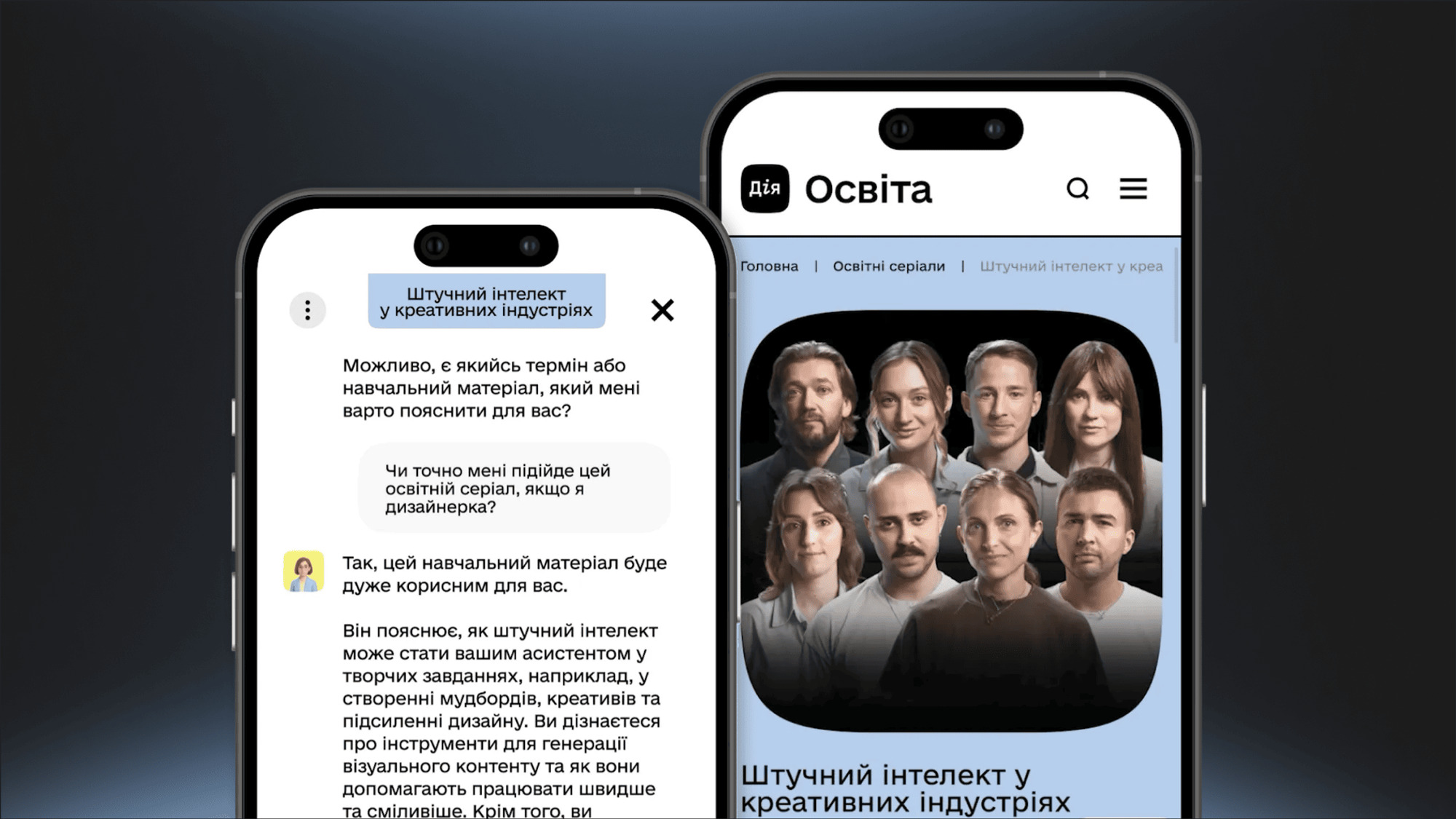
The Diia.Education platform launched an integrated AI Mentor that runs on Google's Gemini language model. This is the first AI tool implemented as part of the collaboration with Google.org, the Ministry of Digital Transformation of Ukraine reports.
"The AI Mentor explains complex terms in plain language, quickly summarizes the content of lessons and creates short notes with the key ideas of lessons."
— Ministry of Digital Transformation (official statement)
How to enable it — step by step
To use the assistant: sign in to the Diia.Education platform, open any educational course, simulator, or guide and click the "AI Mentor" icon in the bottom right corner of the screen. The tool operates within the chosen material and responds to the context of queries, so answers will be tied to the specific lesson.
Where it already works and what to expect
The Mentor is available in series, simulators, gamified courses and guides. In 2026 the platform will also introduce an AI Guide that will help select learning products and build individual learning routes among more than 700 courses. At the same time, officials report the preparation of a Ukrainian LLM based on Google's Gemma model and plans to migrate the Diia.AI chatbot to a national language model.
Why this matters for Ukraine
In short: this is a step toward scaling quality education without a proportional increase in resources. AI speeds up learning — it explains terms, compresses lessons into notes, and helps navigate courses. For a country that, alongside restoring investment and the economy, needs rapid training of specialists, such tools increase the efficiency of education and make it more accessible in the regions.
Risks and conditions for success
AI integration will not replace pedagogy: verification of answer accuracy, transparent data policies and monitoring of content quality are important. Collaboration with Google.org provides a technological advantage, but at the national level it is necessary to ensure adaptation of models to the Ukrainian context and linguistic specifics — therefore the project to create a domestic LLM based on Gemma and the plan to transition Diia.AI to a national model are crucial.
Brief outlook
For now this is an important practical step: the tool is already working and providing benefits to users. The next stage is scaling, quality control and national-level integration. If partners and the state move beyond pilots to systematic support and localization of models, Ukrainian digital education will gain a competitive advantage — becoming more accessible, responsive and adaptive.