NASA redirects $20 billion from Lunar Gateway to a lunar base — what it means for international cooperation and technology
NASA has announced a significant revision to the Artemis program: the orbital Lunar Gateway will not be deployed as planned, and its components will be adapted for a lunar surface base. The decision is not merely a technical change but a turning point for partners, the commercial sector, and new energy solutions on the Moon’s surface.

By Tetiana Suchkova-Ladik
March 25, 2026 · 3 min read
What was announced
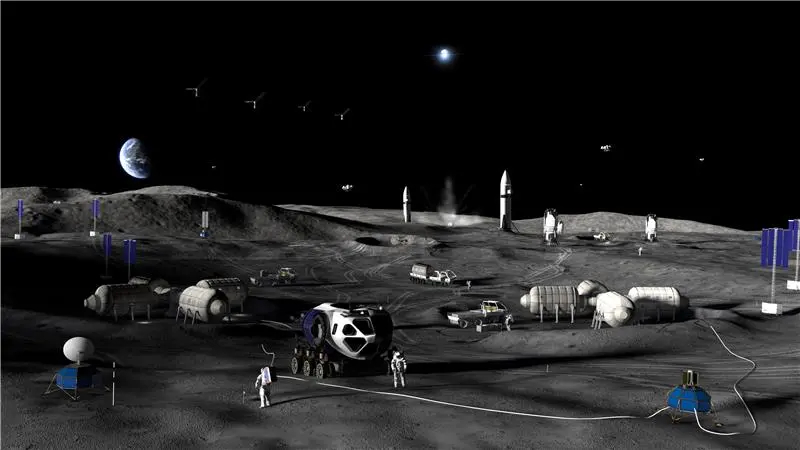
NASA has officially announced that it is abandoning the implementation of the Lunar Gateway orbital station in its previous form and will use already manufactured modules and components to create a base on the surface of the Moon. The approximate cost of the new initiative is about $20 billion. The agency also announced additional robotic missions, the use of drones, and preparations to deploy nuclear power on the Moon.
"We are rethinking the Artemis architecture to move more quickly from orbital platforms to a sustainable surface presence and to deploy the technologies that will keep the base operational"
— NASA, press office
Technical highlights
Some of the equipment already produced is planned to be adapted for surface infrastructure. Key components of the new approach include robotic missions to prepare landing and work sites, autonomous drones for reconnaissance and logistics, and the use of nuclear power sources (the Space Reactor 1 Freedom project) to provide stable power for systems. In addition, NASA announced a mission to Mars using nuclear-electric propulsion: the launch of the Space Reactor 1 Freedom spacecraft is planned by the end of 2028, after which deployment of helicopters to explore the surface is envisaged.
Position of international partners
Changes to the Artemis architecture may force the European Space Agency, Japan and Canada — which had planned to participate in the Lunar Gateway — to reassess their roles. Negotiations and the redistribution of work are now in the spotlight — from technical contracts to financing and industrial cooperation. For some partners this is an opportunity to convert contributions to modules into concrete surface projects; for others, it is a risk of losing planned niches.
Commercial sector and supply chains
NASA's decision also strengthens the role of private players. An example from the original release: in 2025 the company of the Amazon founder landed the New Glenn rocket for the first time and launched a NASA mission to Mars — a signal that government programs are increasingly integrating with commercial solutions. The new focus on the surface creates demand for robotics, power systems, thermal protection and logistics, areas in which Ukrainian engineering companies and startups in drones, materials science and energy can also compete.
Why this matters
The reasons for the changes are pragmatic. Redirecting resources from orbit to the surface provides a faster path to an actual presence of people and equipment on the Moon, and investments in nuclear power and robotics make that presence more sustainable. It is also a signal: lunar development is shifting from demonstration projects to operations with long-term scientific, technological and economic value.
What to expect next
The main task now is to turn the announcement into concrete agreements. Partners will have to rewrite memoranda, contractors must reorient programs, and governments need to resolve budgetary issues. For companies and research teams, this is the time to prepare proposals for the new technical requirements. Whether the pace of landing people by 2028 can be maintained will depend on the ability to turn political declarations into signed contracts and effective coordination of international logistics.
Summary: this is more than a technical reshuffle — it is a reassessment of space exploration priorities. For Ukraine and its industry, it is a chance to find niches in new supply chains and technological challenges, if we quickly transform existing scientific and engineering potential into competitive proposals.



