Nexis shot down Shahed at 250+ km/h — first combat success for new Ukrainian interceptor
WinFly Confirms Destruction of Shahed-136 in Mid-Air: Nexis Interceptor Drone Operated at the Limit of Its Stated Capabilities. While competitors count thousands of destroyed targets, Nexis takes its first step.

By Tetiana Suchkova-Ladik
April 14, 2026 · 2 min read
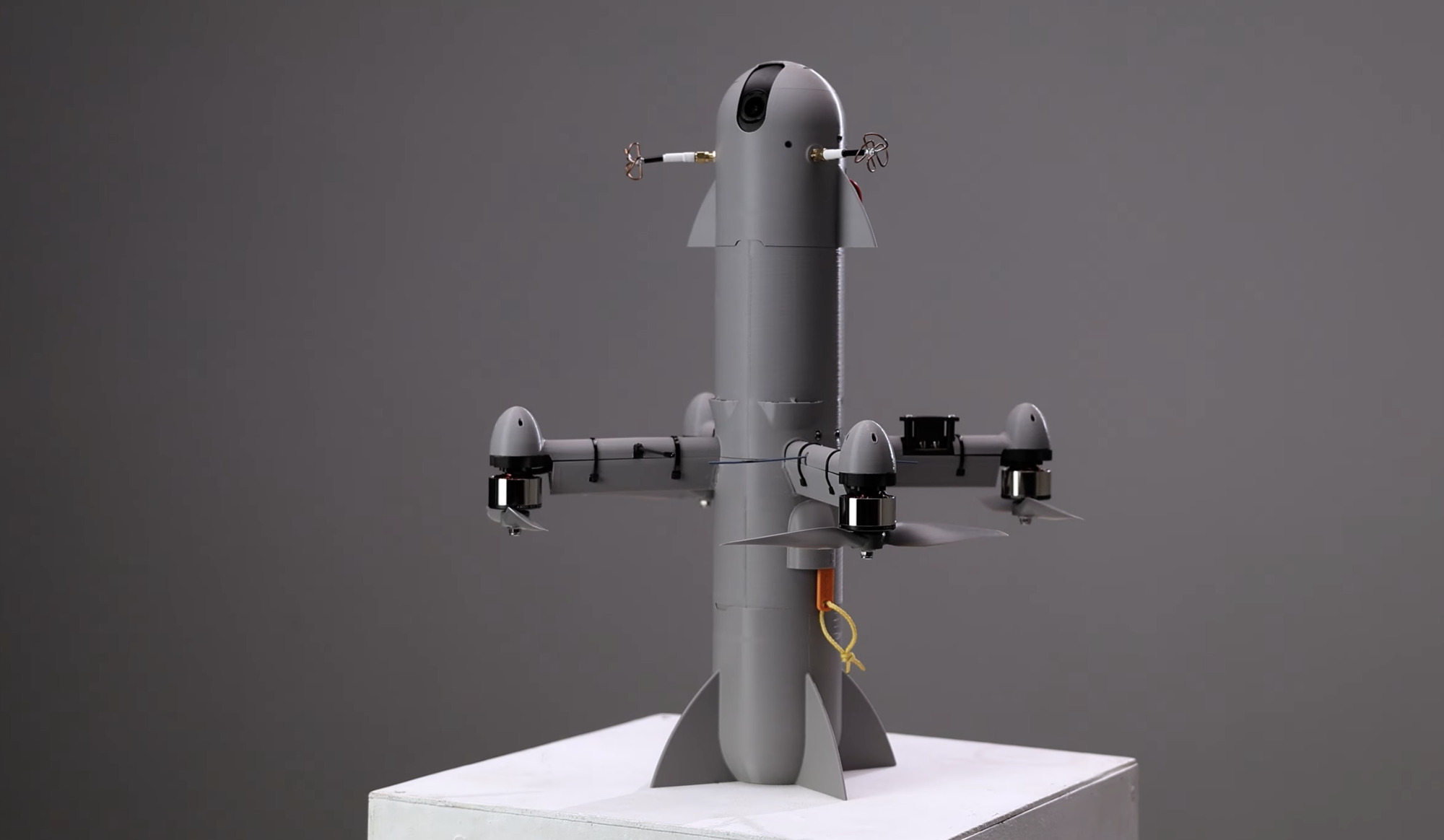
Ukrainian company WinFly announced the first confirmed combat use of its FPV-interceptor Nexis against Russian Shahed-136 kamikaze drone. The target was destroyed in the air — the fact was recorded by objective control means.
What happened and under what conditions
The interception occurred at a speed exceeding 250 km/h with the engine loaded at 84% thrust. This is a key detail: Nexis did not just catch up with the target — it did so with thrust reserves, not at the edge of a stall. The drone's maximum declared speed is up to 270 km/h.
Shahed-136 in standard propeller version cruises at approximately 180–185 km/h. This means the speed difference during interception was about 65–70 km/h — enough for stable target acquisition, but not comfortable for an operator working during night flights.
Nexis technical profile
- Flight time: up to 25 minutes
- Range: up to 30 km
- Operating altitude: up to 5000 m
- Maximum speed: up to 270 km/h
By this profile, Nexis is oriented toward the medium-range zone — between "urban" interceptors on 7–10-inch frames and more expensive systems with autonomous guidance. For comparison: competitor P1-SUN from SkyFall claims up to 300–450 km/h and over a thousand confirmed kills, Bullet from "General Chereshnya" — up to 314 km/h with three modifications and AI guidance in the terminal.
What is confirmed and what is not yet
WinFly relies on its own objective control means. Independent confirmation from the Armed Forces of Ukraine or ISW was not available at the time of publication. This is a standard situation for a first combat deployment: the manufacturer records the result, the army verifies it in operational order.
"Interception works — this is already combat practice. Scaling is underway: production is growing, contracts are concluded for 2025 and 2026"
Yuri Mironenko, Ministry of Defense of Ukraine, Forbes.ua
Context is important: the Ministry of Defense classified WinFly as a manufacturer of FPV for the military — the company's drones are built on 7, 8, and 10-inch frames and designed taking into account recommendations from front-line operators. Nexis is a separate product line, tailored specifically for interception.
Why this matters beyond one destroyed drone
Ukraine is building an echeloned FPV-interception system as a cheap alternative to missile air defense. One Patriot missile costs millions of dollars; an interceptor of the Nexis or P1-SUN class costs between $1,000 and $2,000. Scaling this segment has already gone beyond Ukraine: following the American-Israeli campaign against Iran, Persian Gulf countries are actively interested in Ukrainian solutions.
For Nexis, the first combat success is the start of a serial record. The question is not whether the system worked, but whether WinFly will be able to confirm stable results under conditions of massed night attacks — exactly where Shahed operates in flocks of 50–100 units and where one interception is not enough.