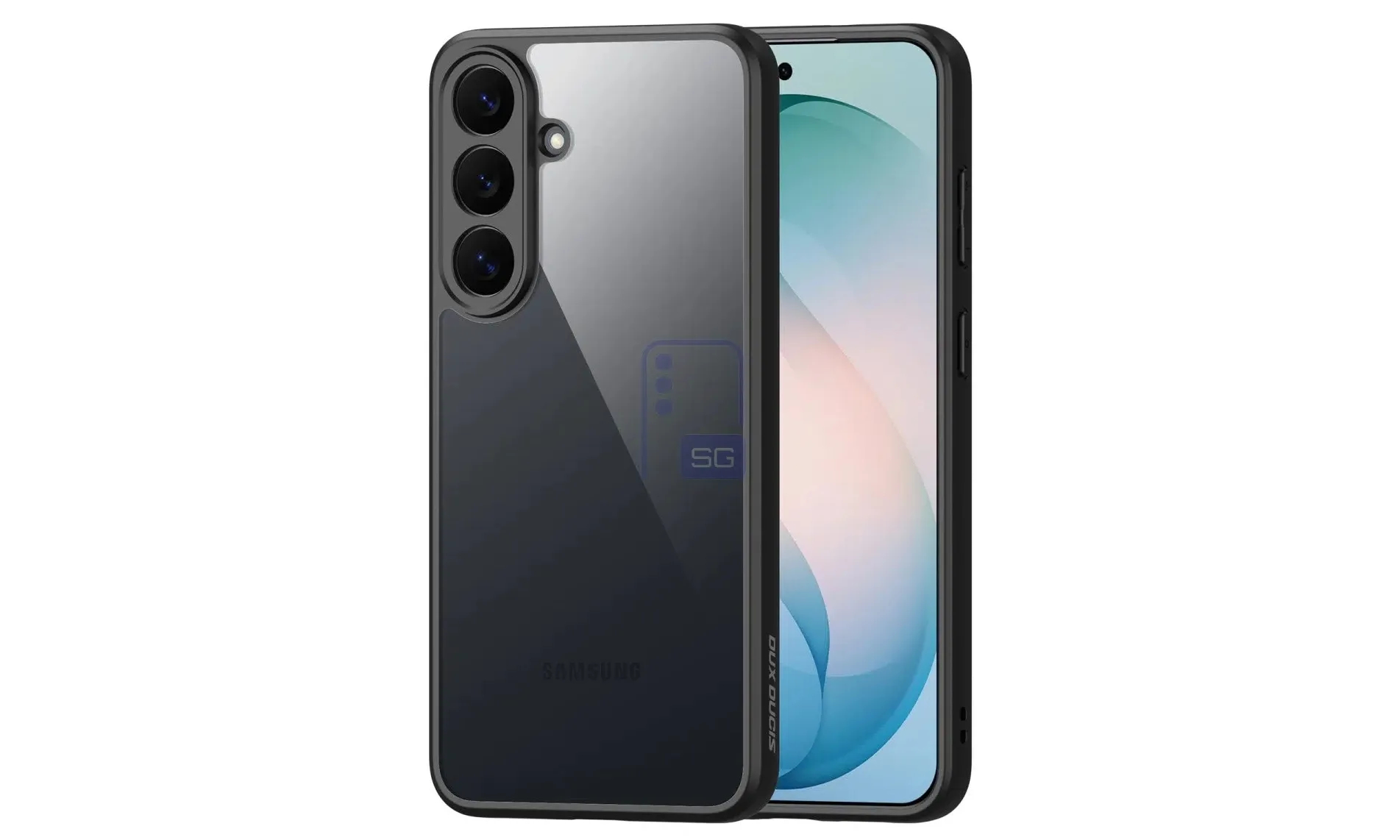
"A Scratch for $1500: Why Oppo Find N6's Inner Screen Scratches Easier Than Window Glass"
# Titanium Hinge for a Million Bends, IP58, Nanocrystalline Glass Outside — and an Inner Display That Can't Withstand a Fingernail. JerryRigEverything Test on Oppo Find N6 Reveals a Design Compromise Common to the Entire Class of Foldable Flagships A durability test of the Oppo Find N6 by popular tech reviewer JerryRigEverything has exposed a fundamental design flaw shared across foldable flagship devices. While the phone boasts premium features such as a titanium hinge rated for one million folds and an IP58 water-resistance rating with nanocrystalline glass protection on the exterior, its internal display proves surprisingly fragile. The inner screen cannot withstand even minimal pressure from a fingernail, revealing a critical weakness in the manufacturing standards of foldable smartphones. This compromise between external durability and internal display vulnerability appears to be endemic to the entire category of high-end foldable devices.

By Tetiana Suchkova-Ladik
April 27, 2026 · 2 min read
Foldable smartphones in 2025 have learned to withstand dust, water, and hundreds of thousands of bends. But one problem hasn't gone away: the internal screen scratches at level 2 on the Mohs hardness scale — that is, with a regular fingernail.
What the test showed
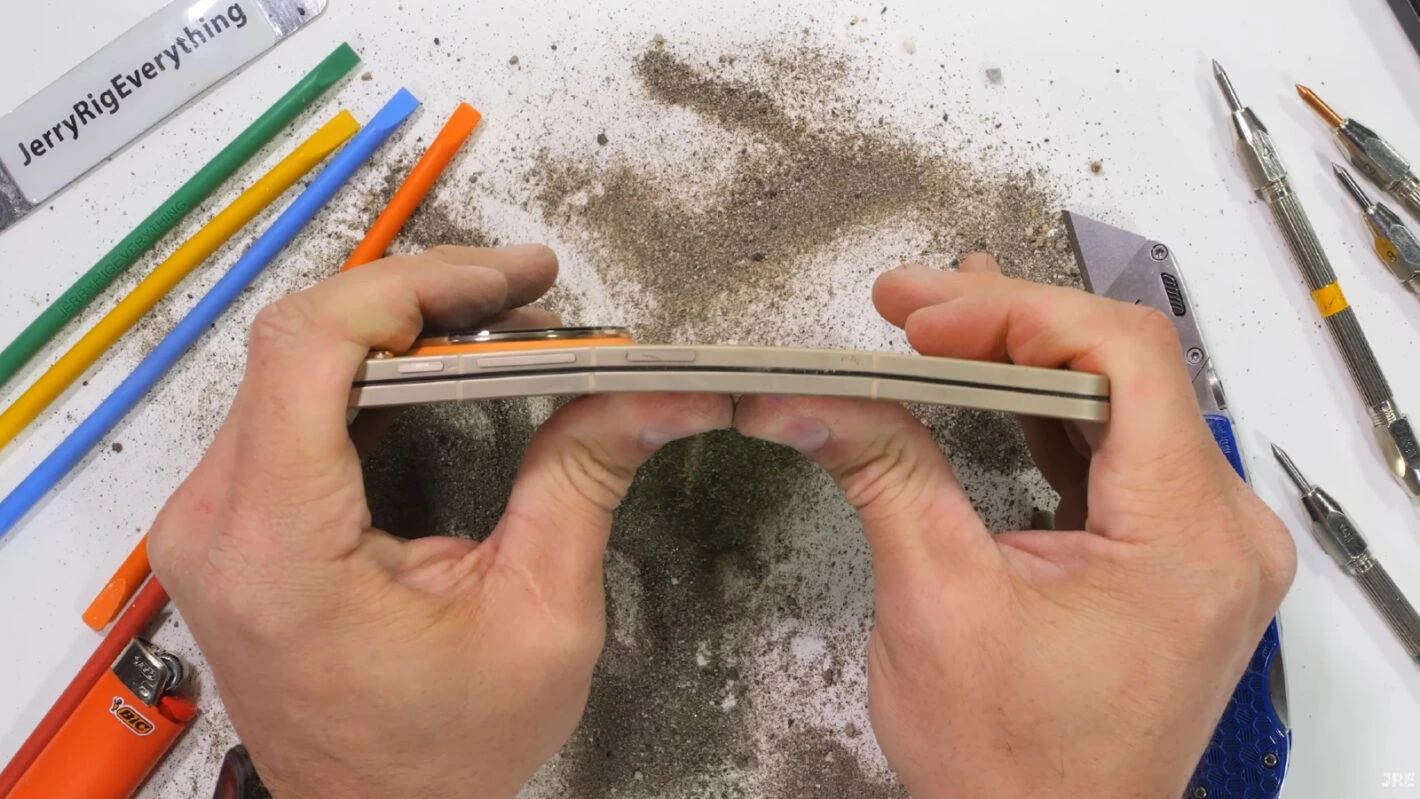
On the JerryRigEverything channel, the Oppo Find N6 underwent a standard battery of tests. The external screen made of nanocrystalline glass behaved like a typical flagship: scratches starting at level 6, deeper grooves at level 7. The internal flexible display tells a different story: damage begins already at level 2. For comparison, gypsum — a mineral at level 2. A regular window — level 5.5.
This is not a bug of a specific model. As the same channel documented when testing the Galaxy Z Fold 7, no Samsung foldable flagship has solved this problem yet. The internal layer remains polymeric — it must bend, and glass cannot bend without compromising hardness.
Where engineers got their revenge
The Find N6 body received a frame made of 7000-series aluminum — 30% stronger than standard. The hinge is made of 3D-printed Grade 5 titanium and reinforced with steel with a strength of 2200 MPa. According to Oppo, the structure is certified for one million bending cycles — twice more than its predecessor.
Separately, it's worth noting the protection class: the Find N6 received three certificates at once — IP56, IP58, and IP59, which means protection against dust, submersion, and pressurized water jets. For comparison, the Galaxy Z Fold 7 has only IP48 — without dust protection.
"Hinge system is certified for one million folds while maintaining minimal wear over time. That's not just marketing speak — it's a genuine durability milestone."
Gadget Hacks, analysis of Find N6 disassembly
The price of compromise — literally
Samsung charges $589 to replace the Fold's internal screen if damage goes beyond the protective film. Oppo has not officially announced repair prices in Ukraine, but the device class suggests similar figures. At the same time, the manufacturer does not include a spare film in the box — unlike some competitors.
- External screen: nanocrystalline glass, scratches from level 6–7 on Mohs scale
- Internal screen: polymeric layer, damage from level 2 (fingernail, key, sand)
- Hinge: Grade 5 titanium + 2200 MPa steel, 1,000,000 cycles
- Protection: IP56/IP58/IP59 — class higher than direct competitor Galaxy Z Fold 7
- Back panel: plastic — the weakest point of the external body
What this means in practice
The Find N6 is a device with truly advanced hinge mechanics and environmental protection, but with an internal screen that requires care as it did in 2020. Oppo engineers solved the hinge durability problem — and did it convincingly. No one in the industry has solved the internal display hardness problem.
The question is not whether to buy a foldable smartphone. The question is: if the manufacturer achieved one million hinge bends, but cannot protect the screen itself from a fingernail — does this mean that the limit of polymer technology has been reached, and the next step is only a fundamentally new material? The answer will come when one of the manufacturers stops placing a film on top of polymer and replaces the polymer itself.
```