Germany Orders Meteor Missiles for Eurofighter Jets — What It Means for European Air Security and Why It Matters for Ukraine
MBDA has announced a new contract to supply Meteor air‑to‑air missiles for German Eurofighter Typhoons. We explain the technical details, industrial implications, and the practical significance for Ukraine’s security.

By Tetiana Suchkova-Ladik
January 22, 2026 · 2 min read
Essence of the deal and briefly about Meteor
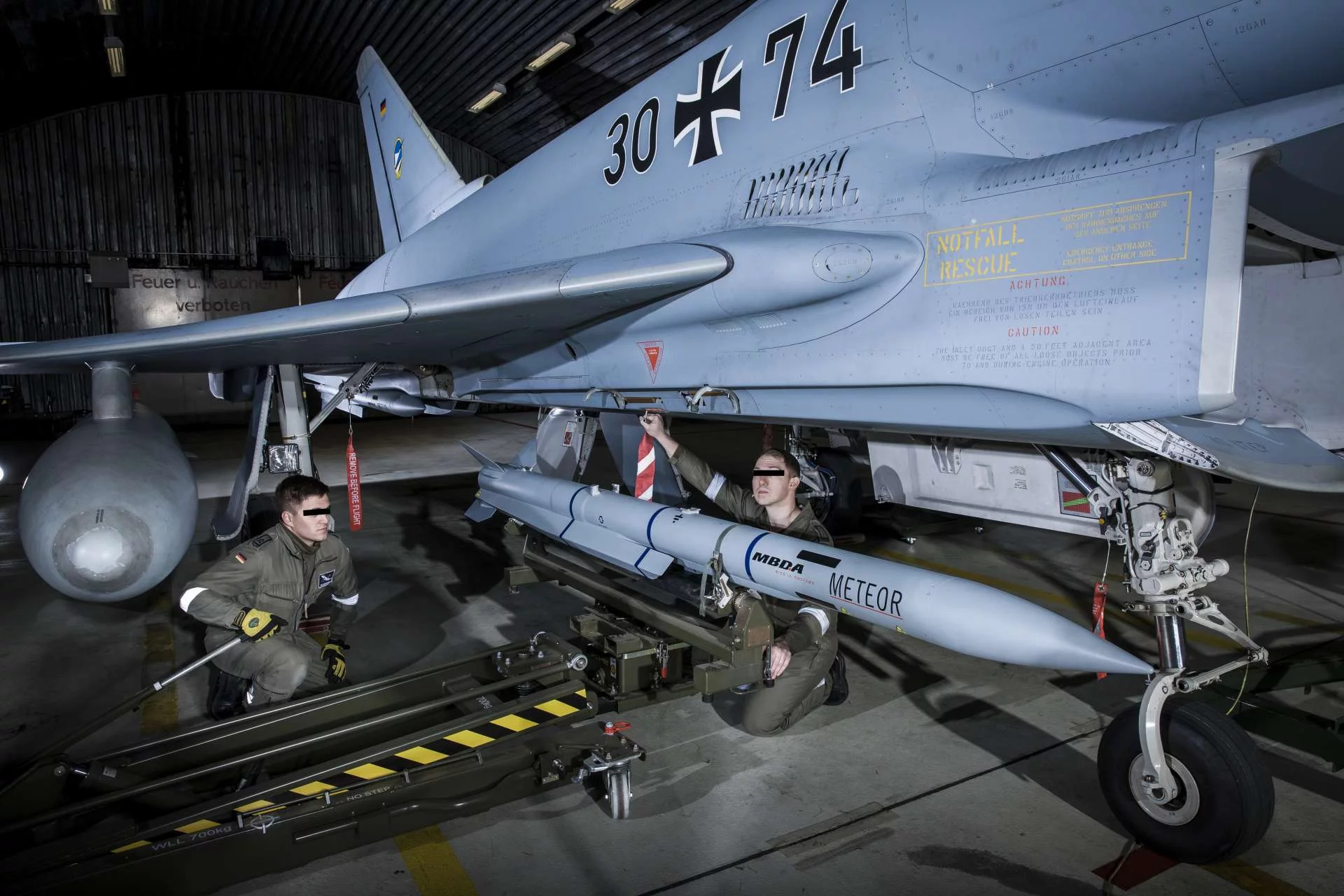
MBDA has confirmed a new contract with Germany for additional “air-to-air” Meteor missiles for Eurofighter Typhoon fighters of the German Air Force. The company does not disclose either the quantity or the contract value — however, the fact of the order confirms the continued integration of the Meteor into European aircraft fleets.
Technology: what makes Meteor stand out
The Meteor is equipped with a solid‑fuel, variable‑flow ramjet engine developed by Bayern Chemie. This arrangement provides sustained thrust over a long trajectory, giving an advantage at long engagement ranges without the need to close on the target. The missile has a two‑way data link, allowing target data to be updated in flight — an important factor in dynamic air battles.
Initial tests of the Meteor on German Eurofighters took place from 2021; in December 2024 the first launch from board a German aircraft was carried out during a campaign based at RAF Lossiemouth in the United Kingdom. Meteor is already in service with or integrated on a number of platforms: Eurofighter, Rafale, Gripen, and is also planned for the F‑35 in some countries.
Europe’s position: industry and alliance
Meteor is supplied to the six partner countries of the programme (UK, Germany, France, Italy, Spain, Sweden), making it an example of collective investment in NATO’s and Europe’s air superiority. At the same time MBDA announced the start of serial production of the Taurus NEO in Germany, as well as joint projects with Rheinmetall on combat lasers — a sign that Europe is ramping up its own defense industry.
"This order is a step toward increasing engagement range and interoperability between allied platforms, making air defence more resilient and flexible."
— MBDA, press service
Why this matters for Ukraine
First, strengthening European air force capabilities raises the overall deterrent power in the region. Second, expanding the production base in Germany and joint programmes with companies like Rheinmetall make supply chains more resilient — important for NATO’s operational readiness in crises.
For Ukraine, the presence of modern missiles in European arsenals means a tougher barrier to aggressive air actions, but it does not automatically mean deliveries: export decisions remain political. At the same time, growth in European industrial capacity opens opportunities for technological cooperation, training, and interoperability in the longer term.
What’s next
While MBDA is not disclosing contract details, it is more important to understand the trend: Europe is investing in long‑range, guided air systems and its own production capabilities. For Ukraine this means both additional security guarantees in the region and an opportunity to work with partners on interoperability and logistics in the post‑war period.
Final conclusion: this is not just about a single batch of missiles — it is about the consistent strengthening of the European defence ecosystem. The next moves are for politicians and decision‑makers regarding actual deliveries and cooperation.