Oppo Find N6: a nearly invisible display crease and what it means for the foldable smartphone market
Oppo published a teaser on Weibo for the inward-folding Find N6’s flexible display — the manufacturer promises a minimal crease, flagship cameras, and a large battery. We examine why this matters right now and what Ukrainian users can expect.

By Tetiana Suchkova-Ladik
February 24, 2026 · 2 min read
What was shown
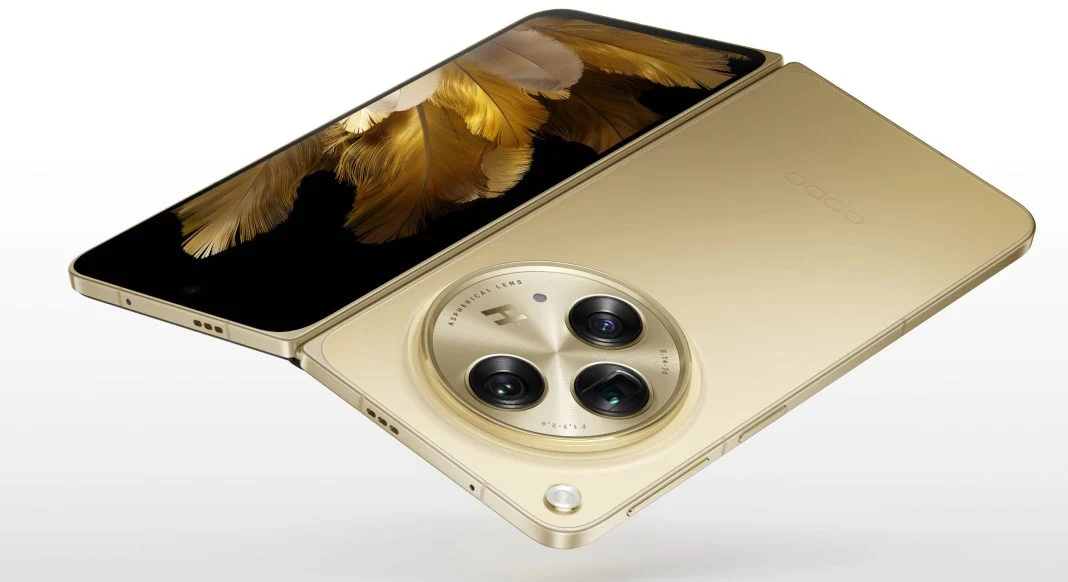
Oppo officially posted a teaser of the foldable smartphone Find N6 on its Weibo account. The company confirmed a forthcoming announcement of the device, although it has not yet named the exact presentation date — according to preliminary information, the model may be unveiled on March 17 in China. The materials show the inner flexible display with an emphasis on a minimally noticeable crease, which becomes the main marketing message.
"smooth sailing"
— Oppo, official Weibo account
Technical details
According to leaks and internal demonstrations within the company cited by industry sources, the Find N6 may receive a Snapdragon 8 Elite Gen 5 processor and a 6000 mAh battery. The main camera is claimed to be 200 MP; a periscope telephoto lens at 50 MP and an ultra-wide module at 50 MP are also expected. Additionally, the industry notes that Samsung 200 MP sensors may appear in both the OnePlus 16 and this Oppo — a signal of component consolidation among manufacturers.
Why this matters
Minimal visibility of the seam is not only aesthetics. It's a marker of technological progress in the production of flexible panels: a smaller seam means higher build quality, potentially better screen durability, and a more pleasant user experience. If these characteristics are confirmed in real-world tests, the Find N6 could strengthen competition in the foldable smartphone segment and accelerate their move into the mass market.
Context for Ukraine
What this means for the Ukrainian consumer and market: the appearance of a competitive flagship with an improved display and a large battery raises hopes for a wider choice of premium devices and downward pressure on prices. It's also a signal for the service market — the more complex and precise the technologies, the more important local repair skills and adaptation to national operating conditions become.
What to watch next
The key is validation. Advertising and internal demonstrations often highlight strengths, but real value is confirmed by independent durability tests and camera-quality reviews in field conditions. Separately, the industry is watching whether Oppo will be able to bring this model to international markets and how the device's price will change. It's also worth remembering: recent reports that one of Samsung's expensive smartphones failed a durability test serve as a reminder — technological progress requires critical scrutiny.
Summary: The Oppo Find N6 teaser confirms a move toward reducing seam visibility in foldable displays and a focus on photographic capabilities and battery life. If the technical specifications are confirmed in independent reviews, the market will gain a strong player — the only questions remain availability and the model's durability in practice.