Oppo Watch X3 — titanium case, eSIM and up to 5 days of battery life: why it matters for Ukrainians
Oppo unveiled the Watch X3 in China — a premium titanium smartwatch with an eSIM and a suite of medical sensors. We explain why these features are not just about a fashionable gadget but about practicality for travel, telemedicine, and everyday resilience.

By Tetiana Suchkova-Ladik
March 17, 2026 · 2 min read
Brief and to the point
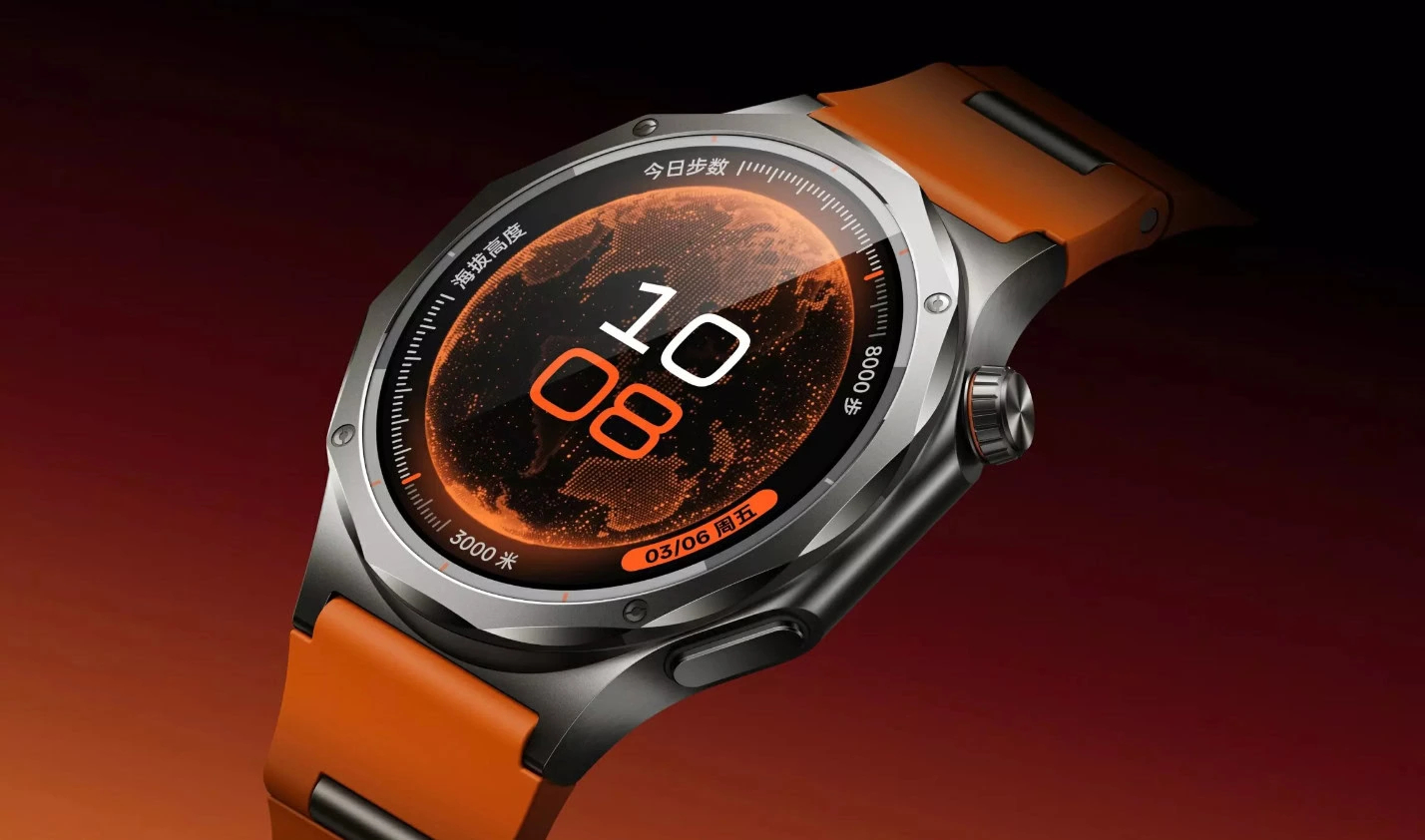
Oppo announced the Watch X3 in China — a watch with a titanium case, round design, a rotating crown, and support for eSIM (4G). For the Ukrainian market this is more than a technical novelty: such details affect travel convenience, telemedicine capabilities, and the device's durability in emergency conditions.
What is known
Display: 1.5" LTPO OLED, 466×466 pixels, peak brightness up to 3000 nits, protected by sapphire glass.
Platform: Snapdragon W5 chip (Qualcomm), Bluetooth 5.2.
Battery: 646 mAh — up to 5 days of autonomy or about 3 days with active use; charging ≈75 min.
Connectivity: support for eSIM with 4G — meaning independence from a physical SIM card when roaming and faster activation of operator services.
Health and sports: blood pressure measurement, SpO2, wrist temperature, sleep monitoring, apnea detection and a 60‑second "checkup" of up to 14 metrics; over 100 sports modes and an AI coach.
"The Oppo Watch X3 combines a titanium case, LTE via eSIM and a battery lasting up to five days — it's a step toward premium wearable devices,"
— Oppo, official press release
Why it matters for Ukraine
Hassle-free Euro connectivity. eSIM makes switching operators easier when traveling across Europe — important for people who frequently travel or work remotely from abroad.
Durability and protection. A titanium case and sapphire make the watch more resistant to scratches and mechanical damage — useful for mobile professions and field conditions.
Telemedicine and prevention. An extended set of sensors provides additional tools for primary health monitoring — not a replacement for a doctor, but a useful aid for patients in remote regions or for veteran rehabilitation.
Technical context and market realities
The Snapdragon W5 chip has become a standard for energy-efficient smartwatches; Oppo is shaping a premium feature package (screen quality, materials, sensors) to compete with other manufacturers. However, an important detail for Ukraine — the official global launch has not yet been confirmed, and eSIM support will depend on local operators.
Price and availability
Starting price in China — 2,799 yuan (approximately $402). The model is available in Universe Star Orange, Gravitational Black and Unlimited Titanium. A global release and Ukrainian network support have not yet been announced.
Conclusion
The Oppo Watch X3 is a logical step toward more resilient, autonomous and medically equipped wearables. For Ukrainian users the key factors remain local operators' support for eSIM and an official market release: without these, the watch's advantages partially lose practical value. Whether to wait for a global version depends on the manufacturer's response and operators' readiness to provision new eSIM devices.