Oura patents removable battery for smart ring — and it's about repairability, not design
Oura's modular battery patent is not a technological breakthrough, but a response to a real problem: most owners of the $350 ring discard the device when the battery degrades after 2-3 years, since replacement is impossible.

By Oleg Bazylewicz
April 8, 2026 · 2 min read
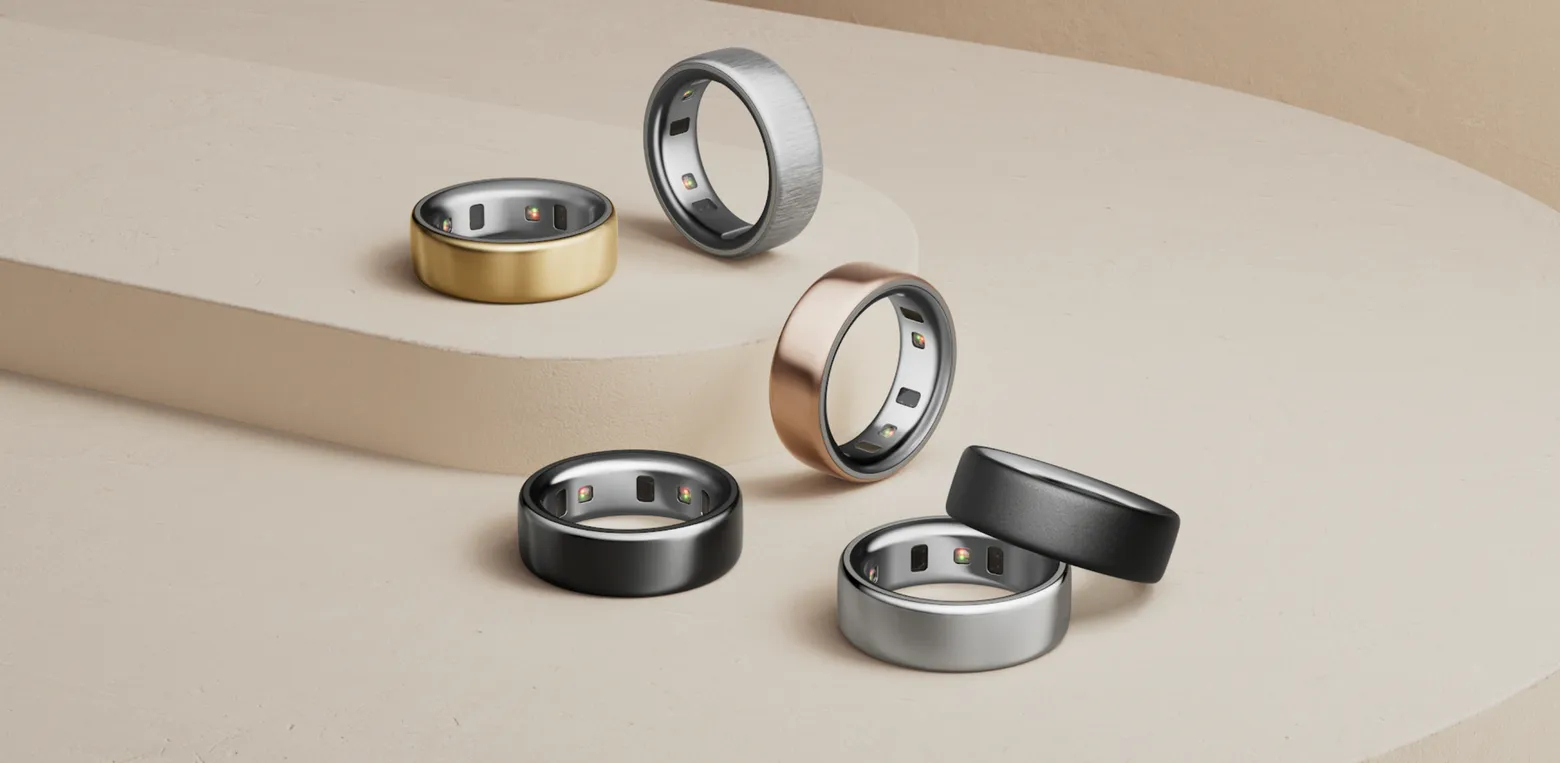
On April 7, 2025, the U.S. Patent and Trademark Office published an Oura patent for a smart ring with a modular battery. Formally — a design solution. In reality — an admission that the company's current business model has a built-in expiration date.
What's inside the patent
According to the patent description, the ring consists of two sections: an inner one housing sensors and main electronics, and an outer arc-shaped part with a battery compartment. As Gadgets & Wearables reports, the document directly states that the battery can be removed and reinserted without compromising device functionality. The patent also describes electrical contacts between the battery module and the housing, and several mounting options — Oura protects not just the idea, but the method of its implementation.
Why this matters now
In all current Oura Ring models, the battery — a LiPo with a capacity of 15 to 22 mAh depending on size — is soldered into the case and cannot be replaced. When it degrades, the ring stops working. Oura officially classifies the battery as a "consumable material" and does not cover its wear under standard warranty.
"The only Oura Ring component that genuinely wears out is the battery. When it dies, the ring stops working."
FallmanTech, Oura Ring technical review
Some users report: after one to two years of active use, a ring that previously held a charge for 5–7 days requires daily charging. At a device price starting at $350 plus a $5.99 monthly subscription — this is a significant argument against repurchasing.
Modular battery as a business solution
A replaceable battery changes the product's economics: instead of buying a new ring, a user purchases a battery module. This simultaneously lowers the barrier to customer retention and makes the device more attractive to those who previously hesitated due to fears of the device being "disposable" at that price point.
- Repairability becomes a competitive advantage against Samsung Galaxy Ring and RingConn, where the same battery problem remains unsolved
- The EU is strengthening regulations on the Right to Repair — modular design may become a requirement rather than an advantage
- The patent protects not just the product, but also the potential market for battery modules as a separate accessory category
Patent ≠ product
Oura has in no way confirmed that a device with a removable battery will reach the market. Companies patent solutions for years before commercial launch — or never bring them into production at all. But the very fact of patenting this particular node suggests: the engineering team has already developed the design to the level of mounting details and electrical contacts.
If Oura Ring 5 launches with a modular battery, it will redefine the durability standard for the entire smart ring segment. If not — the patent remains a protective barrier against competitors who solve this problem first.



