Phantom MK-1 for the front: what the transfer of humanoid robots to Ukraine means
A systemic innovation that won't replace the soldier but could transform reconnaissance and logistics on the front line. Two robots slated for trials in February — we examine the capabilities, limitations, and tactical implications for Ukraine.

By Tetiana Suchkova-Ladik
March 13, 2026 · 2 min read
What was delivered and why it matters
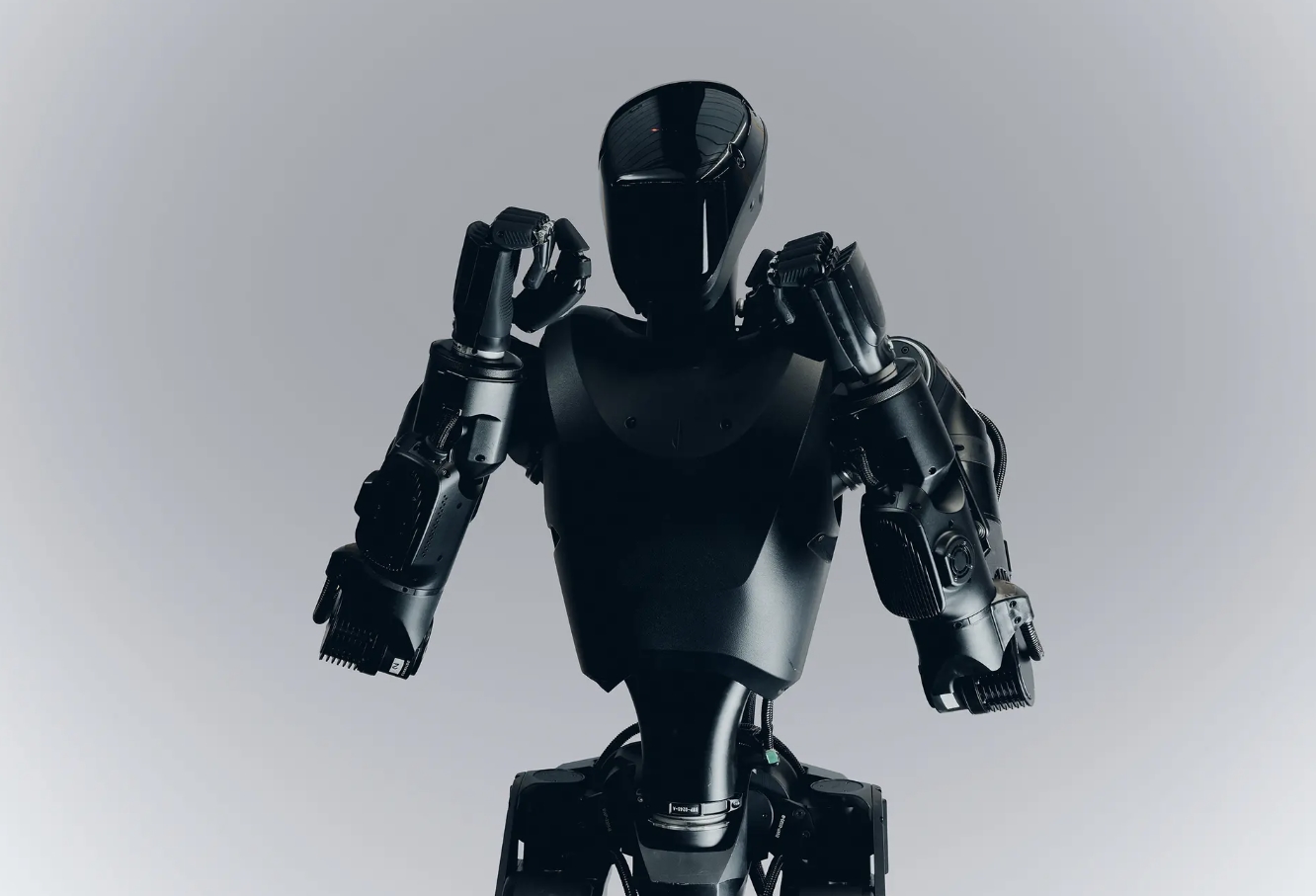
According to Time, in February Ukraine received two Phantom MK‑1 humanoid robots from the American company Foundation for testing. This is not a promo demonstration — these are field tests under real-war conditions, and the outcome will determine whether such platforms will become a tool to reduce the risks faced by our military.
Platform capabilities
According to Foundation's co‑founder, the robots are intended for reconnaissance, delivering supplies, and operating in spaces that are harder for drones or people to reach — buildings, underground facilities, narrow corridors. The developers also say they intend to train the robots to use standard weapons.
"Such robots can conduct reconnaissance, deliver supplies and operate in places that are hard for drones to reach, including inside buildings or bunkers. We plan to teach them to use any weapons that people use."
— Mike LeBlanc, co‑founder of Foundation
Official backing — a signal, but not a guarantee
Foundation has research contracts worth roughly $24 mln with the Army, the Navy and the Air Force of the United States, and also plans tests for the Marine Corps. This indicates serious Pentagon interest in such platforms, but funding does not equal mass deployment — endurance, communications security and economic feasibility are required.
Technical limitations and cyber risks
Robotics and AI specialists point to several key problems: high cost and design complexity, limited autonomy due to the need for recharging, susceptibility to mechanical failures (loss of balance, broken components) and algorithmic errors — the so‑called AI "hallucinations." In addition, such systems are theoretically vulnerable to interception of commands or software hacking.
"Humanoid robots remain complex and expensive, require regular recharging, can lose balance and fail due to the large number of mechanical components."
— Pralad Vadakkepat, Associate Professor at the National University of Singapore
Tactical context for Ukraine
For us the key issue is not the robotics themselves but how to integrate them: whether robots can reduce the risks of reconnaissance in urban combat, deliver ammunition to isolated units, or assist engineering teams during assaults. At the same time, logistics for recharging, battlefield maintenance and protecting communications channels from jamming or cyberattacks must be taken into account.
Media have also reported examples of combat robots being used in actual conflicts — including cases where autonomous or remotely controlled systems struck the enemy or took prisoners. These reports demonstrate the platform's tactical possibilities, but do not remove the technical and ethical questions.
Conclusion: a test is a beginning, not the end
The transfer of two Phantom MK‑1s is an important step in testing the technology under combat conditions. The questions these trials will answer are: whether the robots can endure prolonged operations, whether their control channels are secure, and how effective they are in the conditions of the Ukrainian war. For now, they are more of a supplement to the arsenal — a potentially useful tool for reducing risks and strengthening asymmetric capabilities.
Now it's up to Ukrainian engineers and the military: how to use these platforms with maximum benefit and minimal risk to people and the state?



